






Why Aeration Matters for Your Waterbody
Aeration is one of the most effective tools for maintaining a healthy lake or pond. By increasing oxygen levels and improving circulation throughout the water column, pond aerators and fountains help create balanced aquatic ecosystems that are more resistant to common water quality problems. Whether you manage a small backyard pond or a large community lake, understanding how aeration works is the first step toward long-term success.
The benefits of a well-oxygenated waterbody are extensive. Dissolved oxygen supports beneficial microbes, which work together to keep water quality in balance. When oxygen levels are sufficient, issues like algae overgrowth, aquatic weed proliferation, muck accumulation, and foul odors become far less likely. Aeration also improves water clarity, making your waterbody more visually appealing.
This guide covers everything you need to know about pond aerators and fountains—from how different systems work to installation considerations and ongoing maintenance. You’ll learn the differences between floating fountains, submersed aerators, surface aerators, and solar-powered options so you can determine which solution best fits your waterbody’s unique needs.



The benefits of a well-oxygenated waterbody are extensive. Dissolved oxygen supports desirable fish and microbes, making water quality more balanced. When water quality is balanced, algae, aquatic weeds, muck build-up, and bad odors are less likely to occur. Aeration also helps improve water clarity. Learn more about the different systems available to you and how they each function to enhance the health of aquatic environments.
We are proud to offer top-of-the-line floating fountains and submersed aeration systems from our partners, AquaMaster, Vertex Aquatic Solutions, Kasco, Airmax, Keeton, Bearon Aquatics, and Otterbine. With these partnerships, we are able to provide a variety of fountain and aeration solutions that will help you reach your management goals.
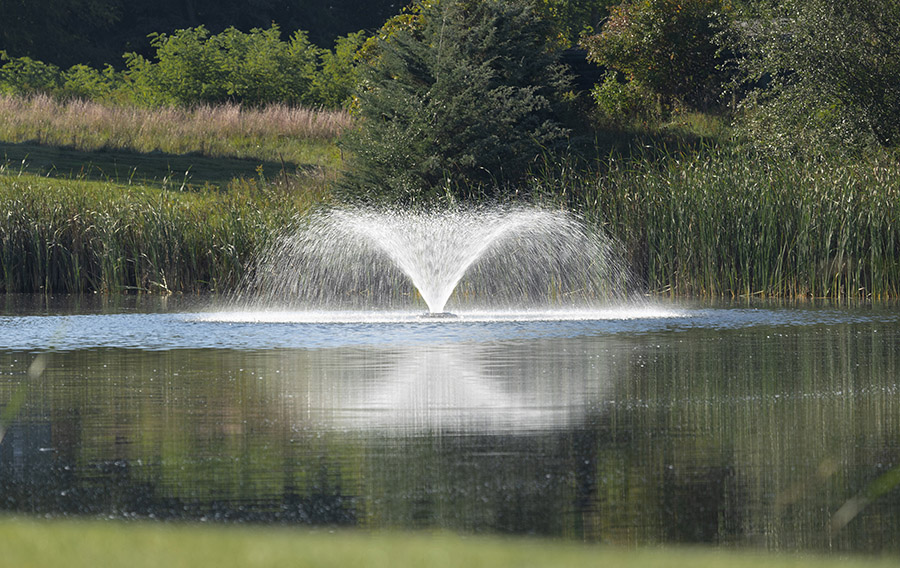
Floating Fountains
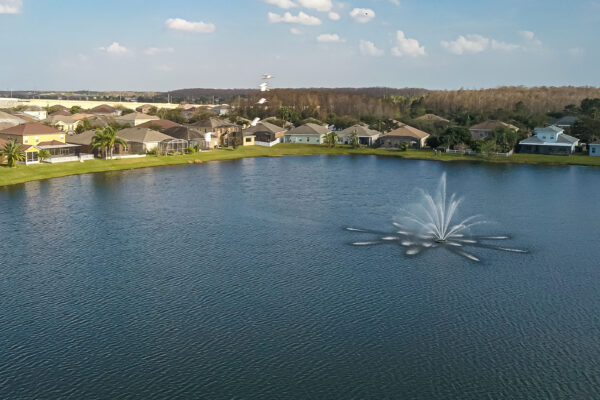
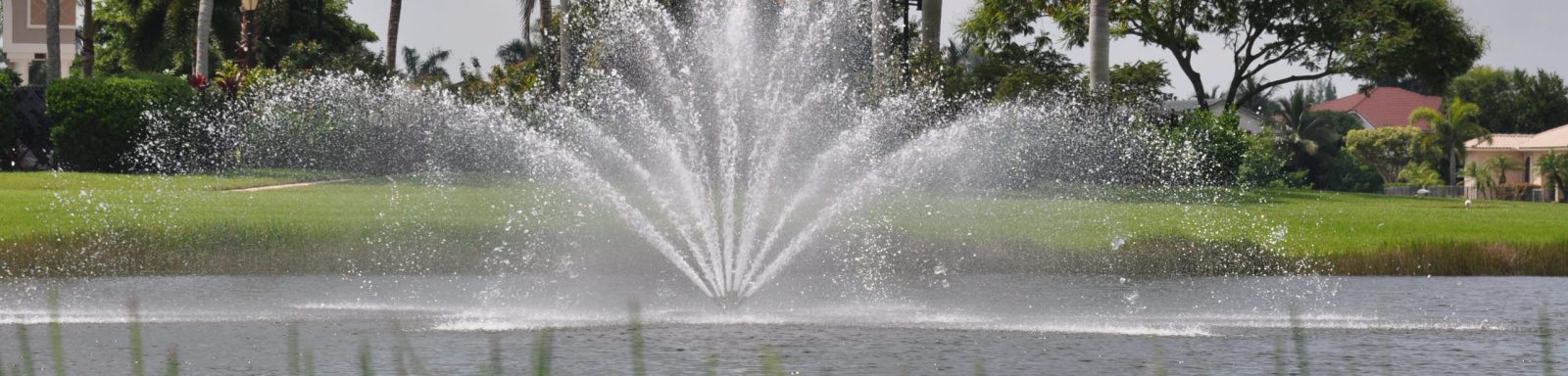
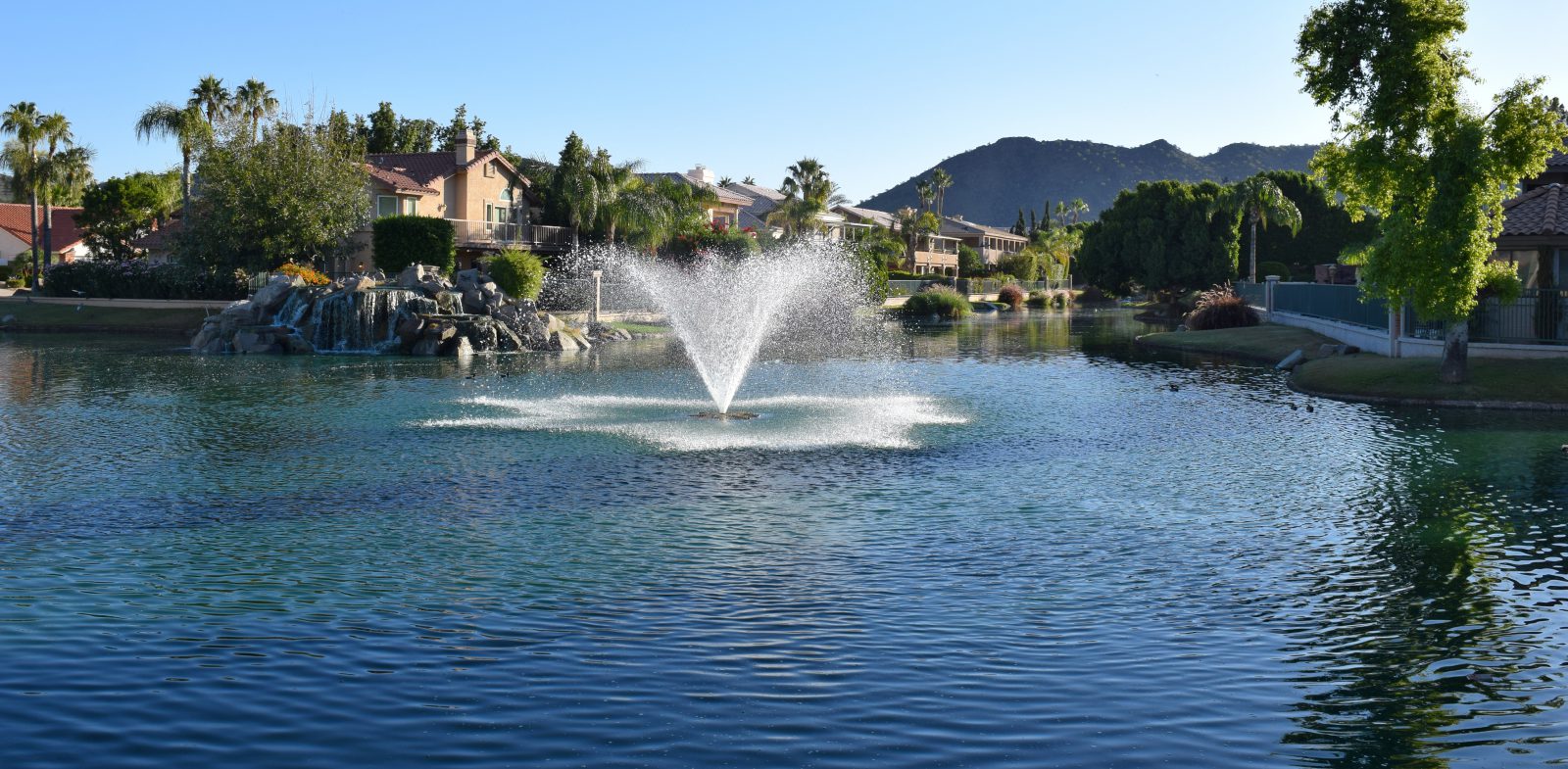
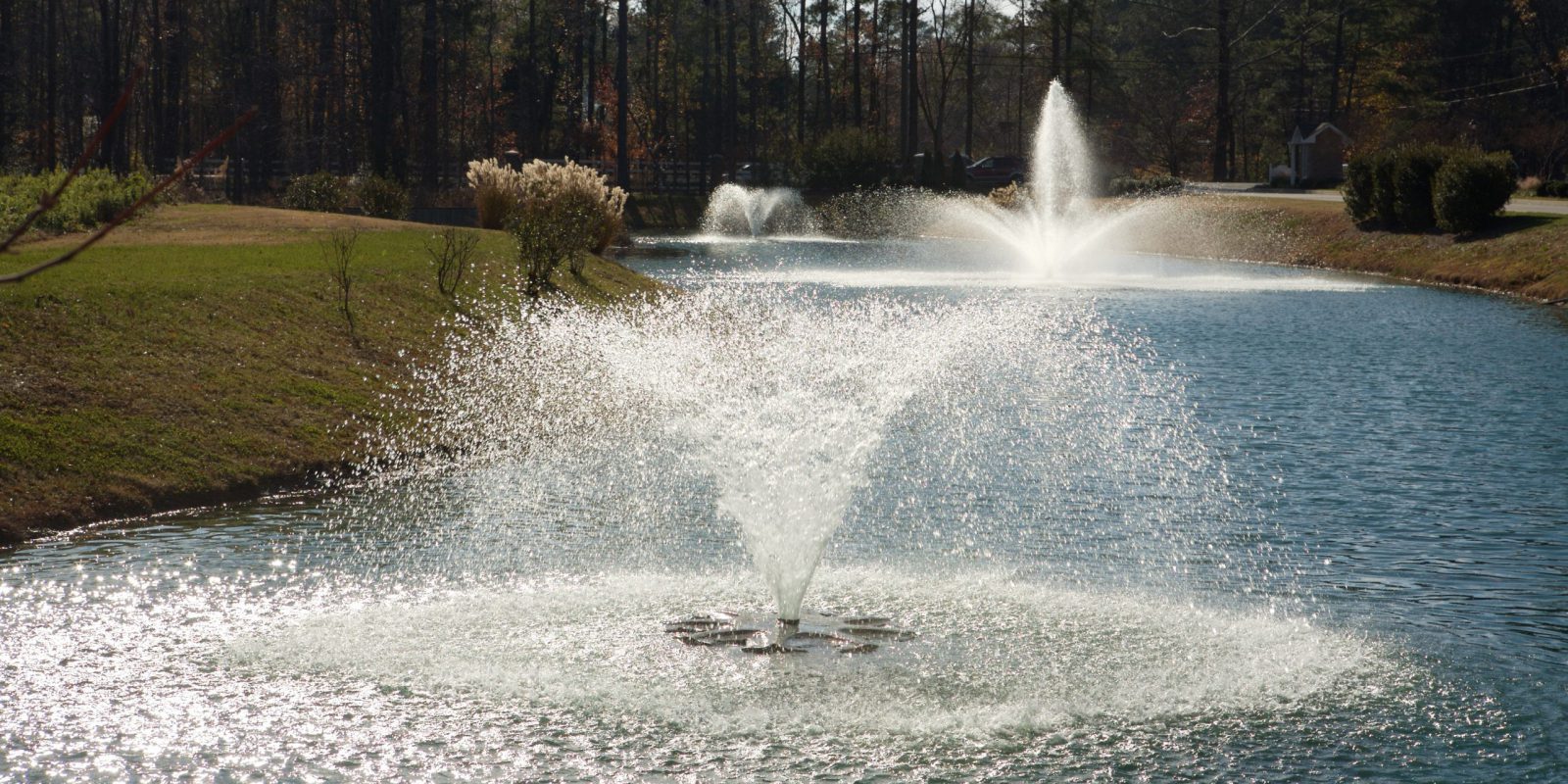
Floating lake fountains offer aesthetically-pleasing visuals that add beauty and dimension to any waterbody. But unique spray patterns and customizable lighting features aren’t the only advantages; floating fountains are excellent tools for water circulation and oxygen transfer. These benefits are most effective at the water’s surface, so they are best utilized in shallow waterbodies or when paired with submersed aeration systems.
Vendor Partners for Floating Fountains
We are proud to partner with several lake and pond fountain vendors to help enhance our client’s waterbodies. Learn more about our vendor partners below:





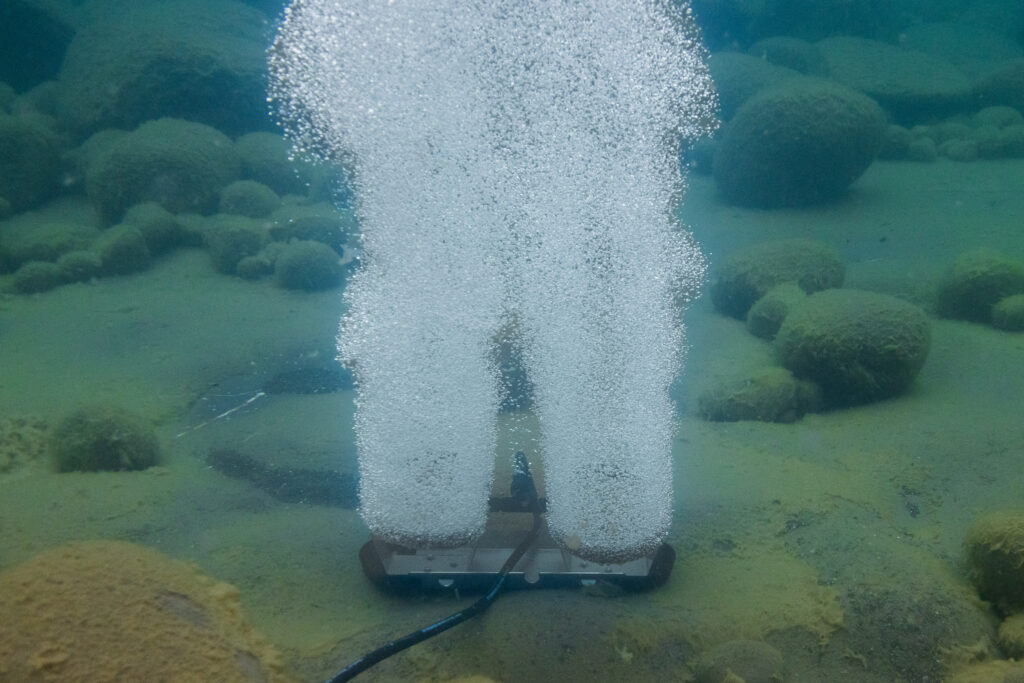
Submersed Aerators (Pond Diffusers)
Submersed aerators utilize a weather-protected on-shore compressor to pump air through a subsurface tube that releases bubbles from the bottom of a lake or pond. As the bubbles rise, they carry the low oxygen water from the bottom towards the surface, where it mixes with atmospheric oxygen before sinking back to the bottom. The continuous vertical mixing helps increase oxygen concentrations throughout the entire waterbody, particularly deeper waters.
Vendor Partners for Submersed Aerators
We are proud to partner with several lake and pond submersed aeration vendors to help enhance our client’s waterbodies. Learn more about our vendor partners below:
Exploring Additional Aeration Systems
While aeration equipment has evolved over the decades, the purpose hasn’t changed – to circulate and oxygenate the water column. Floating fountains are usually the most recognizable type of aeration thanks to their eye-catching spray patterns and lighting features, but there is not always a need for the bells and whistles that set them apart. If function is more important than form, stakeholders can find great success with a surface aerator.
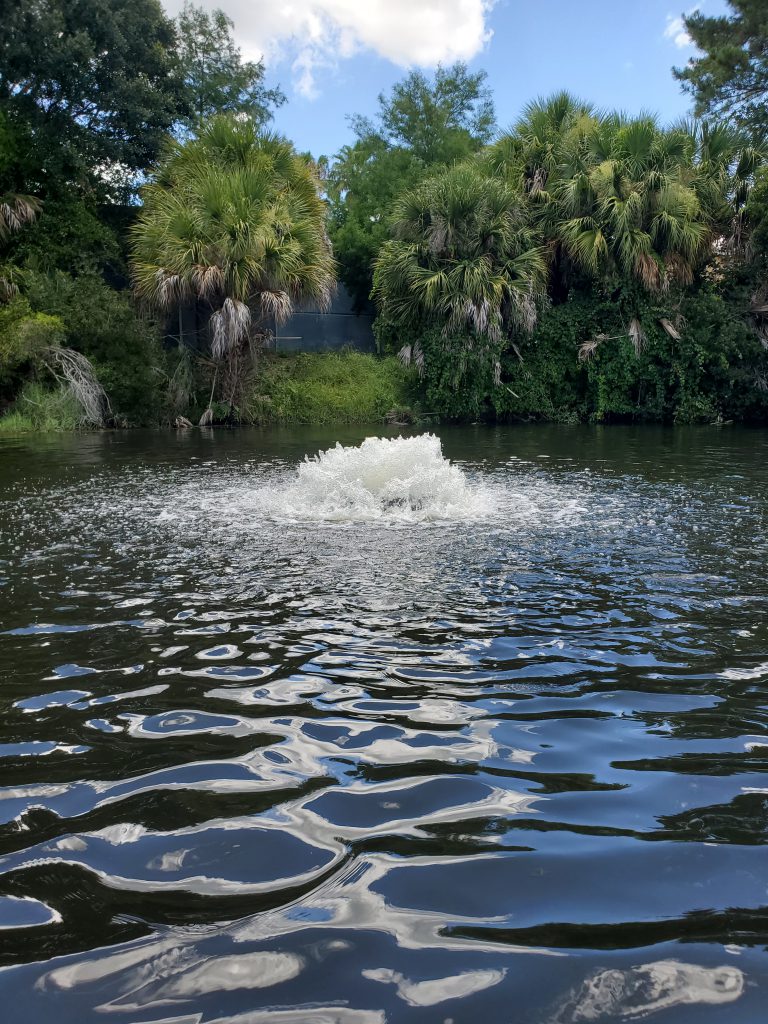
Surface Aerators
Surface aerators share a resemblance to fountains, but instead of pleasing conical patterns and pretty nozzles, surface aerators run at lower speeds with large propellers that produce a boil-like flow on the surface of the water. Surface aerators are an excellent choice for ponds with less than 4-6 ft. of average depth. The circulation and oxygenation benefits provided by surface aerators become more limited beyond that depth.
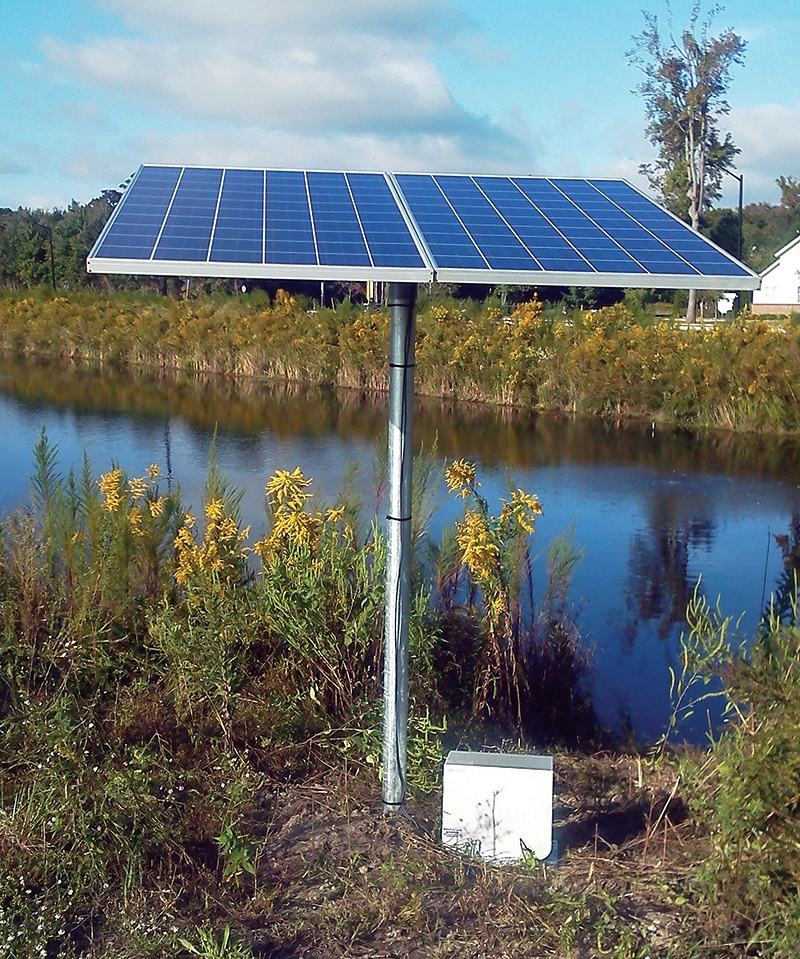
Solar Aeration
All lakes and ponds can benefit from the aeration, but many waterbodies are not located in areas with accessible electricity to power the equipment. More remote aquatic environments such as those on private properties, ranches, and golf courses may choose to rely on solar-powered systems to reap the benefits of increased oxygen and circulation. Though these systems come with certain limitations, they are an excellent choice for waterbodies with no power options.

Architectural Fountains & Waterfalls
Sometimes property owners prioritize form over function. Architectural water features aren’t typically used for circulation or oxygenation purposes. Instead, they serve as a focal point for HOA communities, business parks, golf courses, colleges and universities, and virtually any property in need of a beautiful centerpiece. Water features can be completely customized with an array of designs and materials and are usually very simple to maintain.
Traditional Aeration Systems
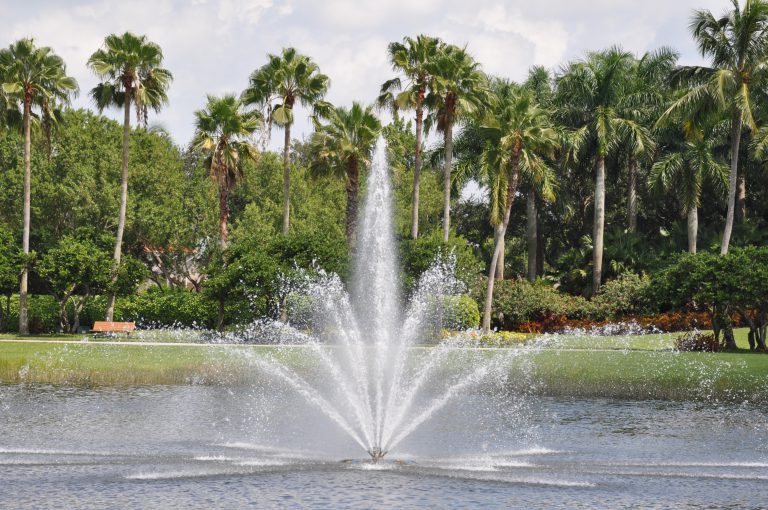
Floating Fountains
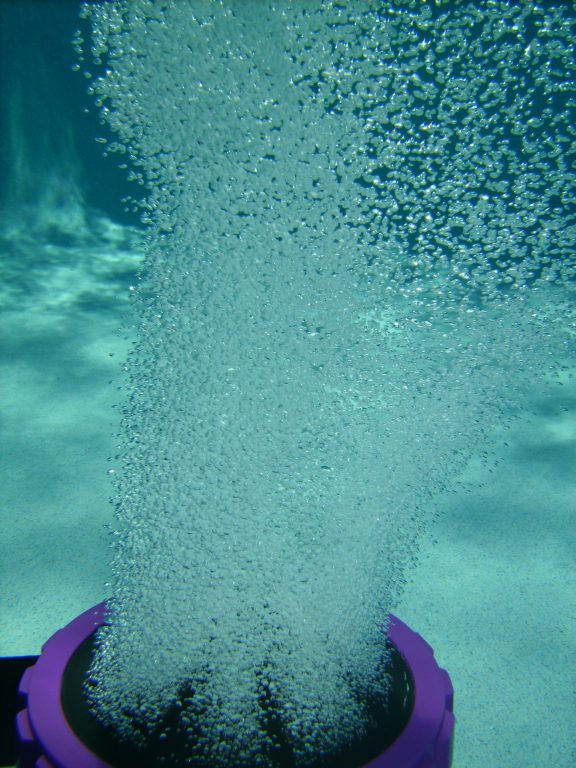
Submersed Aerators (Air Diffusers)

Surface Aerators

Architectural Fountains & Waterfalls
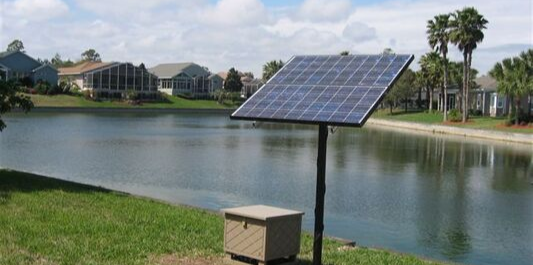
Solar Aeration
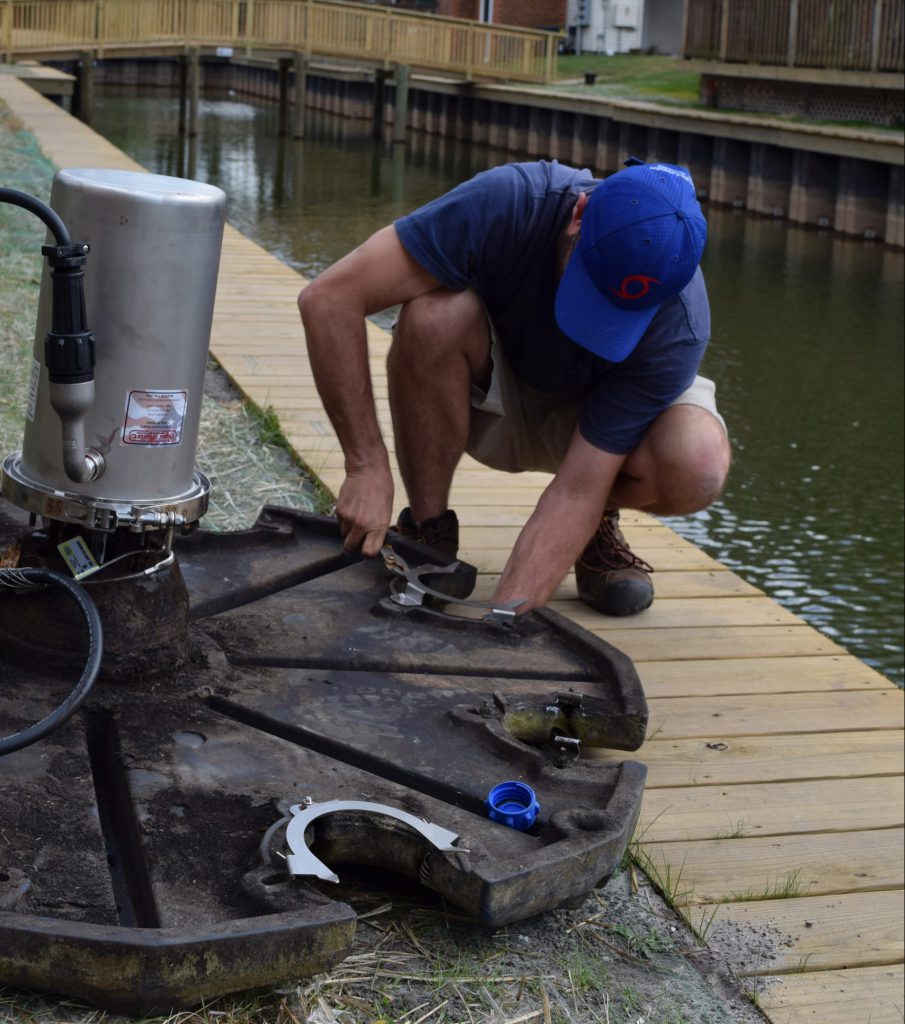
Maintaining Your Aeration System
Like all other aspects of your lake or pond, your aeration system requires recurring maintenance to ensure it continues operating at optimal efficiency. A premium maintenance program through SOLitude’s SOL Pro annual management plans includes monthly aeration inspections so you can rest assured that you’re maximizing your aeration benefits and your budget.
Want to learn more about lake and pond aeration or need help choosing a system that’s right for your property? Speak with our experts.
Enhance Your Water with Aeration
At SOLitude Lake Management we’re dedicated to making water a more healthy and beautiful part of our environment and our world. Discover how aeration helps you maintain beautiful, clean water.