





An Eco-Friendly Solar Aeration Solution for Lakes & Ponds
For some lakes and ponds, running electricity out to the water simply isn’t practical—or affordable. It’s a common hurdle at golf course lakes, farm ponds, private waterbodies, and stormwater ponds set far from any power source. Fortunately, a solar powered pond aerator system offers a reliable way to oxygenate these waterbodies using nothing but the sun. A solar aerator for a pond is also an excellent fit for property owners working to reduce their ecological footprint with renewable energy—and because it costs little to nothing to run, a solar powered aerator for your pond helps pay for itself over time. On bigger or more isolated sites, a solar powered aerator for a large pond delivers the same dependable circulation where conventional electric systems can’t reach.
How Do Solar Powered Aerators Work?
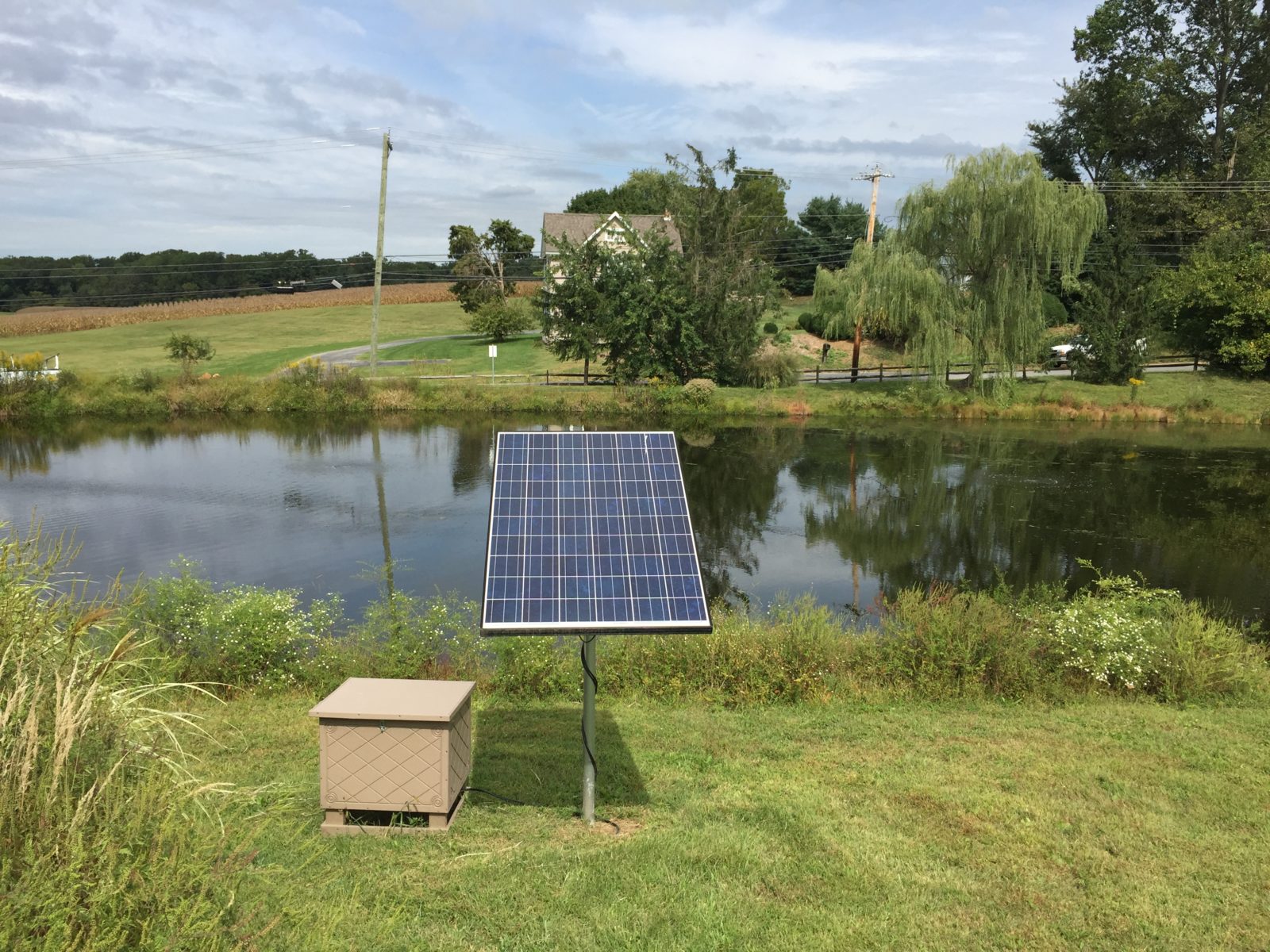
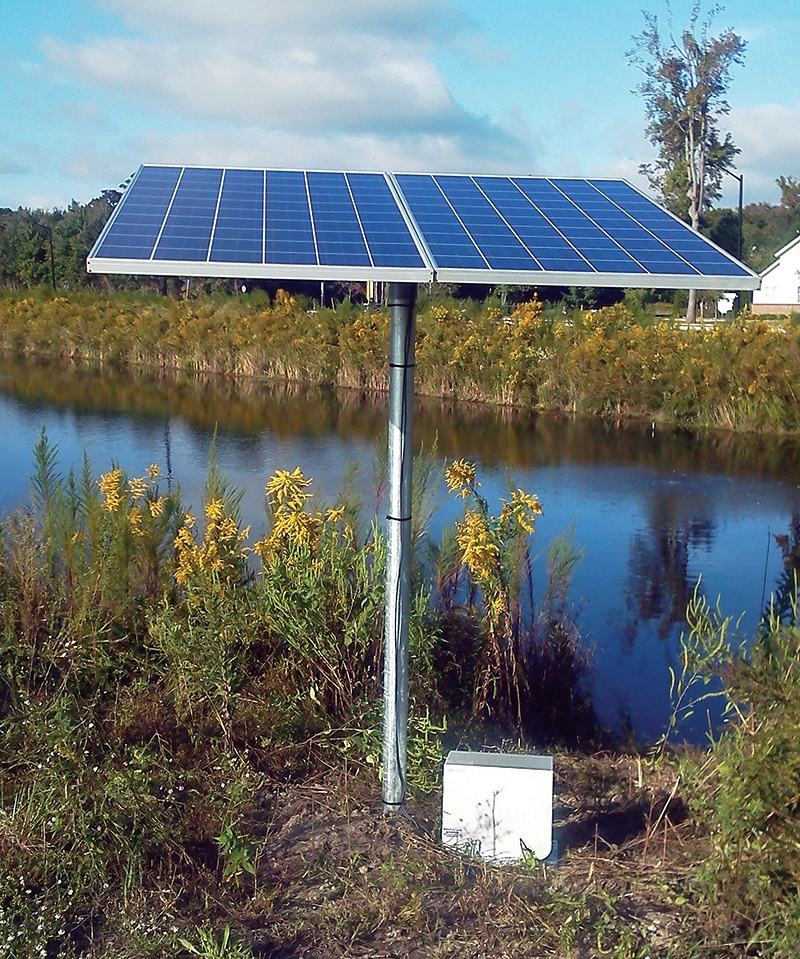
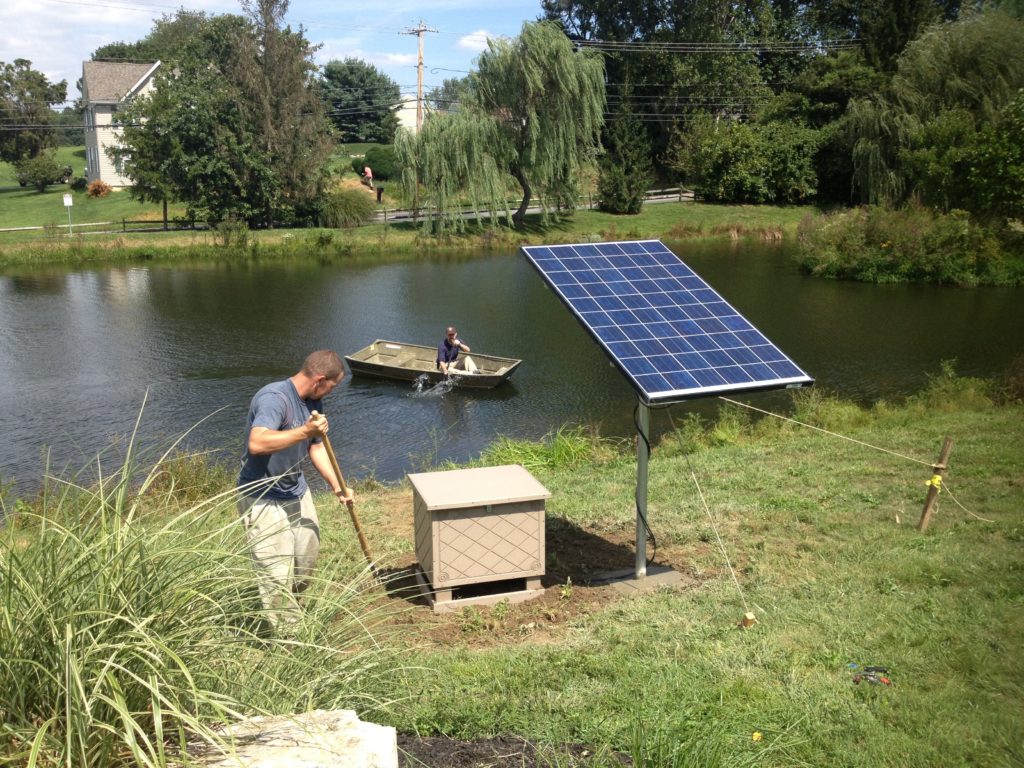
Solar aerators incorporate most of the same components as electric aeration systems. Both electric and solar systems include an on-shore compressor that pumps air through bottom-weighted tubing to diffusers in the waterbody. The air helps circulate water through the water column, thus adding dissolved oxygen and equalizing the water temperature. The only real difference between the two systems is that a solar aeration system includes a solar panel in order to utilize the sun’s rays as its power source.
What Happens if the Sun isn't Shining?
Many solar aerators have the ability to store power through a battery back-up system that can effectively be used to power the system during times when the sun is not shining. So, throughout the night when there isn’t any sunlight available or during cloudy weather that compromises the effectiveness of the solar panel, aeration will remain running thanks to the battery back-up.
Maintaining Your Solar Aeration System
Like all other aeration systems, your solar powered aeration system needs regular maintenance to make certain that it operates at an optimal level. Our team has extensive experience with all of the leading manufacturers’ solar pond aerators. An aerator maintenance plan will help to ensure that your system runs at optimal efficiency and that your lake or pond always has the best aeration possible – in rain or shine.
Find the Right Solar Aerator for Your Pond or Lake
Frequently Asked Questions About Solar Powered Pond Aerators
How does a solar powered pond aerator work?
A solar aerator uses the same core components as an electric system—an on-shore compressor pushes air through bottom-weighted tubing to diffusers on the floor of the waterbody. That air circulates the water column, adding dissolved oxygen and equalizing water temperature. The difference is a solar panel that powers the system with the sun’s energy instead of electricity.
What happens to a solar aerator when the sun isn’t shining?
Many solar aerators include a battery backup that stores power, so the system keeps running overnight and during cloudy weather when the panel can’t generate enough energy on its own.
Where does solar aeration make the most sense?
Solar aeration is ideal for isolated waterbodies with no practical or affordable way to run electric power, including golf course lakes, farm ponds, private waterbodies, and stormwater ponds.
Can a solar powered aerator save money?
Because there’s little to no cost to power a solar aerator, the system can help pay for itself over time—while reducing your ecological footprint through renewable energy.
Does a solar aeration system need maintenance?
Yes. Like any aeration system, a solar unit needs regular maintenance to perform at its best. A maintenance plan helps keep it running at optimal efficiency in any weather.