




Your lake or pond is meant to be enjoyed. Summer should be filled with fishing, boating, swimming, and long afternoons around the water. But when a waterbody isn’t managed throughout the year, nuisance and invasive weed growth can interrupt all of it, which is why aquatic weed control matters long before a problem is visible from shore. Invasive plants are not inherently bad, but when they are moved from their native ecosystems, they reproduce far more rapidly. That explosive growth ensnares boat propellers and fish hooks, impedes kayaking, and, in unfortunate instances, has drowned swimmers. Overgrown weeds also reduce oxygen levels and hinder a waterbody’s natural ability to regulate itself, while native plants that serve as food and habitat for local wildlife are threatened and destroyed. Effective pond weed control and lake weed removal protect both your recreation season and the ecosystem it depends on.
Before and After Invasive Aquatic Weed Treatment
- Invasive Aquatic Weed Control
- Invasive Aquatic Weed Control
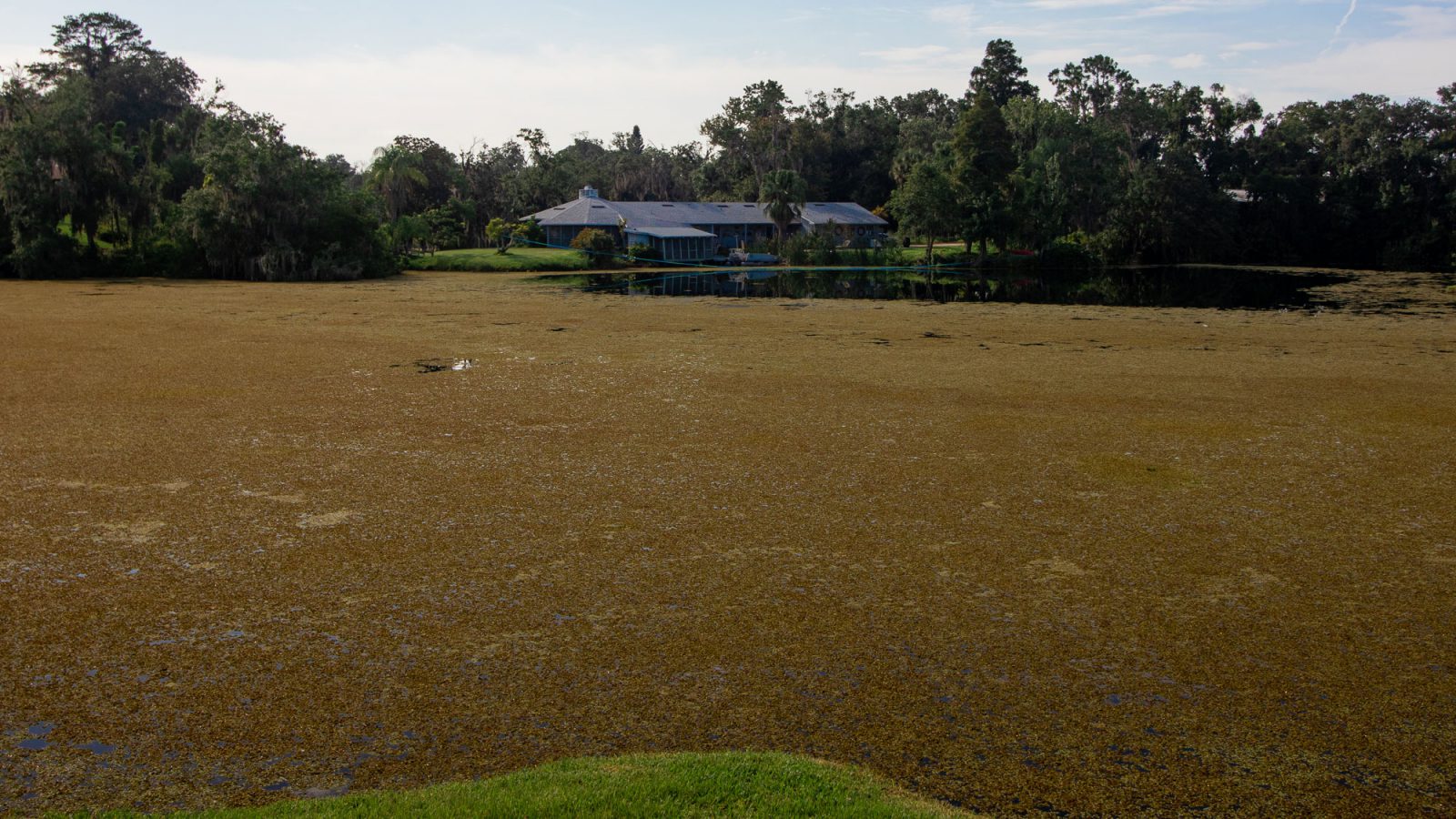
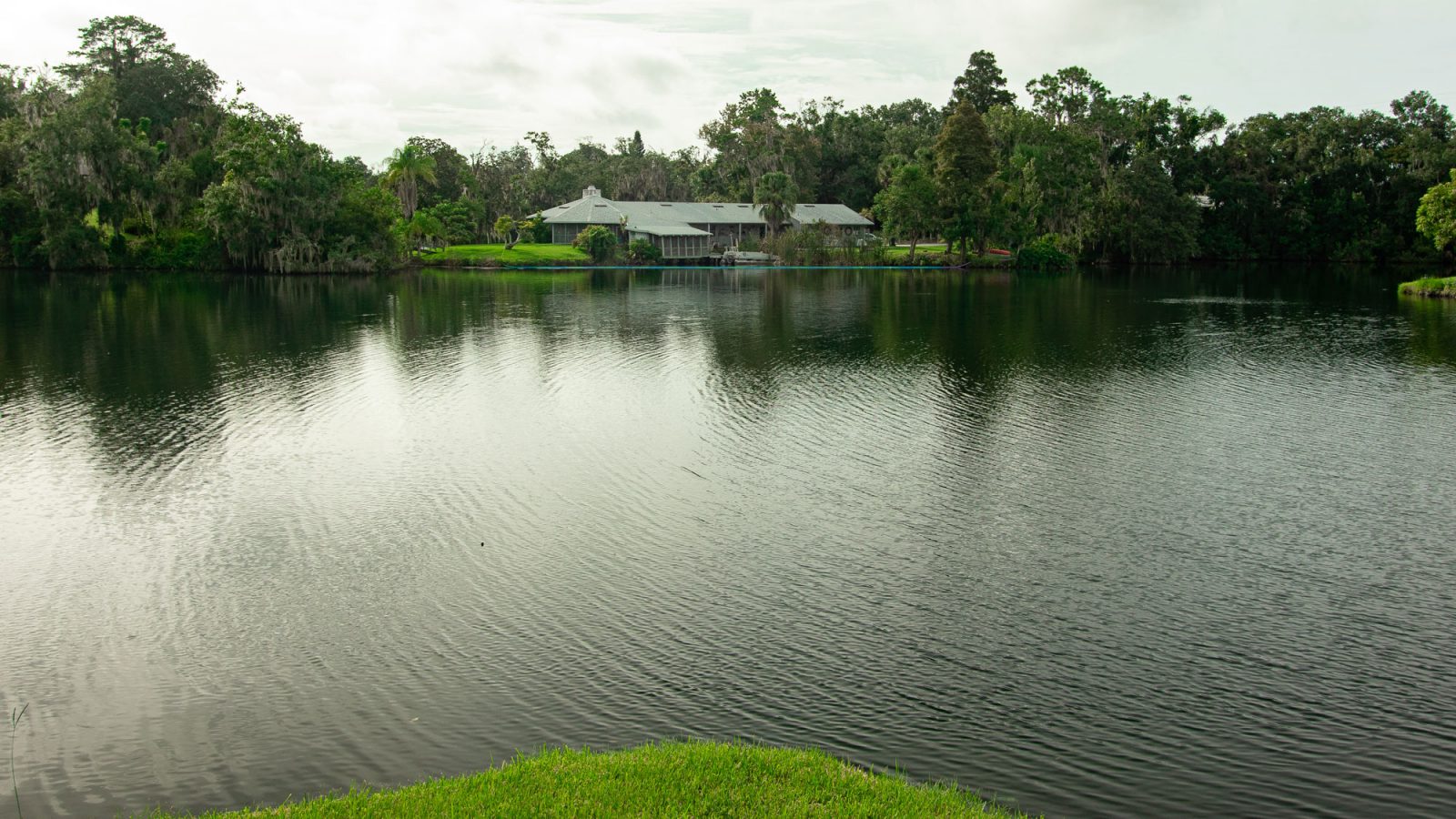
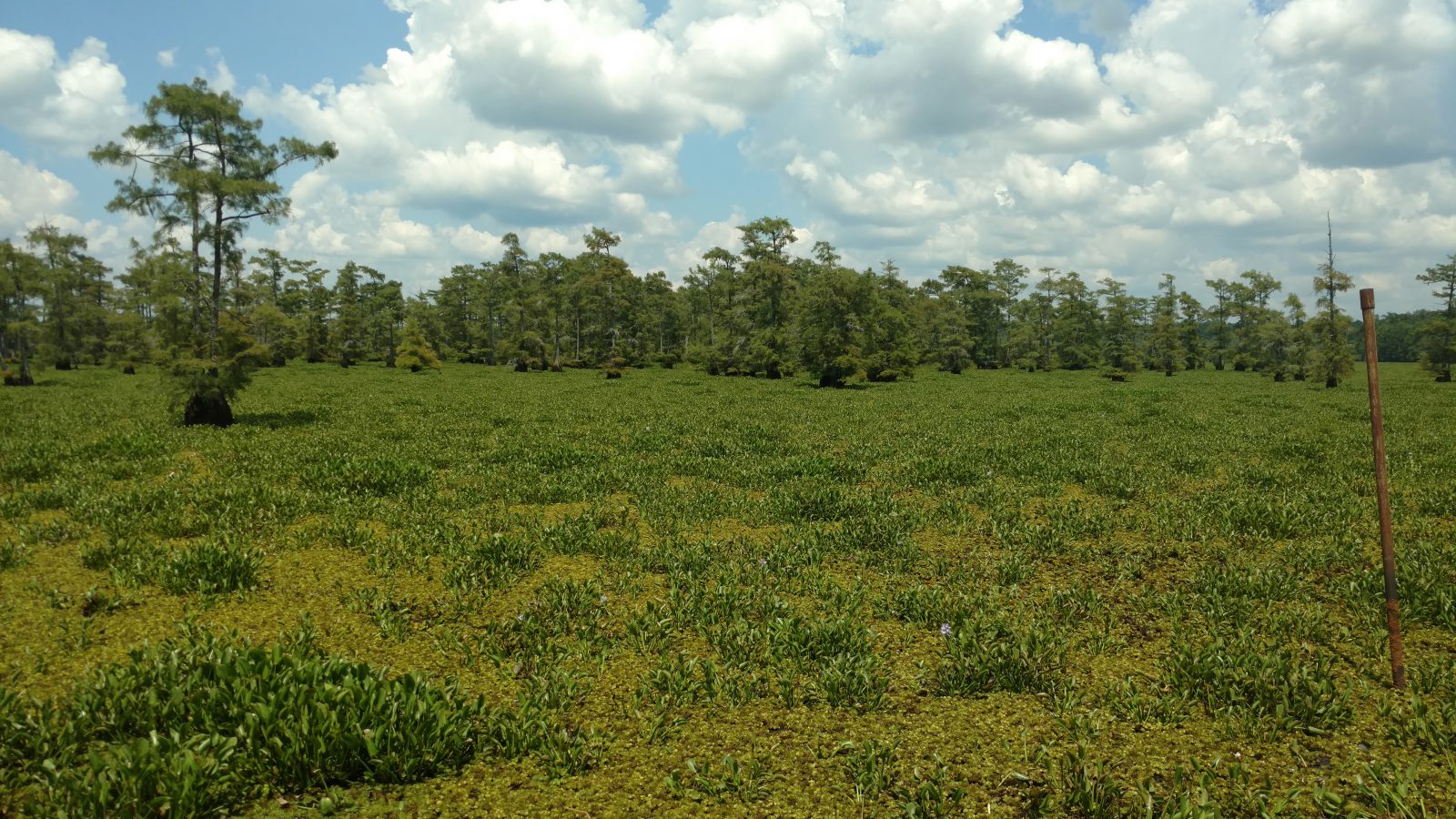
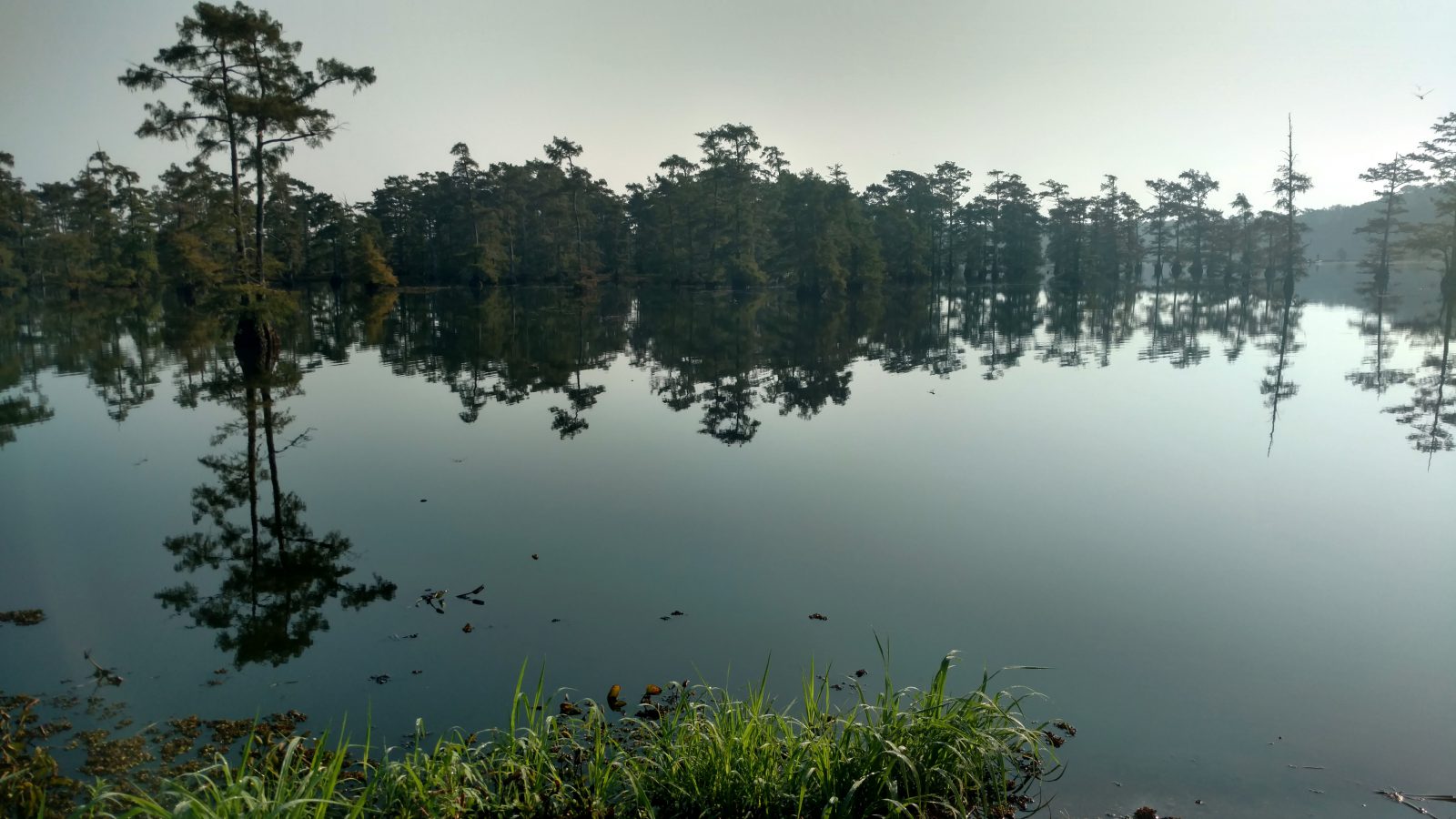
Identifying Submerged, Floating, and Emergent Weeds
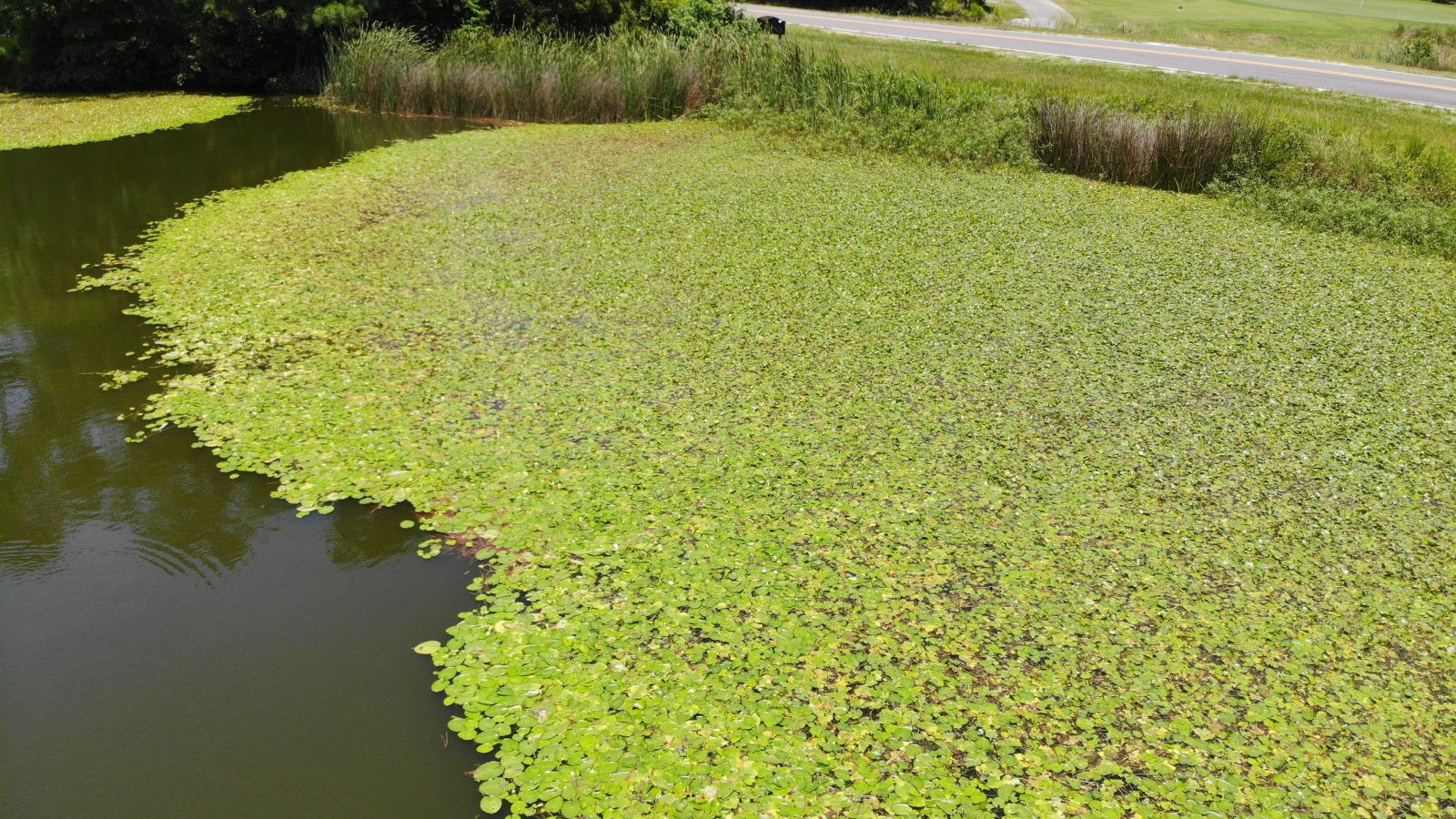
Aquatic weeds come in many forms, including submerged, floating, and emergent species. Submerged weeds grow from the bottom of the waterbody and sometimes “top out” at the surface. Floating invasive weeds have vascular root systems, but these are generally not rooted in sediment under the water’s surface. As such, they are known to spread very rapidly throughout waterways and can completely cover the surface of a lake or pond. Emergent plants are those that stand upright in the shallow water near lake and pond banks or across vast wetlands. They create complex root systems that can quickly dominate shorelines and outcompete native vegetation, and in some cases, destroy hundreds of acres of marsh and wetland areas. The vast differences in each of these aquatic weeds mean professionals rely on a variety of management techniques for pond weed removal.
Management Approaches For Invasive Aquatic Weeds
Aquatic weeds and algae are an inevitable problem for lake and pond owners. When waterbodies have excess nutrients or low dissolved oxygen levels, these issues can run rampant. Here are the most common methods for aquatic weed control:
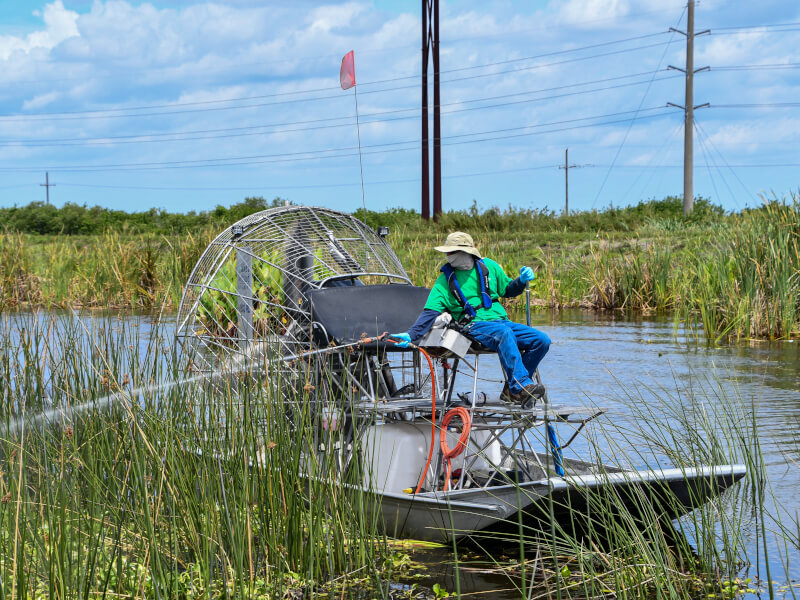
EPA-Registered Herbicide Treatments
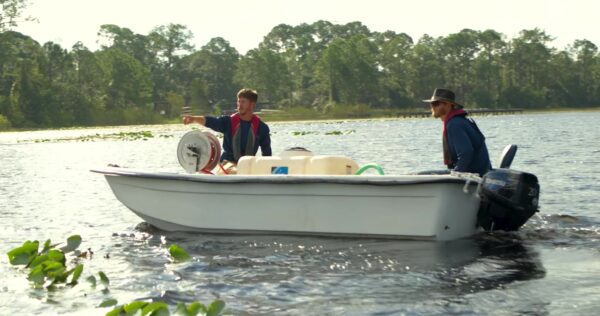
EPA-registered herbicides are a popular solution for pond weed control. These products are optimized, meaning they specifically affect the unique growth mechanisms of the invasive plant without impacting native wildlife or interfering with recreational activities. They are highly regulated by the Environmental Protection Agency and are safe for non-target plants and animals when applied by a licensed applicator in accordance with the product label. When professionally applied with backpack sprayers, boats, or modern drone technology, stakeholders can rest assured that management efforts are as highly targeted and efficient as possible. These products can be used to control all types of pond weeds.
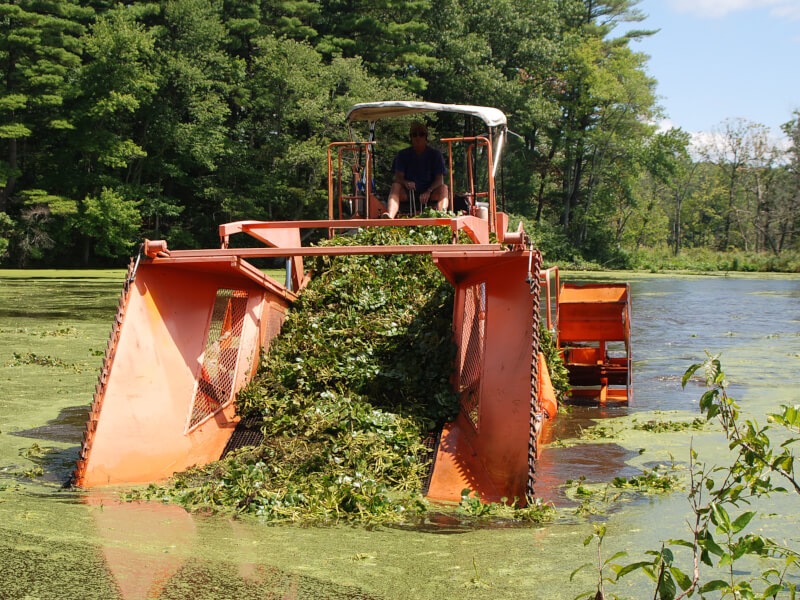
Mechanical Harvesting for Floating Weeds
A floating mechanical harvester can used for lake weed removal in large lakes or ponds. The mechanical harvester contains a cutting mechanism and steel conveyor belt that transports removed growth to an onboard holding area. Then, the organic matter is off-loaded at the shoreline, dewatered, and eventually transported for disposal away from the site. Harvesting once or twice a year can help keep undesirable growth in check on most waterbodies, but herbicides can also be used in conjunction to target stubborn growth. This method is most commonly used for floating weeds that reside on the water’s surface.
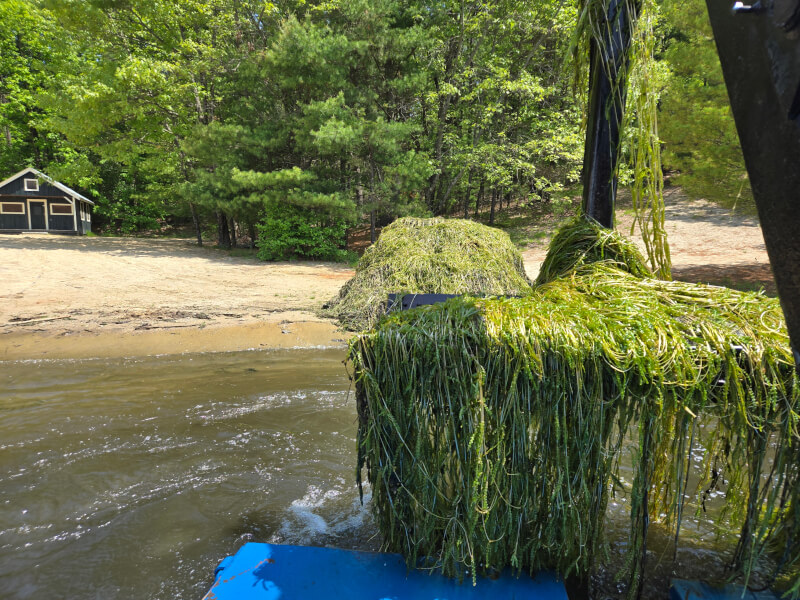
Hydro-Raking for Emergent Plants and Rooted Growth
A hydro-rake is a floating barge equipped with a large rake attachment that can scoop up to 500 pounds of muck and rooted plant matter in each scoop. The hydro-rake can provide up to 3 years or longer of nuisance plant control, making it a popular natural control method. Mechanical hydro-raking is especially effective for emergent plants, easily breaking up complex root systems in wetlands or marshes.
Grass Carp, Hand Removal, and Other Alternatives
For smaller infestations or those looking for hands-offpond weed control, triploid grass carp can be an effective option. Grass carp are voracious eaters that enjoy feeding on many submerged weeds. However, grass carp are not a suitable solution for every waterbody – and in some states, they are not legal – so it’s important to confer with local freshwater management professionals.
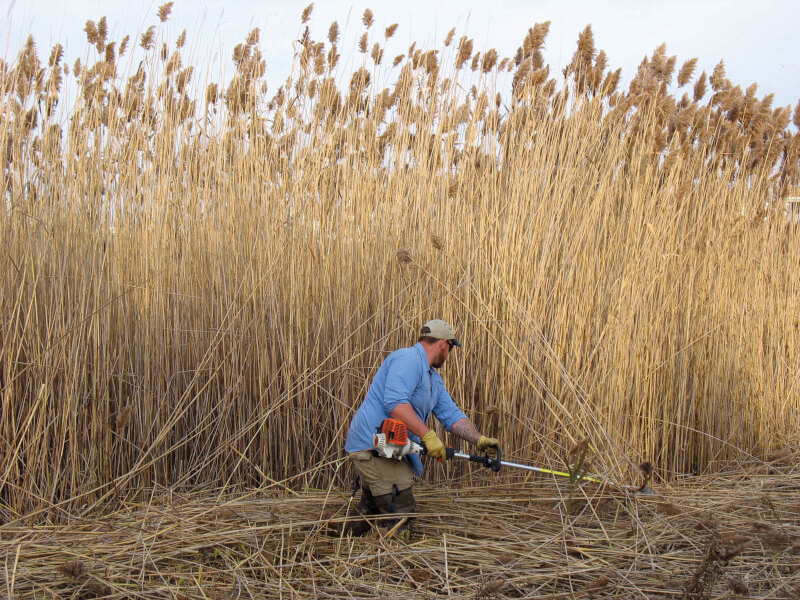
Pond weed removal can also be done by physically removing the plant by hand. While it isn’t a feasible management technique for large infestations, recurring spot treatments can help keep invasive growth at bay. It’s important to note that the physical removal of some plants like hydrilla is not recommended as it can spread through fragmentation.
Cutting and burning may be necessary for some nuisance species found in marsh or wetland areas. Phragmites australis, for example, can take years to eradicate due to their expansive root systems and ability to reproduce through fragmentation, so an aggressive, multi-year management program is key. As with other plant species, pesticides can be used when necessary.
Preventing Aquatic Weeds With Year-Round Management
Pond weed control is possible, but it can be difficult, time-consuming, and expensive. It can also have lasting effects on native plant and animal populations by disturbing the ecological balance of their natural habitats. That’s why the best management approach is year-round preventative monitoring.
The most effective annual programs are built on proactive strategies that help evaluate an aquatic ecosystem from several perspectives. This might include regular surveillance, recurring water quality tests, and swift intervention when a problem is identified. Depending on your aquatic ecosystem, professionals may implement nutrient remediation measures, biological bacteria applications, oxygen saturation, and other sustainable solutions to help maintain balanced water quality that is less hospitable to aquatic weed growth. Lastly, educating stakeholders on how pond weeds can grow and spread can help limit the introduction of unwanted plant species in your lake or pond.
Leave aquatic weed control to the experts at SOLitude. Contact us today.
Aquatic Weed Control FAQs
What are the different types of aquatic weeds?
Aquatic weeds fall into three general groups. Submerged weeds grow from the bottom of the waterbody and sometimes top out at the surface. Floating weeds have vascular root systems that are generally not rooted in sediment, so they spread rapidly and can cover an entire lake or pond surface. Emergent plants stand upright in shallow water near banks or across wetlands, forming complex root systems that dominate shorelines and outcompete native vegetation.
Are aquatic herbicides safe for fish, wildlife, and swimmers?
EPA-registered herbicides are optimized to affect the unique growth mechanisms of the invasive plant without impacting native wildlife or interfering with recreational activities. They are highly regulated by the Environmental Protection Agency and are safe for non-target plants and animals when applied by a licensed applicator in accordance with the product label.
When is mechanical harvesting the right choice?
A floating mechanical harvester is used for lake weed removal in large lakes and ponds, most commonly for floating weeds at the water’s surface. A cutting mechanism and steel conveyor belt move removed growth to an onboard holding area, and the organic matter is then off-loaded at the shoreline, dewatered, and transported off site for disposal. Harvesting once or twice a year keeps undesirable growth in check on most waterbodies, and herbicides can be used alongside it to target stubborn growth.
How long does hydro-raking keep weeds under control?
A hydro-rake can provide up to three years or longer of nuisance plant control. The floating barge uses a large rake attachment that scoops up to 500 pounds of muck and rooted plant matter at a time, making it especially effective on emergent plants with complex root systems in wetlands and marshes.
Can grass carp be used instead of herbicides?
Triploid grass carp can be effective for smaller infestations or for owners looking for a hands-off option, since they feed heavily on many submerged weeds. They are not a suitable solution for every waterbody, and in some states they are not legal, so confer with a local freshwater management professional first.
Can aquatic weeds be pulled by hand?
Hand removal is not a feasible technique for large infestations, but recurring spot treatments can help keep invasive growth at bay. Physical removal is not recommended for some plants, such as hydrilla, because they can spread through fragmentation.
What is the best way to prevent aquatic weeds long term?
Year-round preventative monitoring. The most effective annual programs pair regular surveillance and recurring water quality tests with swift intervention when a problem is identified, and may include nutrient remediation, biological bacteria applications, and oxygen saturation to maintain balanced water quality that is less hospitable to weed growth. Educating stakeholders on how pond weeds grow and spread also limits the introduction of unwanted species.