

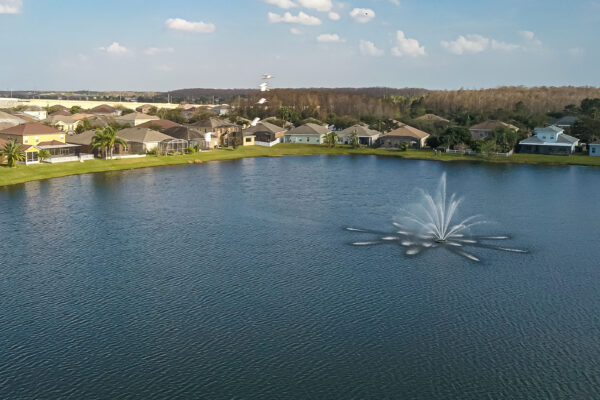

Shoreline erosion will often start quietly. While thinning grass, uneven grooves, or sedimentation along the bank may seem minor at first, these subtle changes are the start of serious deterioration and may signal a need for shoreline erosion control.
The Subtle Signs and Serious Risks of Shoreline Erosion
While many see erosion as a simple cosmetic concern, it can affect much more:
- Decreased value of waterfrontage
- Decreased property values
- Increased risks of flooding and infrastructure damage
- Potential lawsuits resulting from shoreline safety incidents
- Unhealthy water quality conditions
What Causes Shoreline Erosion?
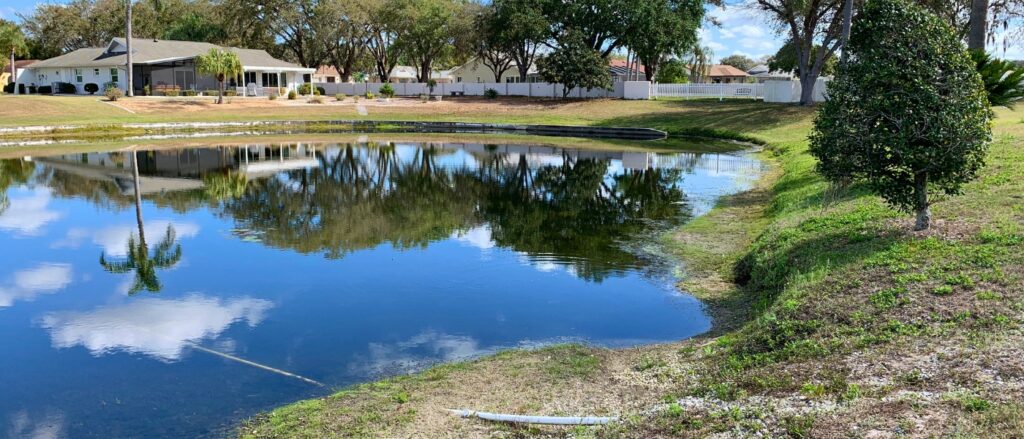
Erosion is naturally caused by wind, rain, temperature fluctuations, and wildlife activity, but it can be greatly accelerated by human influences such as recreation, landscaping, and new construction, often increasing the need for erosion repair.
Urban development reduces natural green spaces that would normally absorb rainwater. Instead, runoff is diverted into nearby waterbodies. As water travels over roads, sidewalks, and other hard surfaces, it accelerates, hitting the shoreline with increased force. This creates a stronger and more persistent wave action. Because of this, additional protections are frequently introduced in areas most vulnerable to water movement.
Traditional Erosion Control Solutions
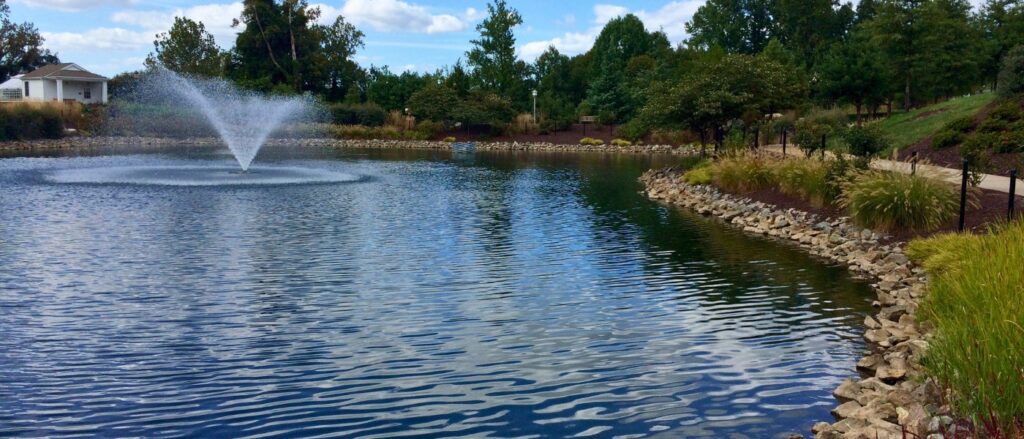
For decades, the standard response was “hardscaping” with concrete seawalls, bulkheads, and rip-rap. However, what appears to be unyielding protection can create new problems. Water doesn’t stop when it hits these barriers; it’s deflected back into the waterbody, often intensifying erosion in adjacent areas. Erosion can also occur behind these structures if they are installed incorrectly.
The Softscaping Solution for Shoreline Erosion Repair
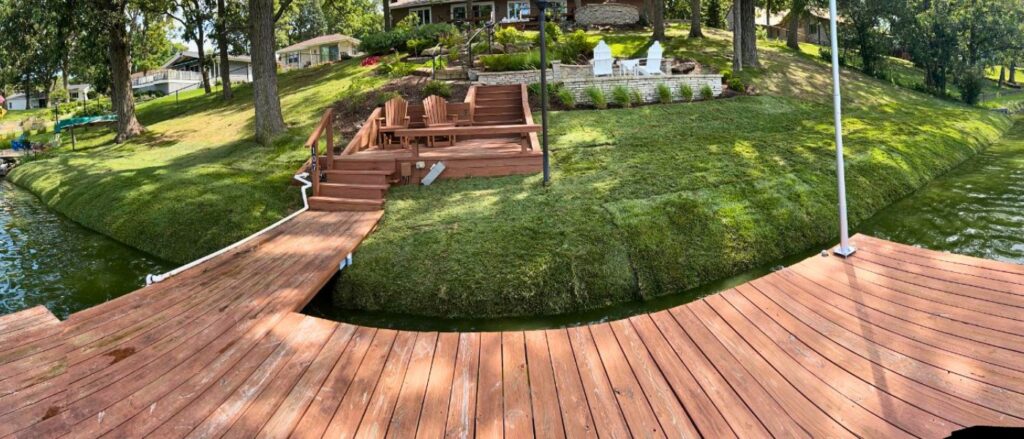
A growing trend in shoreline protection is “softscaping.” Bioengineered living shorelines—which are widely considered the gold standard—work with nature, not against it. They’re designed to absorb wave energy, slow water movement, and blend with the surrounding environment.
Bioengineered shorelines are constructed by filling durable geotextile fabric with organic material and anchoring it to the shoreline. Once secured, sod, seed, or a buffer of deep-rooted, native vegetation can be integrated into the material; their root systems offer additional stability as they develop.
What Are the Benefits of Softscaping?
The benefits of softscaping extend beyond shoreline stability:
Highly customizable – No two waterbodies are the same. Bioengineered shorelines can be tailored to the desired shape and slope to align with the natural aesthetic of the property.
Reclaim lost land – In many cases, several feet of lost land can be restored, potentially elevating property values and community desirability.
Natural filtration – Native vegetation helps slow and filter organic matter that’s picked up by flowing rainwater, such as animal waste, leaves, grass clippings, and fertilizers. Keeping these nutrient sources out of the water can help reduce water quality issues.
Phased approach – Restoration doesn’t have to happen at once. Projects can be completed in sections, prioritizing the most vulnerable areas first and expanding over time. This phased approach makes budgeting and long-term planning easier while steadily improving shoreline health.
Habitat for wildlife – Beautiful vegetative buffers attract native birds and wildlife, including mosquito-eating dragonflies, and support native vegetation.
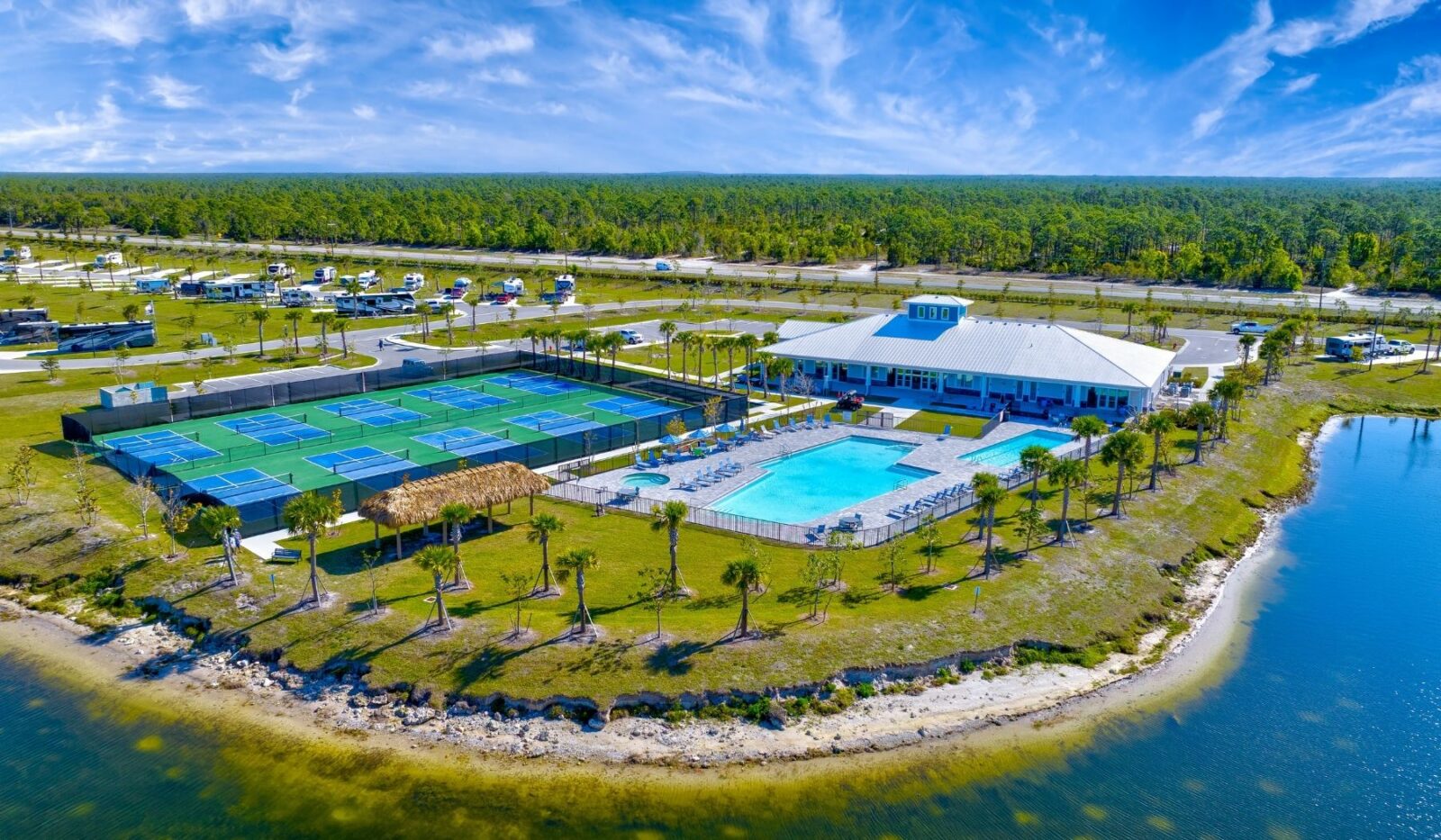
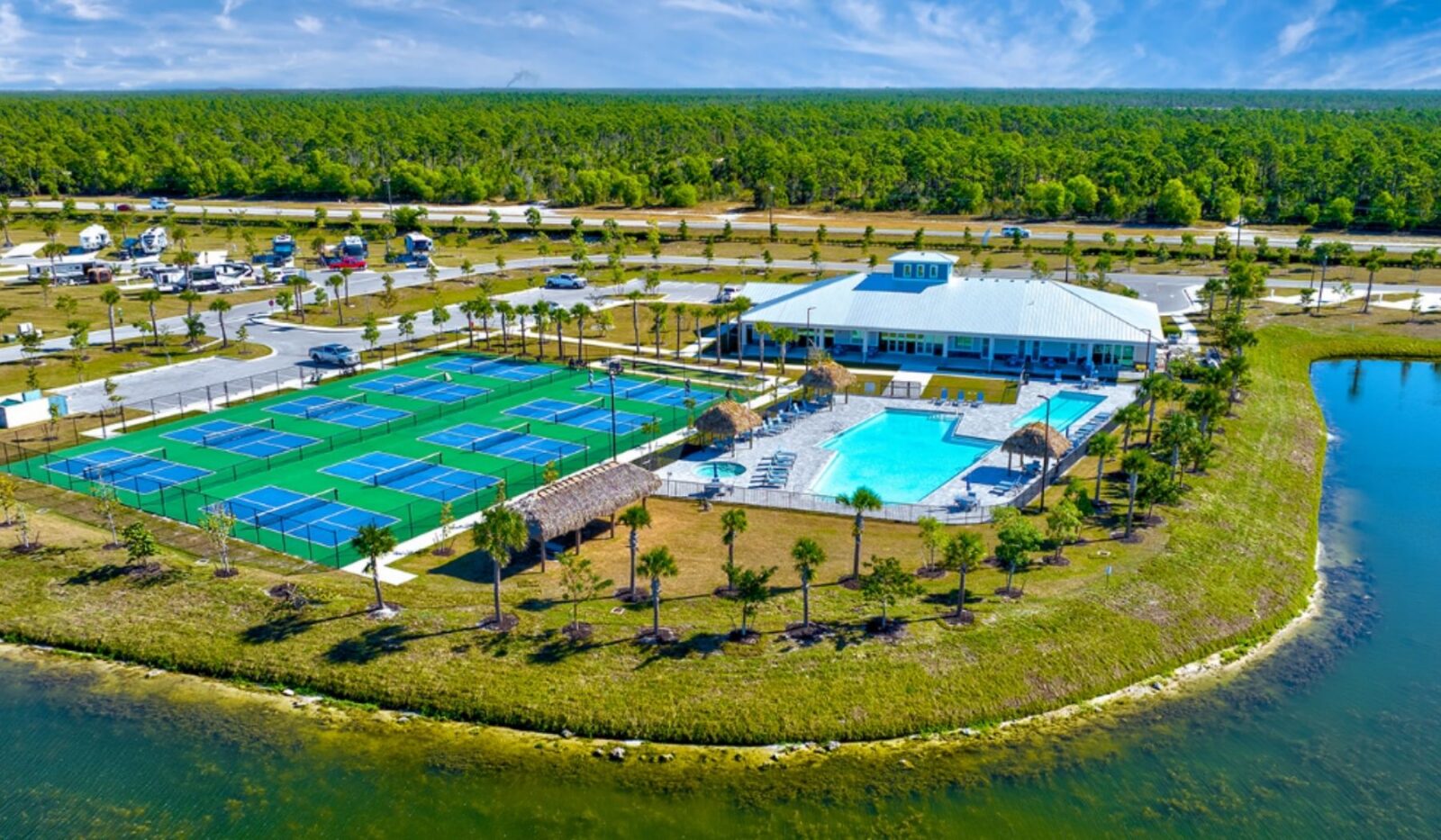
Bioengineered Living Shoreline Transformation
Long-Term Shoreline Health Requires Ongoing Care
Shoreline erosion will always be a challenge as seasons change, rainwater flows, and urban development continue. Ongoing professional assessments are critical for identifying early signs of wear and taking action before the health and beauty of your shoreline is compromised.
Shoreline Erosion: How to Repair AND Prevent It!
SOLitude Lake Management is a nationwide environmental firm committed to providing sustainable solutions that improve water quality, enhance beauty and preserve natural resources.
SOLitude’s team of aquatic scientists specializes in the development and execution of customized lake, stormwater pond, wetland and fisheries management programs. Services include water quality testing and restoration, algae and aquatic weed control, installation and maintenance of fountains and aeration systems, shoreline erosion control, muck and sediment removal and invasive species management. SOLitude partners with homeowners associations, golf courses, private landowners, businesses and municipalities. SOLitude Lake Management is part of Rentokil, a leading business services company, operating across the United States, Canada and Puerto Rico.
For more information, visit SOLitude Lake Management at solitudelakemanagement.com, and connect on Facebook, LinkedIn, and YouTube.