




When Water Quality Declines, Risks Rise
Those responsible for the safety of large lakes and drinking water reservoirs, like Public Works Directors or Water Resource Managers, carry a heavy weight of responsibility on their shoulders, and may feel like they’re constantly under a microscope of the residents, local leaders, or regulatory agencies, as a result. Poorly managed waterbodies can lead to:
- Aquatic weeds
- Nuisance algae
- Cloudiness
- Foul odors
- Accelerated erosion
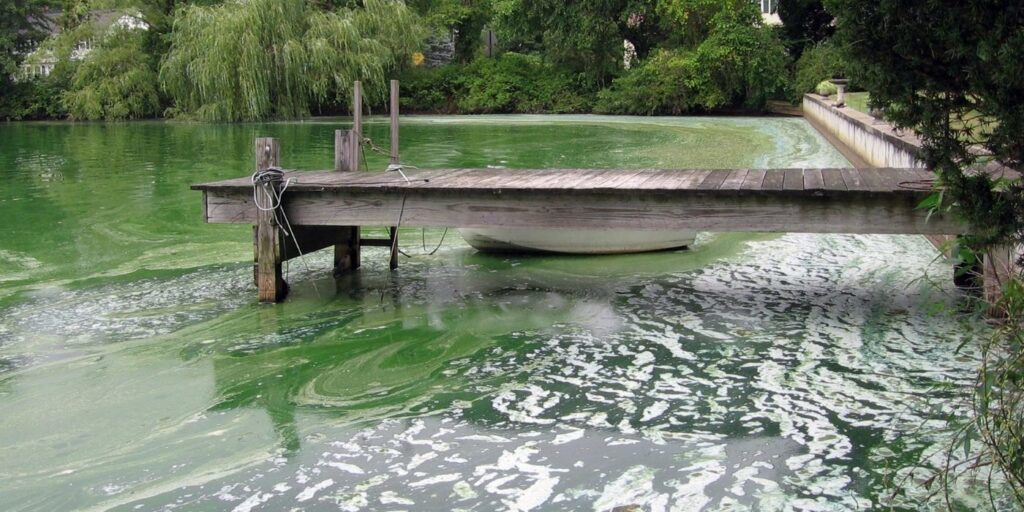
Worse still, poor water quality can lead to dangerous health risks. Cyanobacteria, a type of harmful algal bloom (HAB) capable of producing toxins, are linked to the development of serious health conditions, neurological diseases, and the death of dogs, livestock, and other animals.
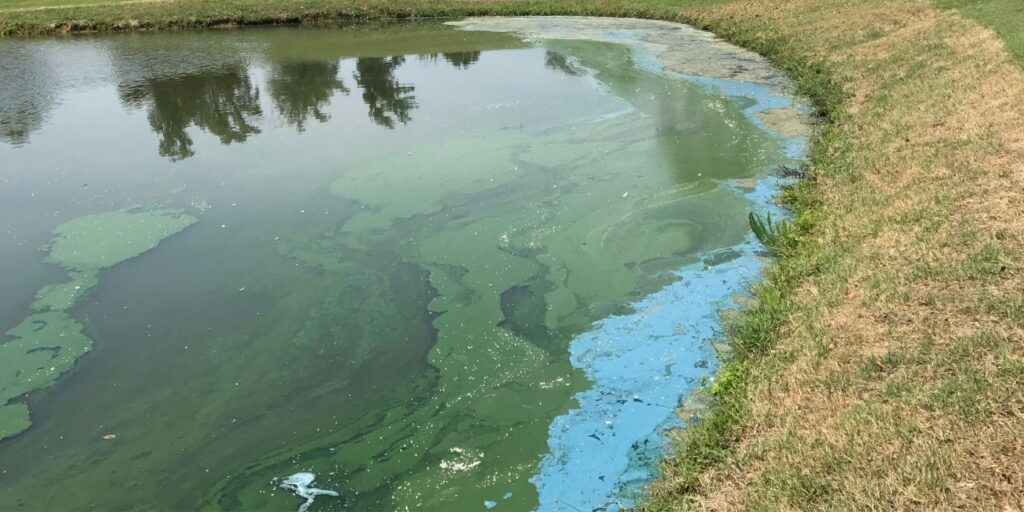
HABs often look like spilled green, blue, or white paint on the surface of the water. Blooms may appear soupy or oily, or develop into streaks or clumped dots.
What Causes Toxic Algal Blooms?
In aquatic ecosystems, nutrients like phosphorus and nitrogen play a crucial role in supporting the food chain, but only in balanced amounts. Excess nutrients are often brought in by stormwater runoff containing pollutants and organic materials such as:
- Fertilizers
- Lawn debris
- Eroded sediment
- Pet and animal waste
- Trash
As these materials decompose, they elevate nutrient levels beyond what a healthy ecosystem can naturally process, leading to increased algal blooms. One of the most effective tools for restoring nutrient balance, particularly phosphorus, is aluminum sulfate (alum).
What is Alum?
Alum has been used in water treatment for more than 60 years and is endorsed by the North American Lake Management Society (NALMS). Alum is one of the most abundant elements in the Earth’s crust and a commonly used food additive.
How Does Alum Restore Balance to Waterbodies?
Alum water treatments help balance water quality conditions by “locking up” excess phosphorus so it can no longer serve as fuel for HABs.
When applied:
- Alum forms a substance called floc.
- The floc binds with free-floating phosphorus in the water column as it sinks to the bottom; water may look cloudy temporarily.
- It settles to the lake bottom where it binds with phosphorus and traps it in the sediment.
- Shortly after, water clarity improves.
- Alum continues binding to phosphorus in the sediment, trapping it for years following application.
Alum Use in Florida
Although alum has been used for decades, it was only recently that the Florida Department of Environmental Protection (FDEP) updated its permitting framework to allow alum applications on public lakes. Most alum projects require permits that define how and when treatments can occur, including product specifications, monitoring, reporting, and operational requirements. Noncompliance can lead to fines and affect future permit eligibility.
Under the revised framework, alum projects can be approved as habitat improvement initiatives and as a proactive strategy to reduce HABs.This regulatory change has opened the door for larger-scale efforts to reduce excess nutrients in lakes across the state.
As a result, SOLitude’s team of scientists, Ph.D.-level experts, and experienced project managers have been involved in supporting complex restoration projects on two lakes that have struggled with ongoing water quality problems for decades.
Lake Yale: Improving Impaired Water Quality
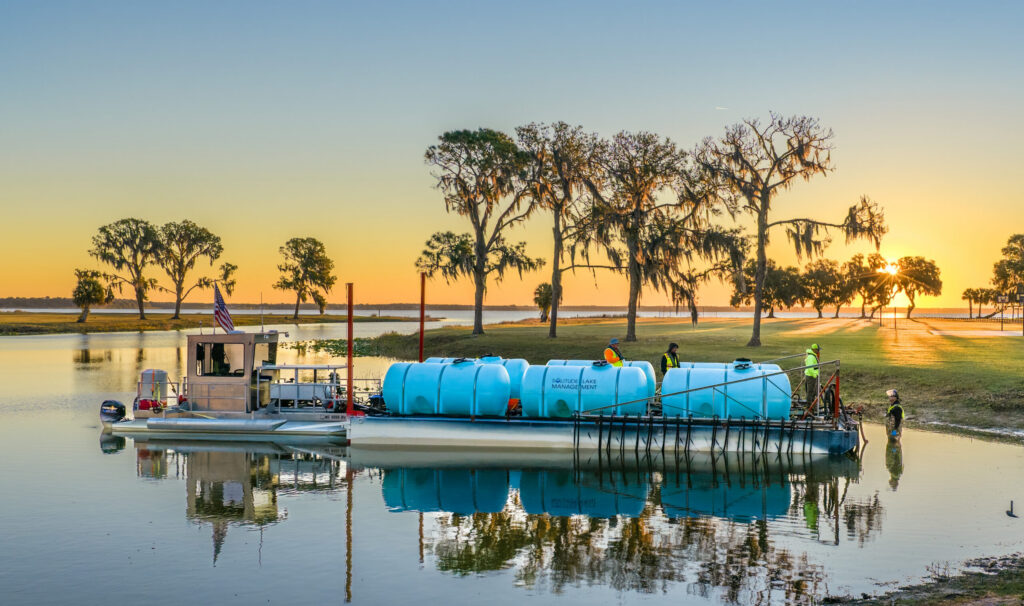
In January 2026, SOLitude began alum applications on Lake Yale as part of a four-year pilot program helmed by the Lake County Water Authority.
Lake Yale is one of the county’s most impaired waterbodies due to heavy nutrient loading, organic muck accumulation, recurring algal blooms, and long-standing hydrilla growth.
The alum treatments are integrated with broader nutrient reduction and vegetation management strategies designed to improve overall ecosystem health. This project is intended to serve as a practical, scalable model for restoring other lakes in the region.
Lake Okeechobee: Water Quality Restoration with Alum
Lake Okeechobee has struggled with toxic algae blooms for years due to elevated nutrient levels. Because water from the lake is periodically released for flood control, these conditions subsequently contribute to water quality issues in connected waterways and have been linked to harmful algae outbreaks (often referred to as red tide) along Florida’s coasts.
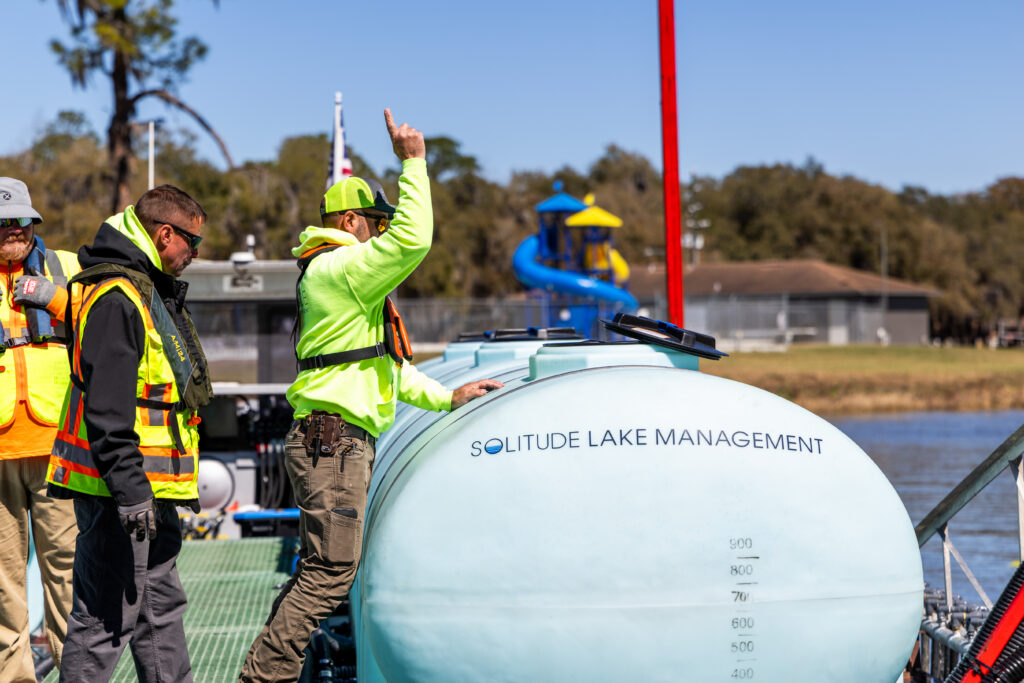
As part of ongoing efforts to address this challenge, SOLitude was selected to implement a buffered alum treatment focused on the western side of Lake Okeechobee in the summer of 2026.
The work is designed to reduce excess phosphorus and nitrogen concentrations in that region of the lake as part of the broader $20 million nutrient reduction initiative led by the Florida Department of Environmental Protection.
In preparation for the applications, our team is developing a thorough remediation plan and sampling protocol to measure how much phosphorus is removed with each treatment, ensuring results can be accurately tracked and verified.
Throughout the project, ongoing monitoring will be conducted to confirm treatment effectiveness and maintain compliance with environmental and permitting requirements.

How Does SOLitude Ensure Applications Are Safe?
Alum is widely studied and well-understood. In fact, recreational use of a lake can usually continue during the application.
To date, SOLitude has successfully completed more than 200 alum applications across over 35,000 acres of recreational lakes and drinking water reservoirs nationwide.
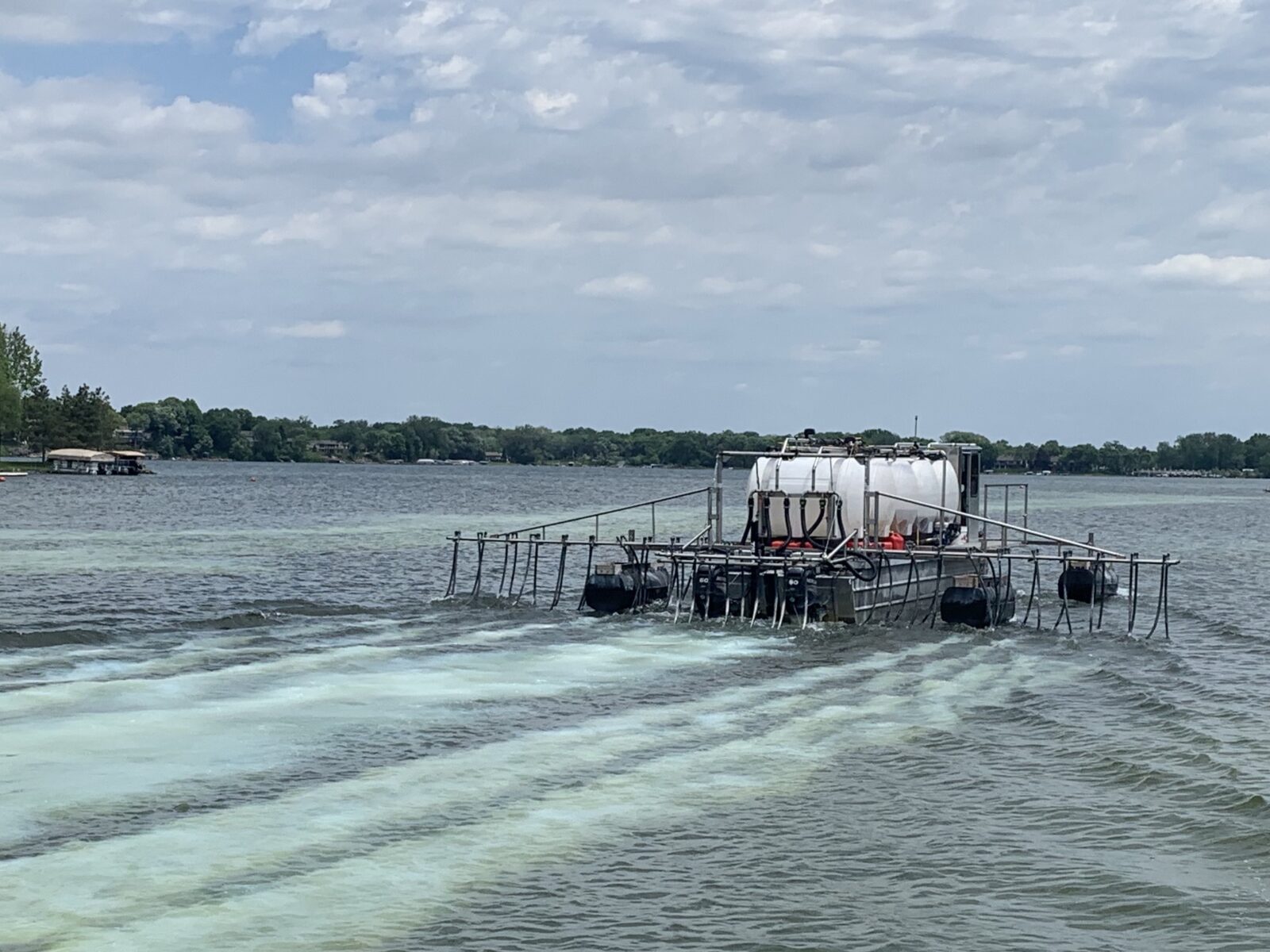
Each project follows strict scientific protocols and is conducted using state-of-the-art equipment:
- Securing proper permits
- Comprehensive pre-treatment water and sediment sampling
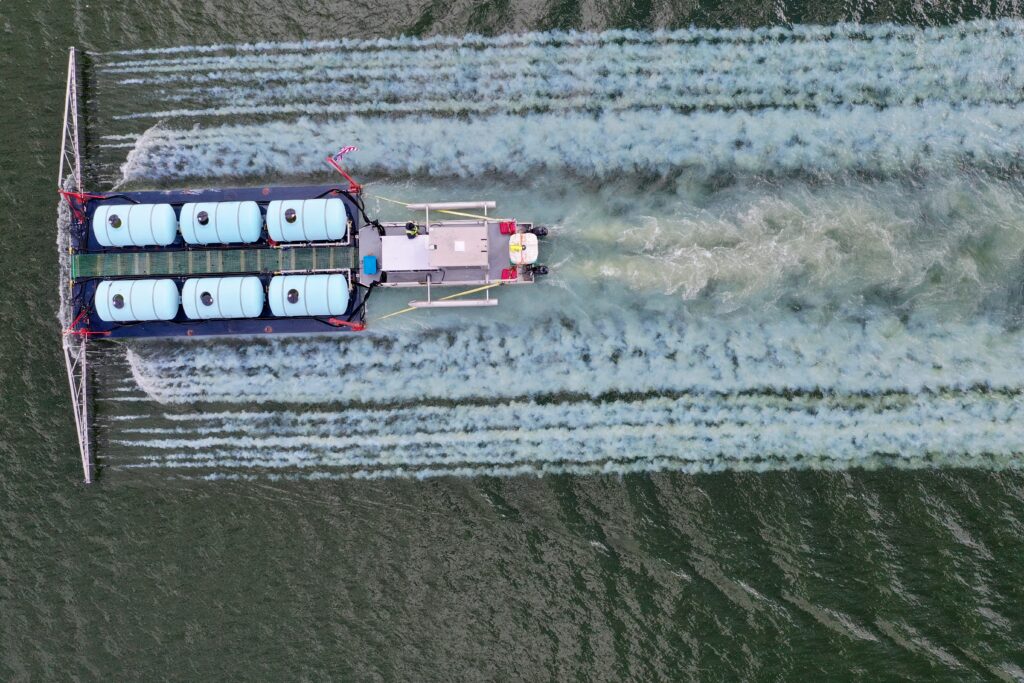
- GPS-guided vessels for even distribution
- Nutrient analysis to determine proper alum dosage
- Buffered formulations to prevent pH shifts
- Application through submerged nozzles to reduce surface disturbance
- Real-time pH monitoring throughout the process
- Ongoing water quality testing to assess treatment effectiveness
Can I Afford an Alum Treatment?
Alum is widely considered a cost-effective, long-term solution for nutrient control in large lakes. By targeting excess nutrients directly, results can last for several decades, reducing the need for temporary solutions like algaecide applications, which can financially add up over time.
Nonetheless, the upfront costs of an alum treatment can be high, but stakeholders can pursue several opportunities to help reduce these expenses:
Grants and Funding Options:
Grant and funding programs vary significantly from state to state. Some offer relatively simple application processes, while others require a detailed, case-by-case review through state agencies. Certain programs fund full restoration projects, whereas others are limited to lake assessments or nutrient studies. In many cases, a lake must be officially designated as “impaired” to qualify for funding. Additionally, some states require documented public access in order to use taxpayer-supported funds.
The range and volume of available resources also differ. For example:
- Wisconsin offers up to $200,000 per alum application.
- Minnesota boasts a yearly environmental fund of over $100 million for various environmental projects.
- Washington State offers up to $50,000 for assessing a lake’s condition.
- Florida operates HAB-specific grant programs.
However, funding often goes untapped due to a lack of awareness or incomplete applications. Most programs are competitive and require:
- Documented environmental need
- Measurable performance outcomes
- Strict permit compliance
- Demonstrated technical expertise
Additionally, the success of grant and funding applications often relies on the provider’s qualifications, including professional experience, past successes, and capacity to integrate the latest industry standards and technologies. SOLitude’s team has experience navigating permitting processes and designing projects that meet both regulatory standards and ecological objectives.
Phased Applications:
Alum treatments do not always need to be completed in a single large project. Phased applications allow communities to:
- Spread costs over multiple budget cycles
- Deactivate phosphorus in the lake gradually
- Achieve cumulative improvements over time
Water clarity often improves relatively quickly after treatment, while long-term nutrient inactivation continues beneath the surface. A phased approach may extend the timeline to full restoration, but it allows communities to move forward without waiting for full project funding up front.
Other Funding Options to Consider:
One of the most common concerns we hear is that stakeholders feel they have exhausted all options. In reality, there are often additional funding pathways and solutions that can still be explored.
For example, some lake associations have:
- Formed legal entities to establish lake improvement districts
- Implemented annual resident assessments dedicated to restoration
- Issued bonds to fund large-scale nutrient reduction projects
Disclaimer: This information is not intended as tax advice. Please consult a qualified tax professional regarding your specific situation.
What Needs to be Done Post-Treatment?
Alum addresses internal phosphorus loading, but long-term lake health requires ongoing management.
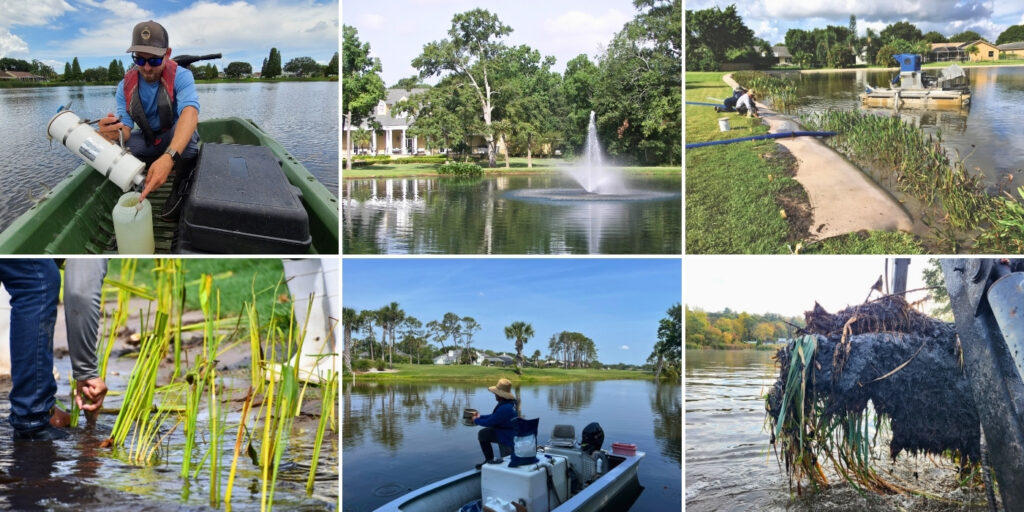
Post-treatment strategies often include:
- Ongoing water quality monitoring
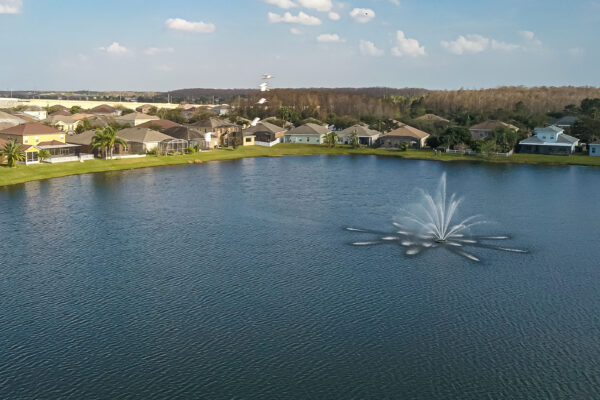
- Fountains and aeration
- Shoreline restoration
- Buffer management
- Biological bacteria applications
- Sediment removal
A comprehensive approach helps preserve the investment made in alum treatment and can reduce future intervention costs.
Restoration Is Possible—With the Right Approach
Lake restoration is not an overnight fix, but it is achievable. By combining nutrient remediation with long-term proactive management approaches, communities can help transform imbalanced lakes into healthy community assets once again.
Improve Water Quality with Alum Applications
SOLitude Lake Management is a nationwide environmental firm committed to providing sustainable solutions that improve water quality, enhance beauty and preserve natural resources.
SOLitude’s team of aquatic scientists specializes in the development and execution of customized lake, stormwater pond, wetland and fisheries management programs. Services include water quality testing and restoration, algae and aquatic weed control, installation and maintenance of fountains and aeration systems, shoreline erosion control, muck and sediment removal and invasive species management. SOLitude partners with homeowners associations, golf courses, private landowners, businesses and municipalities. SOLitude Lake Management is part of Rentokil, a leading business services company, operating across the United States, Canada and Puerto Rico.
For more information, visit SOLitude Lake Management at solitudelakemanagement.com, and connect on Facebook and LinkedIn.