




A healthy shoreline should enhance your property, not hide it. If you spend time around the water, you’ve likely seen Phragmites. At first glance, they may seem like a natural and even attractive part of the landscape, but Phragmites are highly invasive weeds that create dense walls that block scenic water views, impede stormwater equipment, and threaten the native ecosystem.
Once established, they can be one of the most difficult weeds to eliminate, often requiring years of costly management using aquatic herbicides and specialized equipment. Early intervention and strategic management are critical to protecting the balance and beauty of your waterbody.
What Are Phragmites
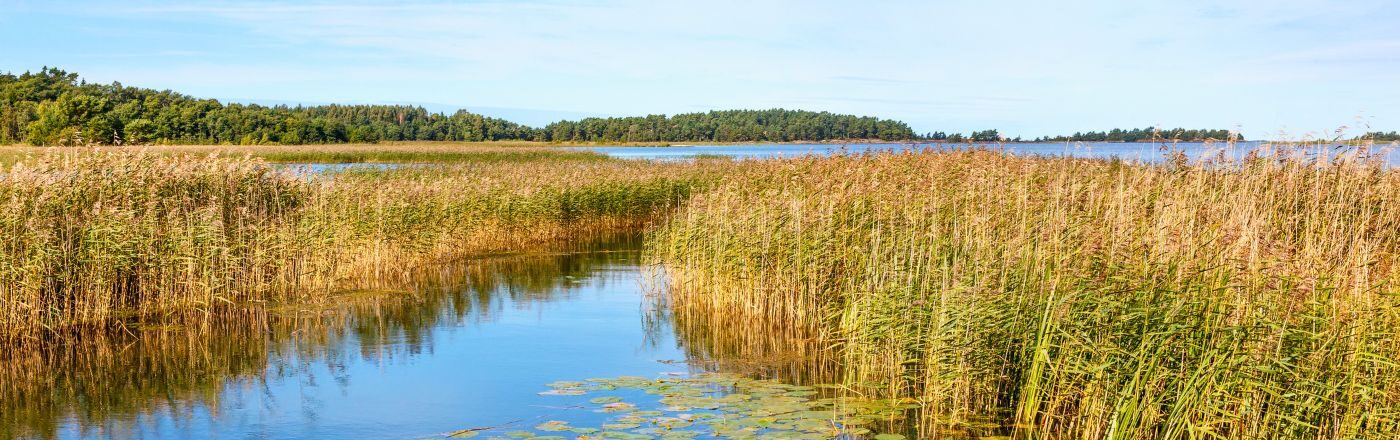
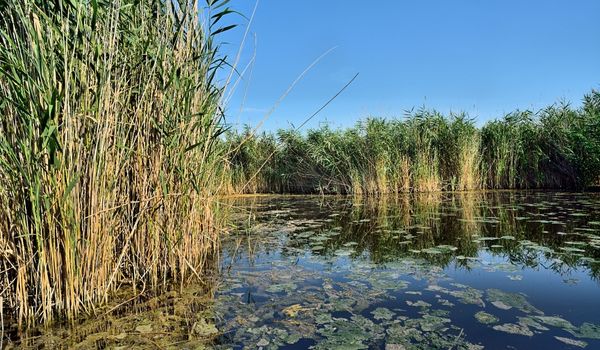 Phragmites (Phragmites australis), or common reed, is a perennial grass that can aggressively dominate pond shorelines, wetlands, and coastal waterways. While North America has its own Phragmites strains, European species have invaded nearly every state in the U.S.
Phragmites are identified by their:
- Stiff, hollow stems
- Long, strap-like leaves
- Feathered plumes
- 6-15+ foot height
Why Are Phragmites Bad for Aquatic Ecosystems?
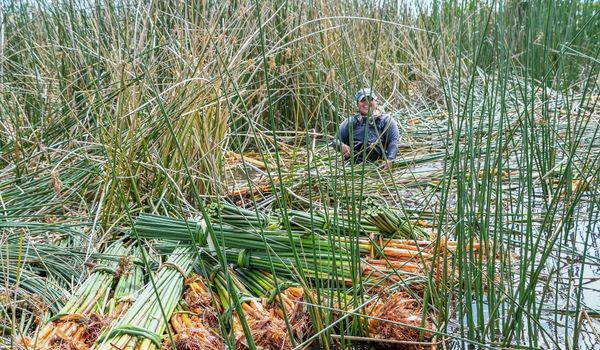 Invasive Phragmites can:
- Form dense monocultures that reduce native plants
- Displace wildlife habitat and biodiversity
- Deteriorate shorelines, increasing accident risks
- Absorb water, reducing waterbody depth and volume
- Leave behind large amounts of dead plant matter that contribute to muck development and water quality imbalances
- Negatively impact property appearance and value
- Obstruct waterbody views
- Limit recreational access and water use
Left unmanaged, Phragmites infestations could also cause property owners to fall out of compliance with local municipal stormwater regulations, resulting in heavy fines.
How Do Invasive Phragmites Spread?
Phragmites aggressively reproduce and colonize new areas in several ways:
- Wind-Dispersed Seeds: Millions of tiny seeds are carried by wind, water currents, waterfowl, and human activities like boating and water sports.
- Underground Rhizomes: Thick networks of horizontal roots spread rapidly beneath the soil, launching new shoots every few feet.
- Above-Ground Stolons: Running horizontal stems creep across the surface to expand the colony’s footprint.
Understanding how Phragmites spreads is essential for effectively managing infestations.
Do Phragmites Die Off in the Winter?

Although Phragmites appear to die back each winter, they return during the next growing season. After producing and dispersing seeds in the late summer and fall seasons, the weeds redirect energy into their underground rhizomes. These root-like structures store nutrients throughout the winter and generate new shoots in spring, which allows invasive colonies to persist and expand year after year.
Professional Phragmites Control Methods
Eliminating an established infestation requires ongoing funds, specialized equipment, and professional expertise. Because even a tiny, broken fragment of a root or stem can establish a brand-new colony, improper removal attempts can accidentally spread the infestation.
The most effective Phragmites control programs utilize a structured, multi-phase approach, properly timed to the weed’s growth cycle, which can vary by region.
 Professional Site Assessment of Phragmites
 Professional Site Assessment of Phragmites
Aquatic professionals start by evaluating the specific ecosystem. This includes mapping the infestation density, identifying impacted native species, and analyzing the condition of the waterbody and shoreline. This information is used to develop a tailored management plan. These activities typically take place in midsummer.
Targeted Herbicide Treatment for Phragmites Control
 Targeted Herbicide Treatment for Phragmites Control
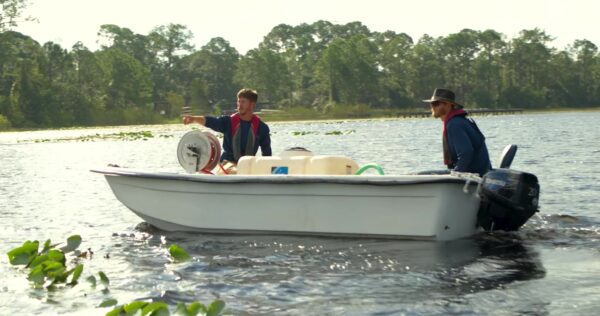
Because mechanical cutting alone triggers rapid regrowth, herbicide applications are vital for successfully controlling the invasive weed. SOLitude’s aquatic experts use EPA-registered aquatic herbicides designed to control Phragmites with minimal impact on native species. Commercial applicator licenses and appropriate personal protective gear are required to conduct these treatments, which take place from late summer to early fall.
Phragmites Removal and Continuous Monitoring
 Phragmites Removal and Continuous Monitoring
Following a successful herbicide application, the dead, dry Phragmites stalks are cut and mulched. Because of the resilience of underground rhizomes, ongoing monitoring and spot treatments over a three-to-five-year period may be necessary to limit regrowth.
How Professionals Control Phragmites in Different Environments
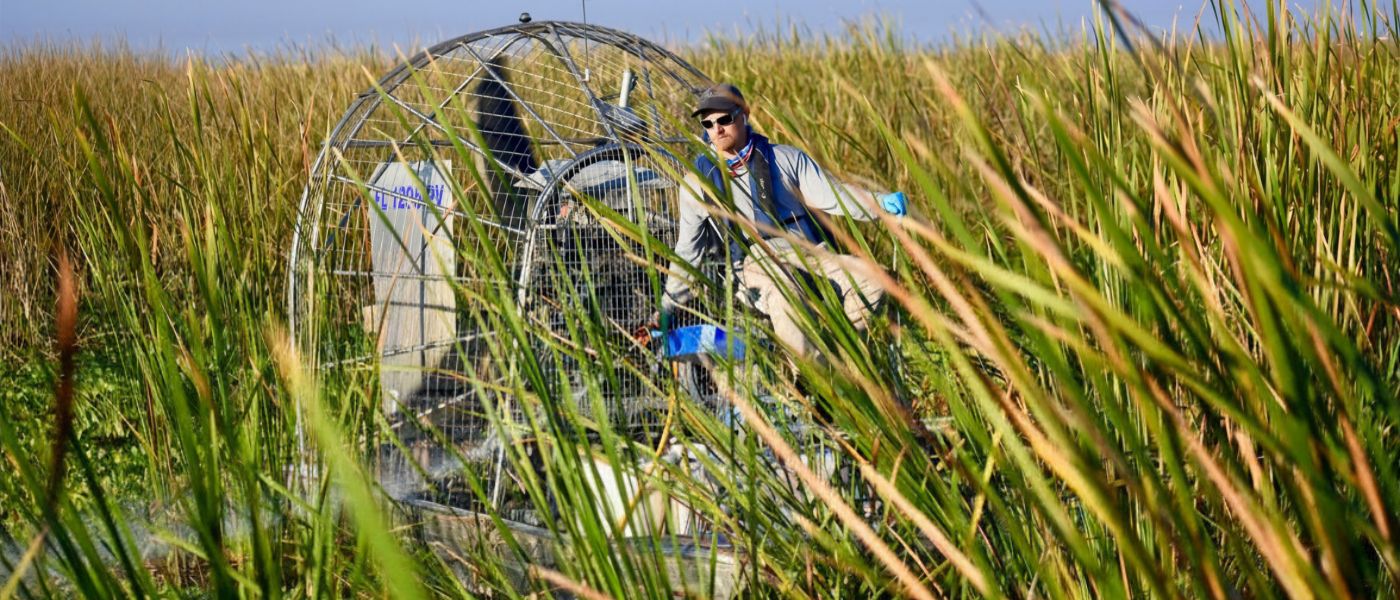
The best approach for Phragmites control depends largely on where the infestation is growing.
- Small, scattered infestations – Frequently managed with handheld equipment or backpack sprayers that allow for highly targeted spraying.
- Large shoreline infestations – May require utility vehicles equipped with specialized spray systems to improve treatment efficiency and coverage.
- Pond edges, marshes, and wetlands – Often require draft boats, airboats, or amphibious equipment capable of traveling over wet soil and shallow water.
- Remote or hazardous areas – Can be surveyed and treated using GPS-guided drone technology that allows professionals to safely reach locations that would otherwise be difficult to access.
By selecting the appropriate equipment for each environment, aquatic management professionals can maximize the effectiveness of control efforts while minimizing impacts to surrounding habitats and native species.
Can Phragmites Be Prevented?
Yes, regular property inspections help experts intervene before an emerging infestation evolves into a multi-year, budget-draining headache.
Ongoing monitoring goes hand-in-hand with proactive management. An integrated management approach incorporates a wide range of tools and solutions to promote a more balanced, resilient environment.
Proactive management solutions include:
Reclaim Your Waterfront: Request a Professional Consultation

You deserve a waterbody that’s beautiful, functional, and healthy. While Phragmites can be one of the most challenging invasive weeds to control, a strategic, professional management program can help restore balance and protect the long-term health of your ecosystem.
SOLitude’s aquatic experts are licensed, trained, and equipped to manage Phragmites infestations of all sizes. Whether you’re dealing with a small emerging patch or a well-established infestation, our team can create a plan designed for long-term success.
Ready to take control of invasive Phragmites? Contact SOLitude to develop a tailored management program.
Frequently Asked Questions About Phragmites
How long does it take to eliminate Phragmites?
Most established infestations require multiple years of monitoring and follow-up treatment. Many management programs continue for three to five years to address regrowth from underground rhizomes.
Can I remove Phragmites myself?
Improper cutting or removal can spread fragments and create new colonies. Professional management is typically the most effective option for established infestations.
What is the best treatment for Phragmites?
The most successful programs combine site assessment, aquatic herbicide treatment, removal of dead vegetation, and long-term monitoring.
Can Phragmites affect stormwater ponds?
Yes. Dense infestations can interfere with stormwater infrastructure, reduce access, and impact the performance of retention ponds and other managed waterbodies.
Explore Lake Weed Control Solutions
SOLitude Lake Management is a nationwide environmental firm committed to providing sustainable solutions that improve water quality, enhance beauty and preserve natural resources.
SOLitude’s team of aquatic scientists specializes in the development and execution of customized lake, stormwater pond, wetland and fisheries management programs. Services include water quality testing and restoration, algae and aquatic weed control, installation and maintenance of fountains and aeration systems, shoreline erosion control, muck and sediment removal and invasive species management. SOLitude partners with homeowners associations, golf courses, private landowners, businesses and municipalities. SOLitude Lake Management is part of Rentokil Terminix, a leading business services company, operating across the United States, Canada and Puerto Rico.
For more information, visit SOLitude Lake Management at solitudelakemanagement.com, and connect on Facebook, LinkedIn, and YouTube.