




Whether your waterbody is a stormwater management facility constructed for nutrient removal and flood mitigation, a golf course pond used for irrigation, or an amenity feature created for recreation, many ecological problems can affect the health and appearance of the pond and its suitability for the intended water use.
Below are answers to some commonly asked questions about pond and lake management.
Why Is My Pond Green?
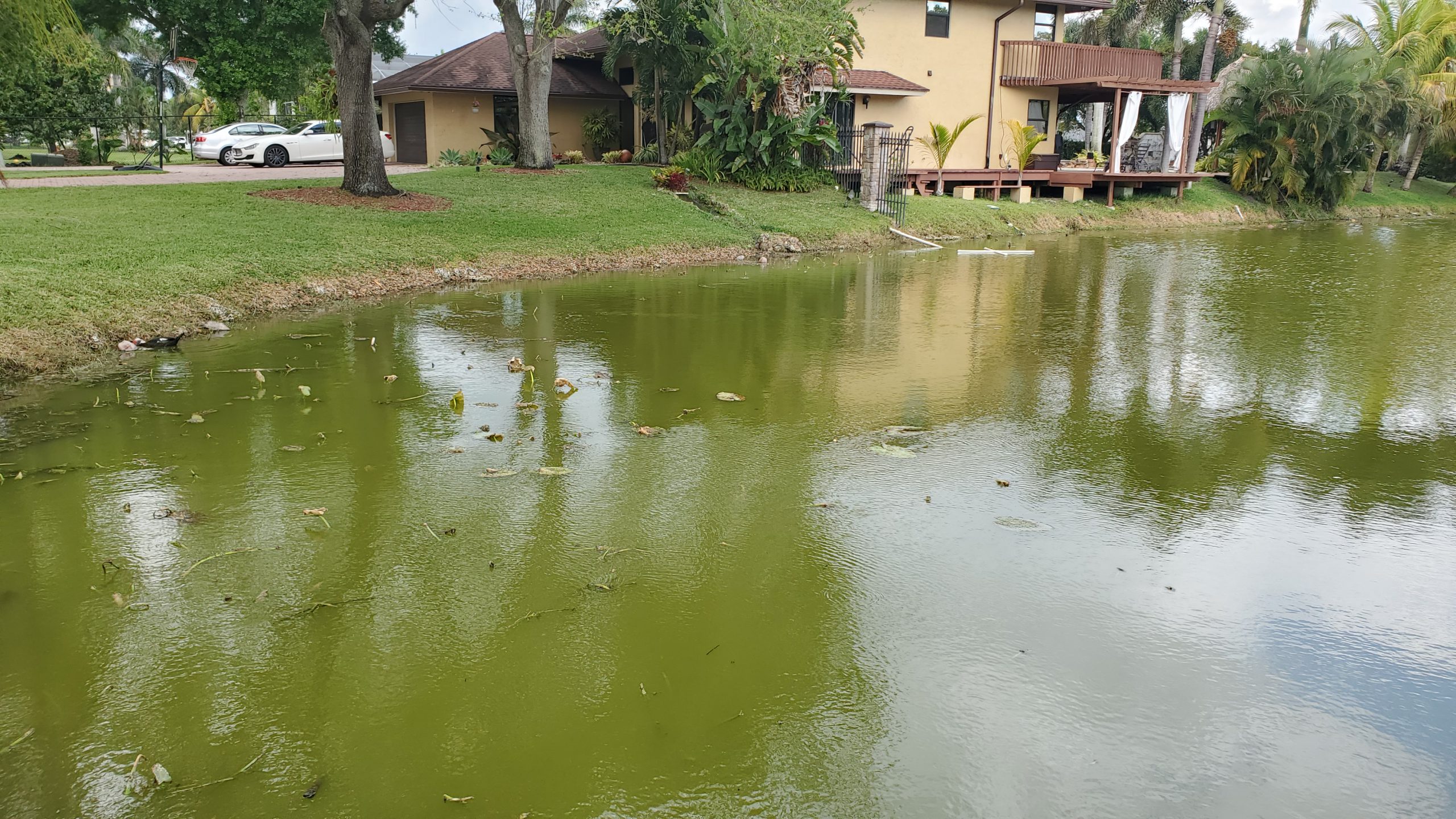
The most common cause of green water in a pond is an algal bloom, which can cause a pond to look like “pea soup,” or can appear as a “green slime” on the surface or bottom of the pond.
Algae are similar to plants because they generate their own food by photosynthesis, but are different from plants in that they do not have true roots, stems or leaves.
The two most common types of algae include:
- Planktonic algae: Individual cells floating in the water.
- Filamentous algae: Thread-like aggregates that appear as mats on the surface or bottom of the waterbody.
What Is Cyanobacteria (Blue-Green Algae)?
Another group of photosynthetic aquatic organisms that can cause green water is cyanobacteria. Although cyanobacteria are often called “blue-green algae,” they are actually classified as bacteria and are not closely related to algae other than the fact that they photosynthesize.
Cyanobacteria are unique in the fact that they can produce toxins under certain conditions, which can be hazardous to humans, pets, and wildlife.
If you notice green water or mats of algae in your pond, we recommend that you contact an aquatic professional to identify the organisms causing the bloom and conduct water quality testing to evaluate the potential causes.
Why Do Pond Algal Blooms Return?
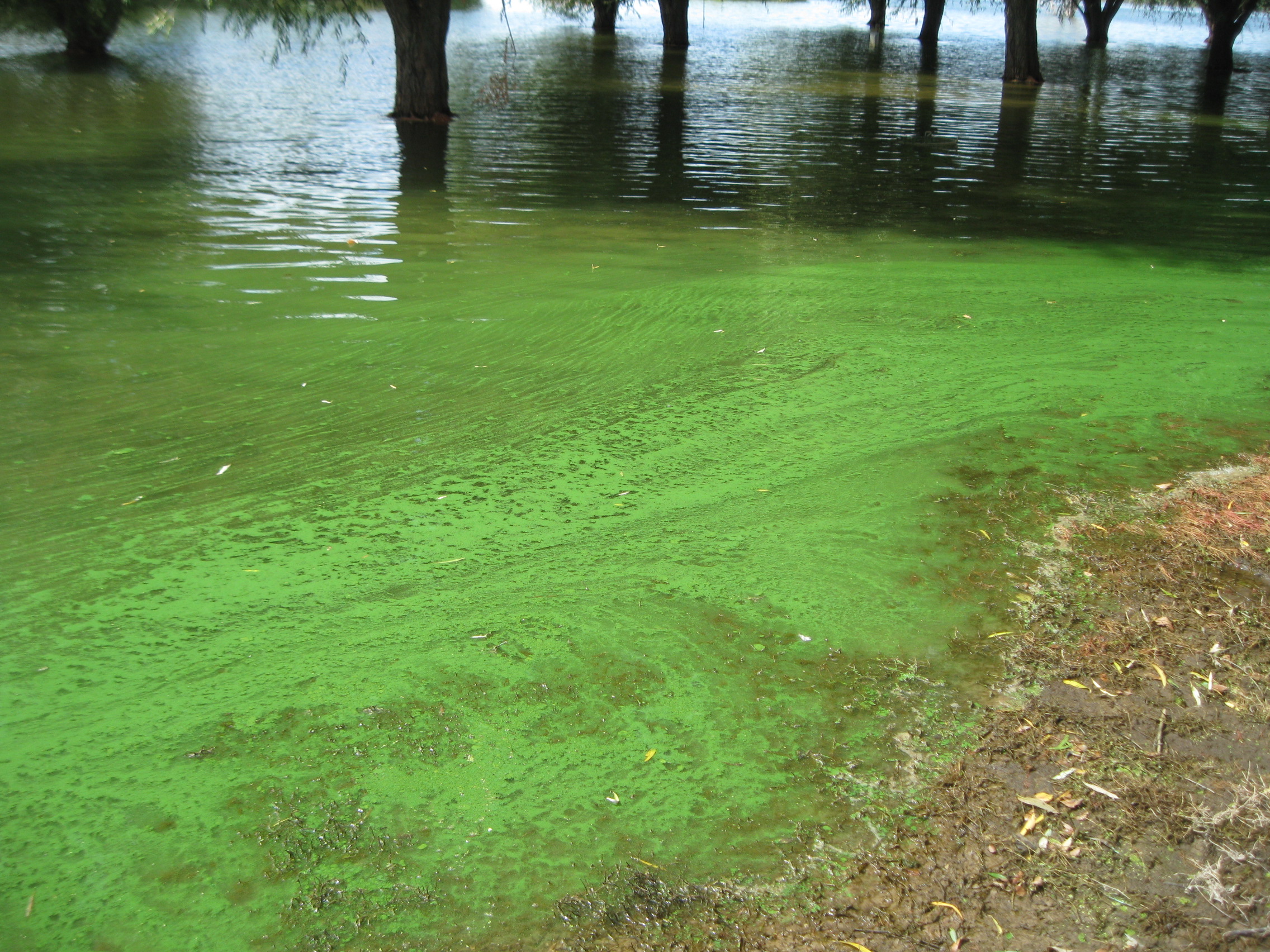
Unlike perennial and annual weeds, algae and cyanobacteria do not have distinct seasonal reproductive cycles.
Blooms can be temporarily managed with algaecides, but if the water quality conditions are right (or WRONG, in this case), the blooms will likely recur within a short time, often a couple of weeks or even just a few days.
When managing persistent algae issues, it is more effective to address the conditions causing the blooms rather than just kill the algal cells.
The primary causative factor for algae and cyanobacteria blooms is excess nutrients from:
- Fertilizers
- Sewage
- Animal waste
- Other organic matter
Reducing nutrient inputs to the waterbody and directly mitigating the nutrients already in the pond are the most effective strategies for long-term management.
However, because it can be impossible to control nutrient inputs from the watershed outside of the pond owners’ property, we often rely on management techniques that can be implemented within the waterbody.
How Do I Get Rid of Pond Algae?
To reduce algal blooms, it is essential to maintain balanced water quality. When nutrient levels and dissolved oxygen levels are properly balanced, algae are less likely to thrive.
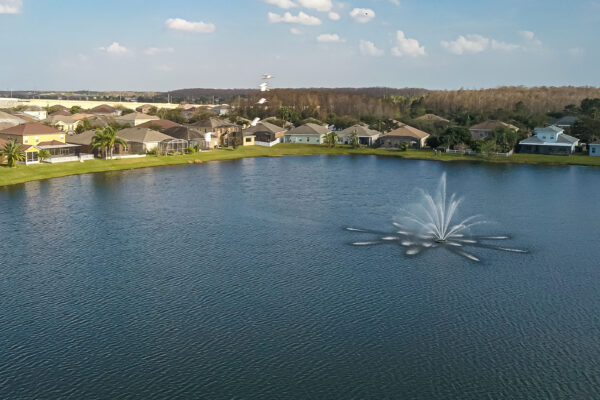
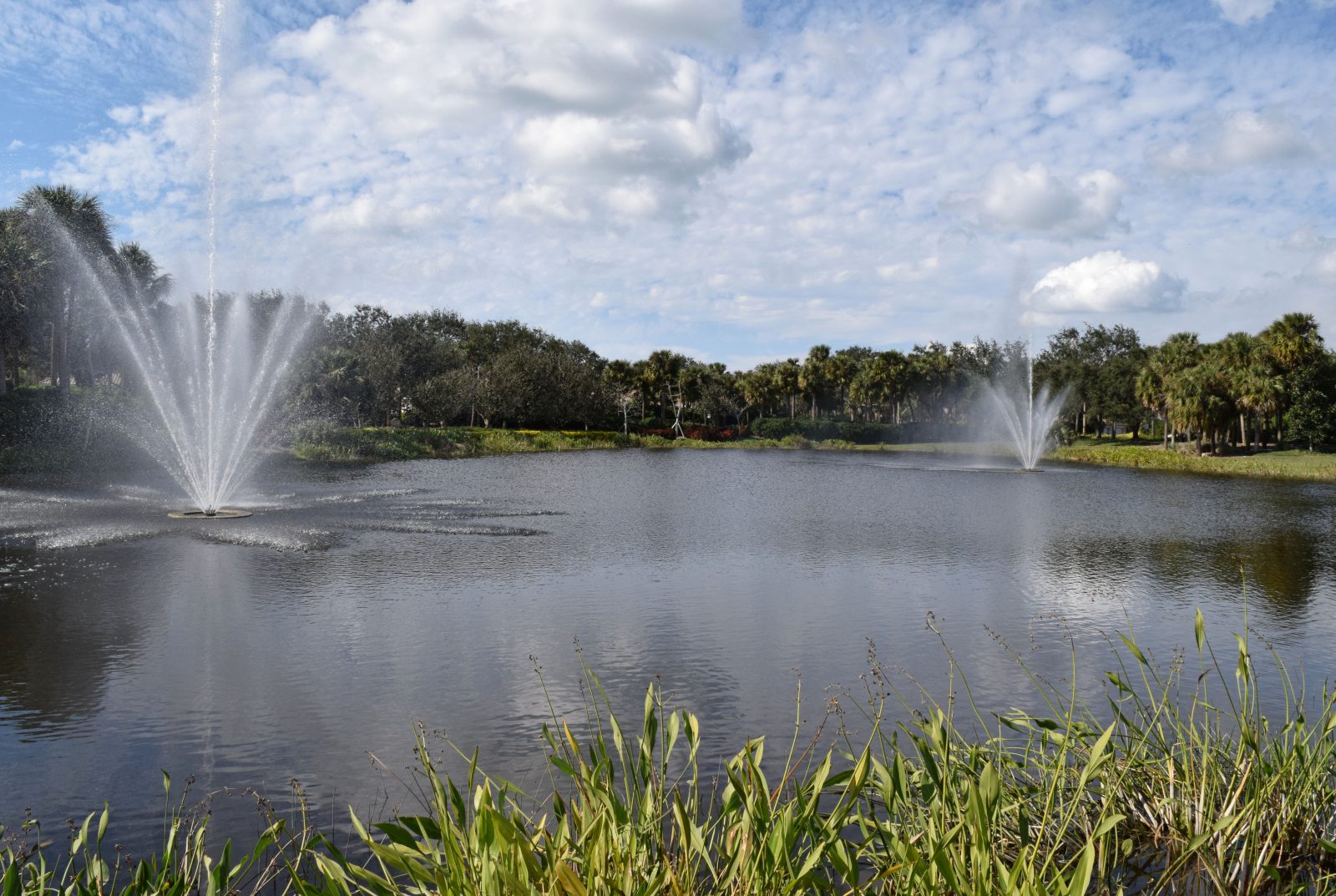
One of the best practices for improving water quality is installing aeration equipment to circulate water and increase dissolved oxygen levels throughout the water column.
To maintain balanced water quality that is less hospitable to algae, we also recommend:
- Nutrient mitigation
- Biological water quality enhancement with beneficial bacteria
While none of these strategies actually kill the algal cells, minimizing the causative factors can have a dramatic effect on the frequency and severity of blooms.
Why Are You Killing the Plants In the Pond? Aren’t Aquatic Plants Good?
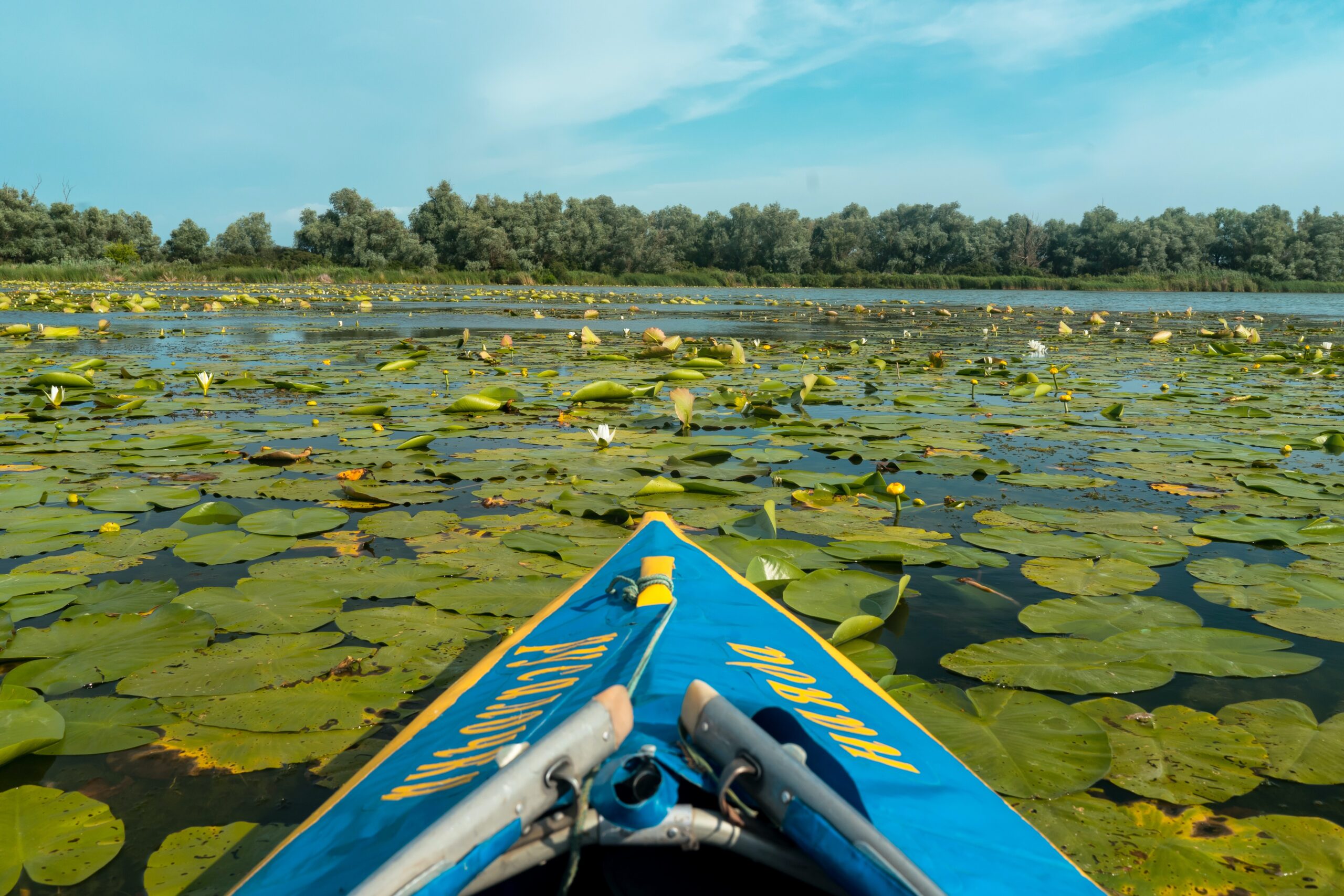
Native aquatic plants can provide many benefits for a pond or lake, including:
- Adding oxygen to the water column
- Providing habitat for wildlife
- Improving water clarity
- Stabilizing the shoreline to prevent erosion
However, there are many situations where the plants could be causing more harm than good.
Why Aquatic Plants Can Become a Problem
In large lakes, the submersed and emergent plant communities are limited to the area known as the littoral zone around the perimeter of the lake, where there is adequate sunlight in the water column to allow photosynthesis.
Plants can’t grow in the deepest areas of the lake, which prevents them from taking over the entire waterbody.
In shallower ponds and lakes, however, there is no limit on the growth of the plants, and often the entire water column can become infested with nuisance plant growth.
Why Invasive Pond Plants Require Management
Dense stands of invasive vegetation cause oxygen in the water to deplete and prevent wildlife from utilizing the aquatic resources.
Many of the plants that take over in this manner are non-native species, which not only tend to have more aggressive reproductive strategies but also have reduced habitat value for native wildlife.
Excessive plant growth can be even more problematic in ponds designed for stormwater management since the plants can obstruct the inlets and impede flow through the facilities.
What Are the Most Common Aquatic Weeds Found In Ponds?
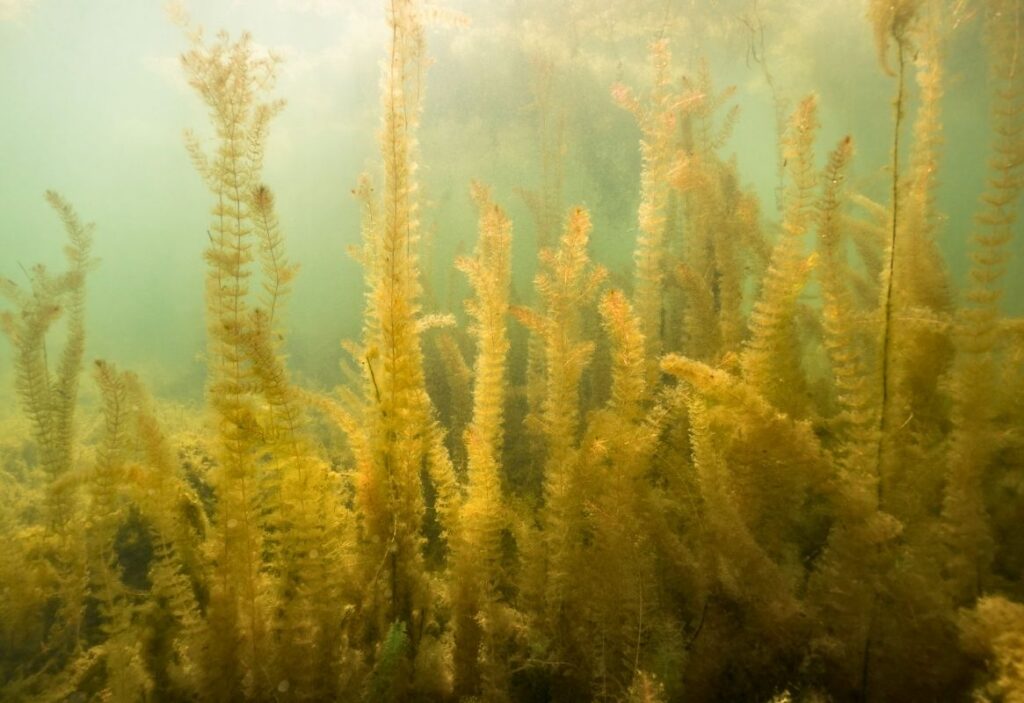
Many species of invasive non-native weeds have been introduced into ponds and lakes in our region.
Some of the most common and problematic aquatic weed species include:
- Hydrilla (Hydrilla verticillata)
- Curly-leaf pondweed (Potamogeton crispus)
- Eurasian watermilfoil (Myriophyllum spicatum)
- Brittle naiad (Najas minor)
- Watershield (Brasenia schreberi)
- Water chestnut (Trapa natans)
What Is the Best Way to Manage Invasive Weeds?
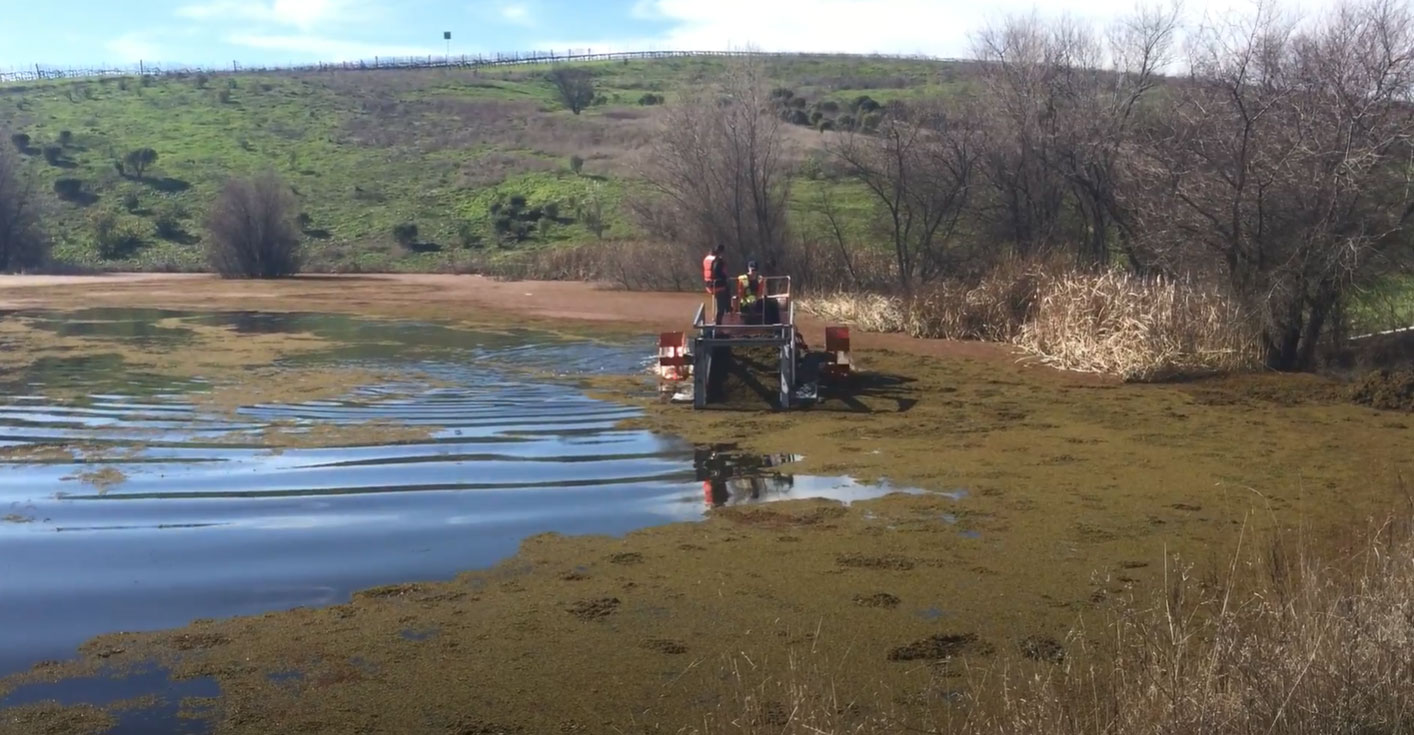
While there are many options available for controlling invasive plants, treatment with aquatic herbicides is generally the most commonly used and cost-effective strategy.
Other management options include:
- Mechanical harvesting or hydro-raking: Mechanical removal is another option, although it tends to be much more expensive than chemical control. This strategy can potentially worsen infestations of many submersed weeds because the plants reproduce by fragmentation.
- Triploid grass carp: Where it is legal to stock them, triploid grass carp eat certain species of aquatic plants but may be counter-indicated in waterbodies that are managed for recreational fishing.
- Bottom barriers and manual removal: These methods can also be effective for some species but are generally limited to use in smaller impoundments.
Should We Stock Fish In Our Pond?
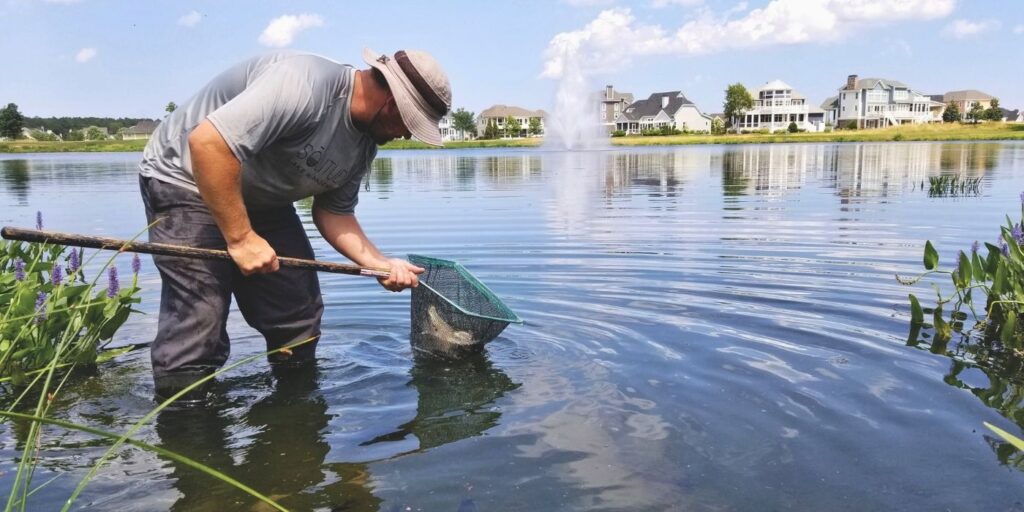
Fish are an important component of the aquatic ecosystem, and we encourage most pond owners to create a naturalized community whenever possible.
For most ponds in our region, the typical native fish community includes:
- Largemouth bass
- Bluegill
- Redear sunfish
- Minnows
- Channel catfish
Other species may also be present in larger waterbodies.
Largemouth bass are the top predators, and their growth rate and health are dependent on an adequate forage base of smaller fish and the water quality conditions in the pond.
Prior to stocking fish in a waterbody, we would ask for information on:
- Pond size and depth
- Stocking history
- Fish species already present
- Baseline physical and chemical water quality
Building a Pond Maintenance Program
All that is generally required to get started in dealing with the most common issues that plague our waterbodies is a preliminary site visit with a lake and pond maintenance specialist and baseline water quality testing.
The recommended management strategies would be based on the site-specific conditions and take into consideration the goals and budget of the pond owners.
Asking questions and seeking help from a professional is the first step in developing a proactive, long-term management program.
How to Maintain Balanced Pond Water Quality
SOLitude Lake Management is a nationwide environmental firm committed to providing sustainable solutions that improve water quality, enhance beauty, preserve natural resources and reduce our environmental footprint. SOLitude’s team of aquatic resource management professionals specializes in the development and execution of customized lake, pond, wetland and fisheries management programs that include water quality testing and restoration, nutrient remediation, algae and aquatic weed control, installation and maintenance of fountains and aeration systems, bathymetry, mechanical harvesting and hydro-raking, lake vegetation studies, biological assessments, habitat evaluations, and invasive species management. Services and educational resources are available to clients nationwide, including homeowners associations, multi-family and apartment communities, golf courses, commercial developments, ranches, private landowners, reservoirs, recreational and public lakes, municipalities, drinking water authorities, parks, and state and federal agencies. SOLitude Lake Management is a proud member of the Rentokil family of companies in North America.