





Pick Up Your Pet’s Waste! It’s Polluting our Lakes & Ponds
December 6th, 2016
By Industry Expert, Derek Johnson, Certified Lake Manager and Fisheries & Wildlife Scientist Who doesn’t love a walk through the park with their four-legged companion on a cool, crisp morning? Think about the sound of the ducks quacking in the nearby pond and the leaves crunching beneath your feet. Remember the fresh air and feel […]
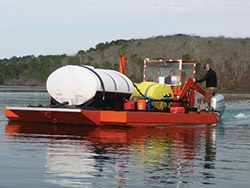
Pond Management: The Restoration of Cliff Pond, in Brewster, MA
December 1st, 2016
By Industry Expert Dominic Meringolo, Senior Environmental Engineer, and Territory Leader Cliff Pond, located in Brewster, Massachusetts, is one of the most popular destinations on Cape Cod for water recreation. It also serves as the highlight attraction of Nickerson State Park, a heavily used property that includes a large campground that is often booked solid […]
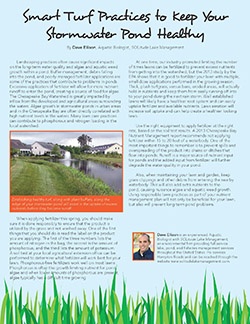
Smart Turf Practices to Keep Your Stormwater Pond Healthy
September 26th, 2016
AS SEEN IN Currents, a publication of the Southeast Virginia Chapter, Community Associations Institute: Written by Industry Expert, Dave Ellison, Regional Director & Aquatic Biologist Landscaping practices often cause significant impacts on the long-term water quality and algae and aquatic weed growth within a pond. Buffer management, debris falling into the pond, and poorly managed […]
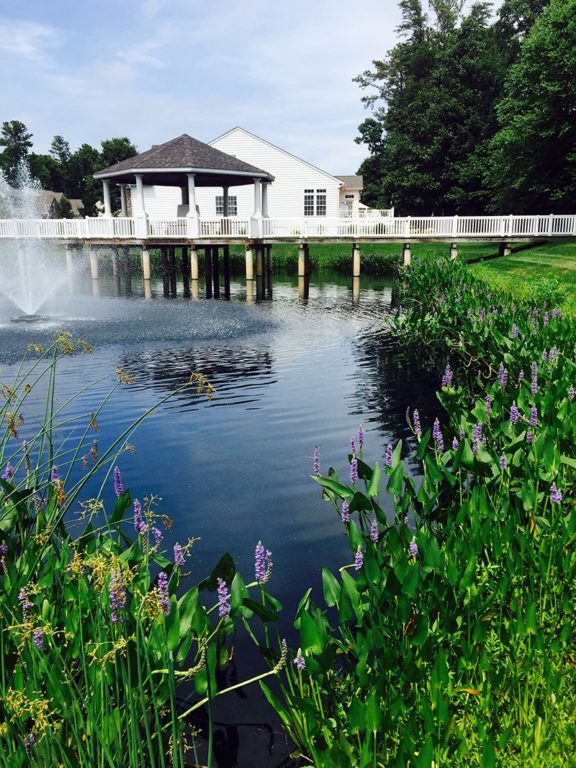
Pond Management: The Benefits of Native Aquatic Plants
August 23rd, 2016
Written by Industry Expert, Chris Doyle, Certified Lake Manager A healthy lake or pond should have a variety of native aquatic plants, preferably including submersed, floating and emergent plant types. A diverse community not only adds beauty to your lake or pond, but also provides an array of benefits for your ecosystem and can ultimately […]

What Are the Best Beneficial Bacteria for Ponds?
August 4th, 2016
Written by Industry Expert, Shannon Junior, Senior Business Development Consultant and Aquatic Ecologist Beneficial bacteria occur naturally in lakes and ponds, and are the microbes responsible for processing dead organic material. There are many different types of bacteria, which work in different ways to break down organic compounds. Aerobic bacteria use oxygen and rapidly break down […]
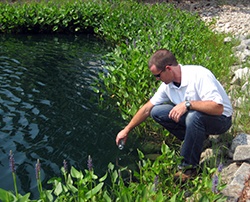
The Importance of Water Quality Testing
August 18th, 2015
Written by Marc Harris, Fisheries and Wildlife Biologist Why is water quality testing so important in coming up with a true ecologically balanced pond management plan that is specific to each site? In the same way that no two human bodies are alike, no two bodies of water are the same. Two ponds across the street […]
Top 10 Reasons to Test Your Pond’s Water Quality
May 12th, 2015
Writted by Industry Expert Marc Harris, Fisheries Biologist Much like a visit to the doctor’s office visit where bloodwork and other tests are performed, professional lake managers can use water testing parameters to gauge the overall health of a waterbody. Factors like dissolved oxygen (DO), alkalinity, pH, conductivity, nutrient levels, secchi depth, and bacteria counts […]
Best Management Practices for Spring Green-Up
April 14th, 2015
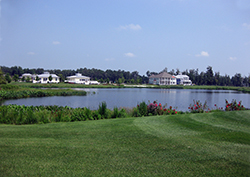
Written by Industry Expert Trent Nelson, Aquatic Specialist You are probably in the process of selecting and implementing fertilizer applications to improve turf health. Unfortunately, fertilizer is often applied incorrectly by both homeowners and unaware professionals. Excessive or improper fertilization, when combined with stormwater runoff, will carry these surplus nutrients away from the target area […]
Phoslock – A Proven Strategy for Water Quality Improvement
February 26th, 2015
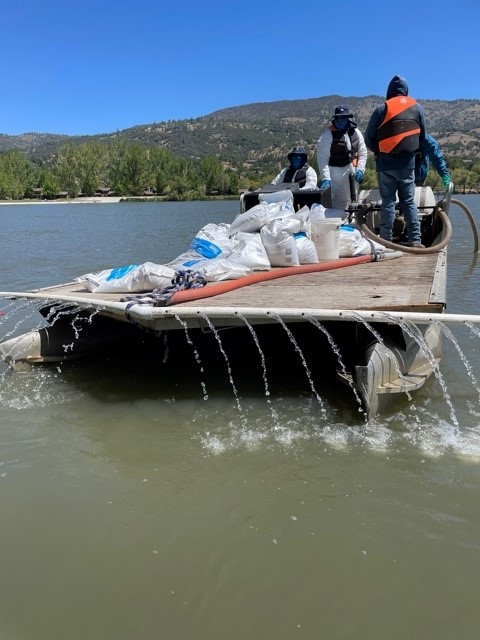
Written by Industry Expert Shannon Junior, Aquatic Ecologist As part of SOLitude Lake Management’s dedication to Integrated Pest Management strategies, we are constantly searching for new and environmentally sustainable practices that will reduce the quantity of aquatic herbicides that we apply to waterbodies, while still achieving the goals of our clients to have healthy and […]
Benefits of Controlling Nuisance Aquatic Plants & Algae In The U.S.
August 5th, 2014
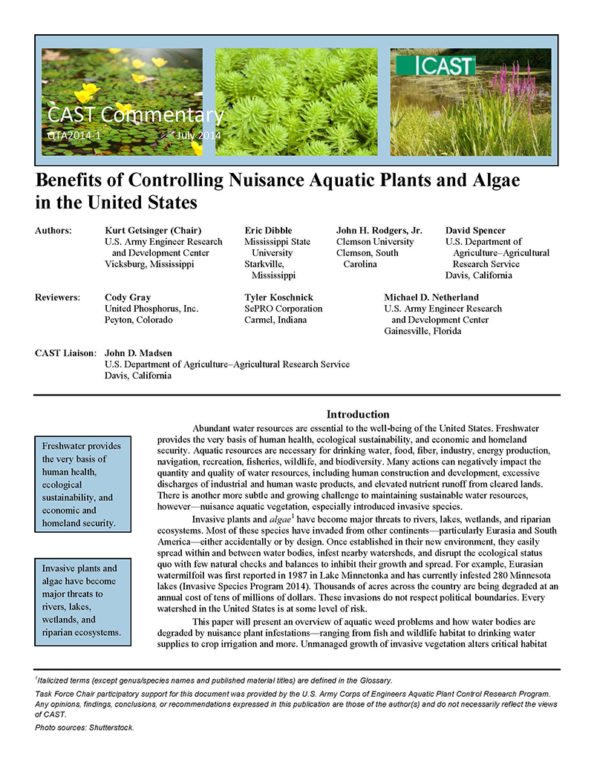
The Council for Agricultural Science and Technology’s (CAST) new Commentary was rolled out on Wednesday, July 16, at the Aquatic Plant Management Society’s annual meeting in Savannah, Georgia. Dr. John Rodgers of Clemson University provided a well-received presentation about the pertinent aspects of the paper. Safe, accessible water resources are essential, but various threats are […]