




What Is a Stormwater Management Pond?
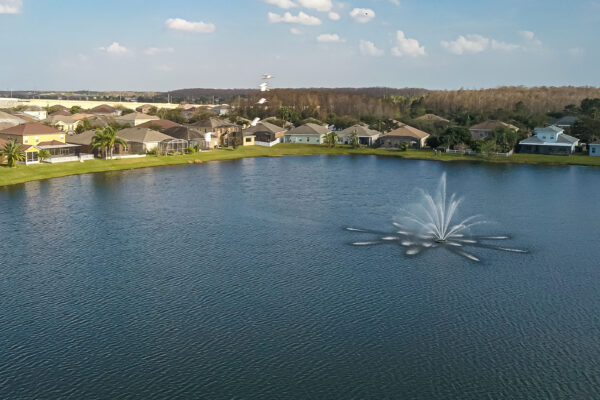
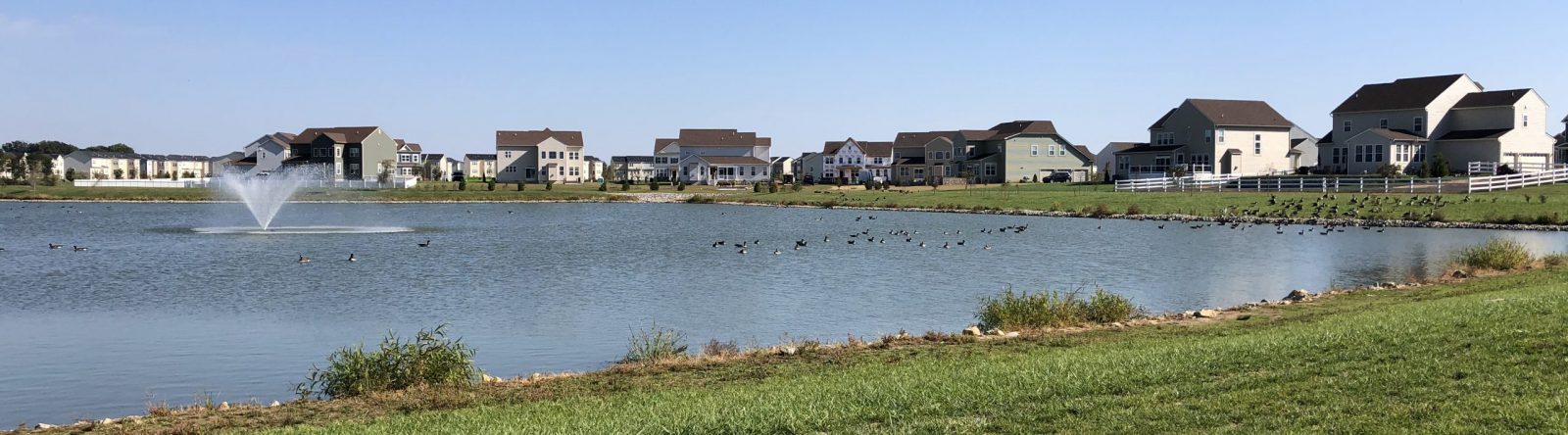
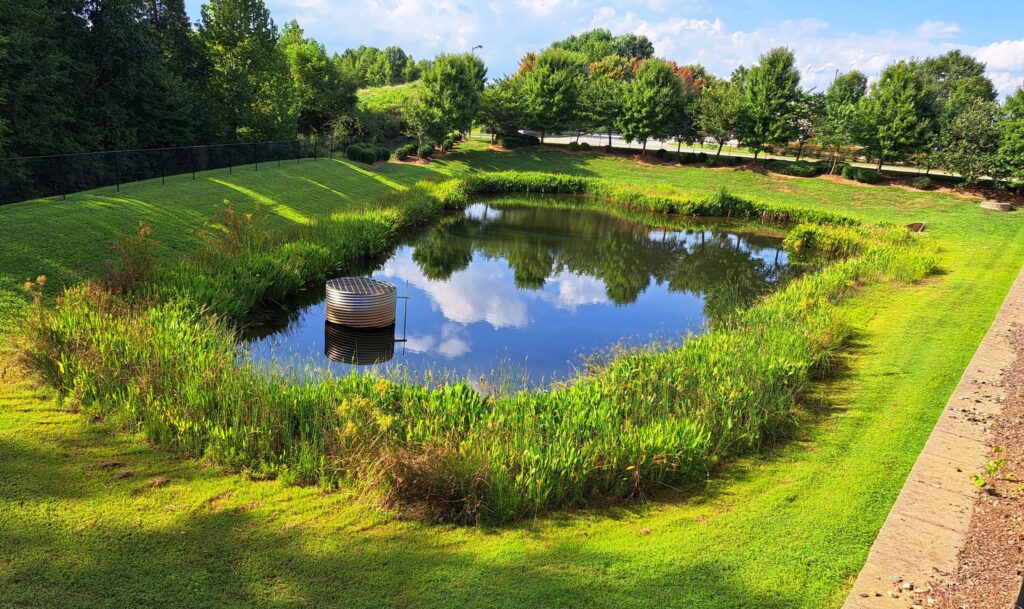
You’ve likely seen ponds scattered across your community — in neighborhoods, public parks, on golf courses, and throughout commercial developments. What many property owners don’t realize is that most of these are manmade stormwater ponds built to collect water during rainstorms, and each one depends on consistent stormwater maintenance to keep doing its job.
Sometimes referred to as Best Management Practices (BMPs), these ponds are engineered to capture and redirect runoff during rain events, helping prevent dangerous flooding and filtering out debris and pollutants before water is safely released back into the environment. Because every stormwater pond contains structural components like inlet pipes, outlets, forebays, embankments, safety benches, and emergency spillways, professional stormwater management services are often the most reliable way to keep these systems healthy, functional, and compliant.
Compliance is an important piece of that equation. Stormwater facilities must meet local and state standards, and those responsible for their management can potentially face fines if these requirements aren’t met. Routine stormwater inspections and proactive maintenance help you stay ahead of regulations — protecting your community, your infrastructure, and your budget from avoidable penalties.
Who is responsible for stormwater maintenance?
Regular stormwater maintenance is essential to keep these systems functioning and remain in compliance with local and state agencies. In the past few years, new legislation has strengthened the National Pollutant Discharge Elimination System, making compliance even more critical.
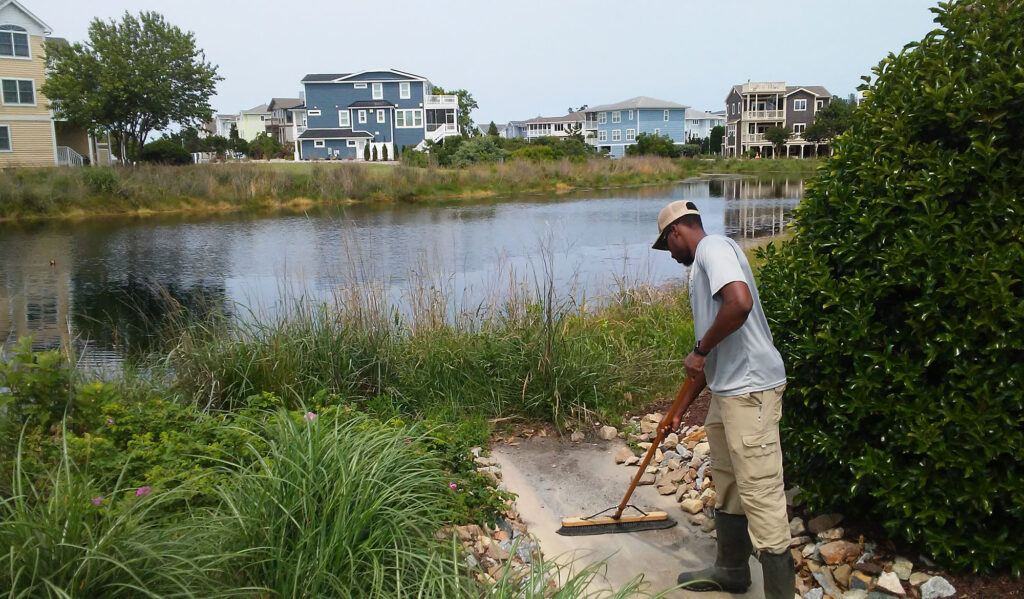
Homeowners associations, commercial developments, and any site with a constructed stormwater pond are usually responsible for the care and management of these facilities. Water quality testing, nutrient remediation, fountains and aeration, and shoreline management are just a few strategies to help keep stormwater ponds clean and balanced.
Risks of poor stormwater maintenance
Neglected or poorly managed stormwater facilities can have serious—and sometimes expensive—consequences. Trash, debris, and nuisance weeds or algae can clog or crack pipes and other equipment. Flooding causes safety risks and damage to parking lots, homes, and other infrastructure.
Often, the costs associated with restoring damaged systems ultimately outweighs the long-term investment in a proactive stormwater maintenance and stormwater inspection program.
Conducting a stormwater inspection
Understanding the various structural components of a stormwater facility isn’t easy. Most stakeholders need a stormwater facility maintenance professional who can inspect all aspects of the system and make recommendations for proper stormwater maintenance and repairs.
Scheduling an annual stormwater inspection can also help stakeholders identify and get ahead of potential areas of concern. For example, identifying aging steel piping, which is known to corrode and fail faster than modern poly piping, can help predict repair or replacement timelines before issues arise.
As part of your annual stormwater inspection, a professional may run down the following stormwater inspection checklist with you:
- What type of facility do you have?
- How does your stormwater system function?
- Where does water enter the facility and where does it exit or discharge into an adjacent stream, wetland or other stormwater facility/system?
- Does your facility retain, detain or infiltrate stormwater?
- What structural components make up your facility, what is their age and of what material are they made? A copy of the facility’s construction plan is very helpful. If you don’t have a copy of your facility’s construction plan, your local municipality should be able to help.
How to use your stormwater inspection data
Annual stormwater inspection data offers valuable insights that support long-term stormwater maintenance planning and help stakeholders budget more effectively, especially for services like dredging.
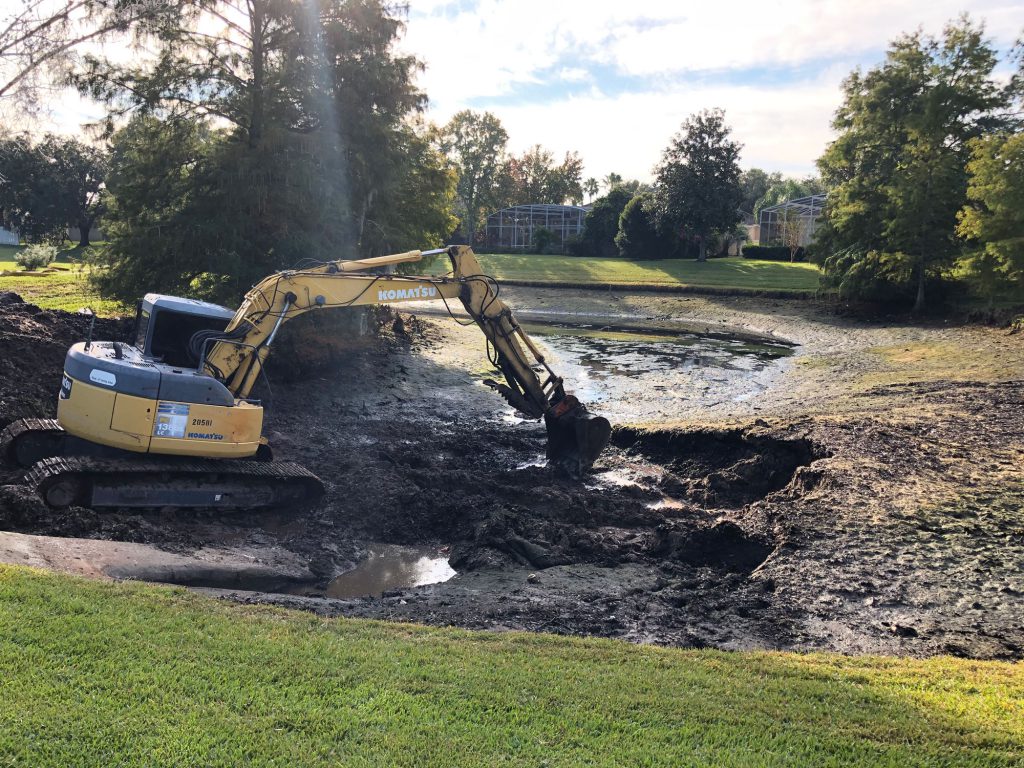
As sediment and debris accumulate in a stormwater pond over time, the structure loses its capacity to hold water, increasing the risk of catastrophic failure during the next 100-year storm. Eventually, dredging will be necessary to physically remove this build-up and restore depth and volume. Annual stormwater inspection data can help stakeholders predict when dredging will be needed and allow for more effective budgeting.
Stormwater Maintenance & Inspection FAQs
What is a stormwater pond?
A stormwater pond — sometimes called a Best Management Practice (BMP) — is a manmade pond engineered to capture and redirect runoff during rain events. It helps prevent dangerous flooding and filters out debris and pollutants before water is safely released back into the environment.
Who is responsible for stormwater maintenance?
Homeowners associations, commercial developments, and any site with a constructed stormwater pond are typically responsible for the care and management of these facilities. Regular stormwater maintenance keeps the system functioning and compliant with local and state agencies.
What are the risks of neglecting stormwater maintenance?
Neglected stormwater facilities can have serious and expensive consequences. Trash, debris, and nuisance weeds or algae can clog or crack pipes and equipment, while flooding can create safety risks and damage parking lots, homes, and infrastructure. The cost of restoring damaged systems often outweighs investing in a proactive maintenance and inspection program.
What does a stormwater inspection involve?
During a stormwater inspection, a professional examines all aspects of the system and recommends proper maintenance and repairs. An annual inspection helps identify potential concerns early — such as aging steel piping, which corrodes and fails faster than modern poly piping — so repairs can be planned before issues arise.
How often should a stormwater pond be inspected?
Scheduling an annual stormwater inspection helps stakeholders get ahead of potential areas of concern and supports long-term maintenance planning and budgeting.
How does stormwater inspection data help with budgeting?
Annual inspection data offers insights that support long-term maintenance planning and help stakeholders budget more effectively, especially for services like dredging. As sediment accumulates and reduces a pond’s capacity, the data helps predict when dredging will be needed.
Stormwater Facility Regulations: Expert Insights
Listen to Industry Expert Bo Burns discuss stormwater facility regulations:
Whether you own, manage, or live near a stormwater pond, it plays a vital role in protecting your community during heavy rain. With routine stormwater inspection and stormwater maintenance by experienced professionals, you can feel confident that your stormwater system is ready—no matter the forecast.