





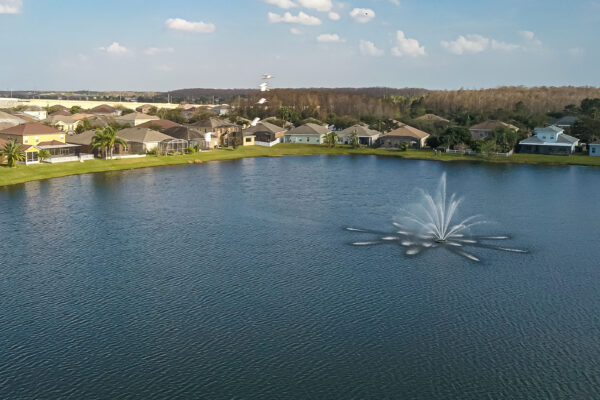


Article Summary
- Learn the difference between a pond aerator and a fountain and how each impacts water quality.
- Discover how aeration increases dissolved oxygen levels and supports a healthier aquatic ecosystem.
- Understand the benefits and limitations of fountains for circulation and aesthetics.
- Compare pond aerators and fountains to determine which solution best supports your water quality goals.
- Find out when combining both systems may provide the greatest benefit for your pond or lake.
If you’re looking to improve water quality, you’ve likely come across two common options: a pond aerator and a fountain. While both systems move water and can enhance a pond’s appearance, they serve different purposes.
Understanding how each works can help you choose the best solution for your waterbody’s health and long-term management goals.
Aeration is one of the most effective tools for maintaining a healthy lake or pond. By increasing oxygen levels and improving circulation, aeration systems help support balanced aquatic ecosystems that are less susceptible to common water quality challenges. However, not all aeration systems function the same way. Some are designed primarily for aesthetics, while others focus on improving oxygen levels throughout the water column.
In this guide, we’ll compare pond aerators and fountains, explain how each impacts water quality, and help you determine which option is best for your pond or lake.
What is the difference between a pond aerator and a fountain?
A pond aerator is designed to increase dissolved oxygen and circulate water throughout the entire pond, while a fountain primarily circulates surface water and enhances appearance. To improve overall water quality and support a balanced ecosystem, a pond aerator typically provides greater long-term benefits.
How Does a Pond Aerator Improve Water Quality?
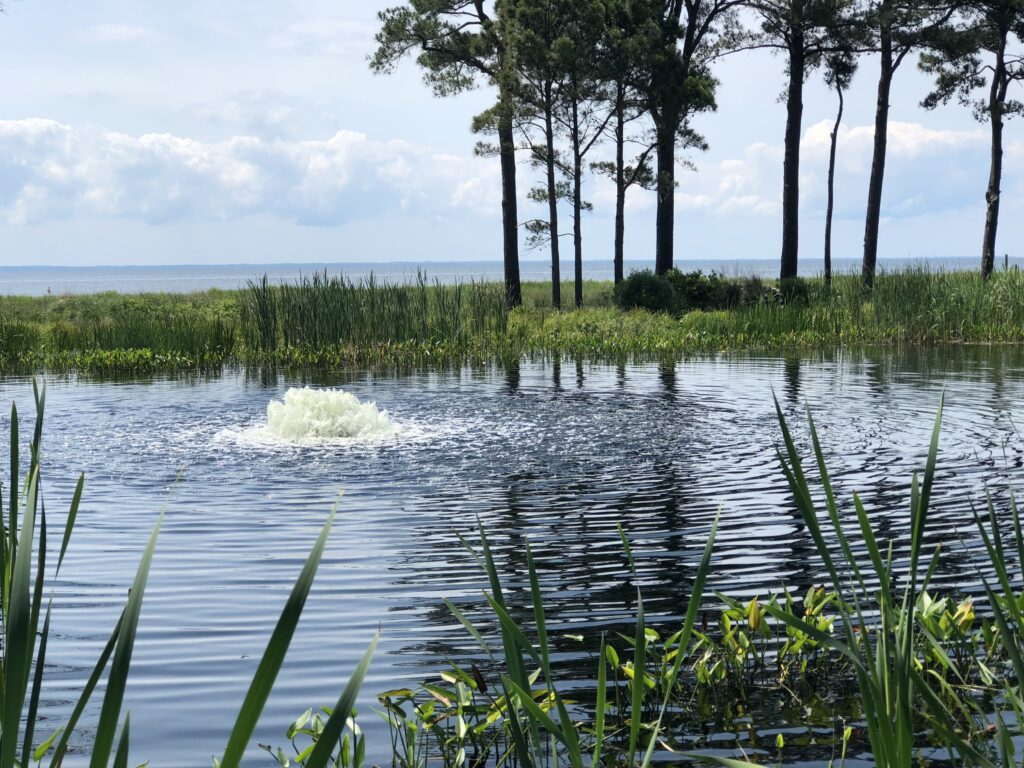
A pond aerator, such as a submersed aerator or surface aerator, are designed to increase dissolved oxygen levels and circulate water throughout the entire water column. This circulation helps create a healthier aquatic environment by supporting natural biological processes that contribute to balanced water quality.
Benefits of pond aeration include:
- Increased dissolved oxygen levels
- Improved water circulation
- Support for beneficial bacteria
- Reduced stagnant areas
- Healthier conditions for fish and aquatic life
When oxygen is available throughout the pond, beneficial bacteria can more efficiently break down organic matter. This helps support overall ecosystem balance and reduces the likelihood of water quality issues developing over time.
For deeper ponds, bottom-diffused aeration systems are often the most effective option because they circulate water from the bottom to the surface.
How Does a Fountain Improve Water Quality?
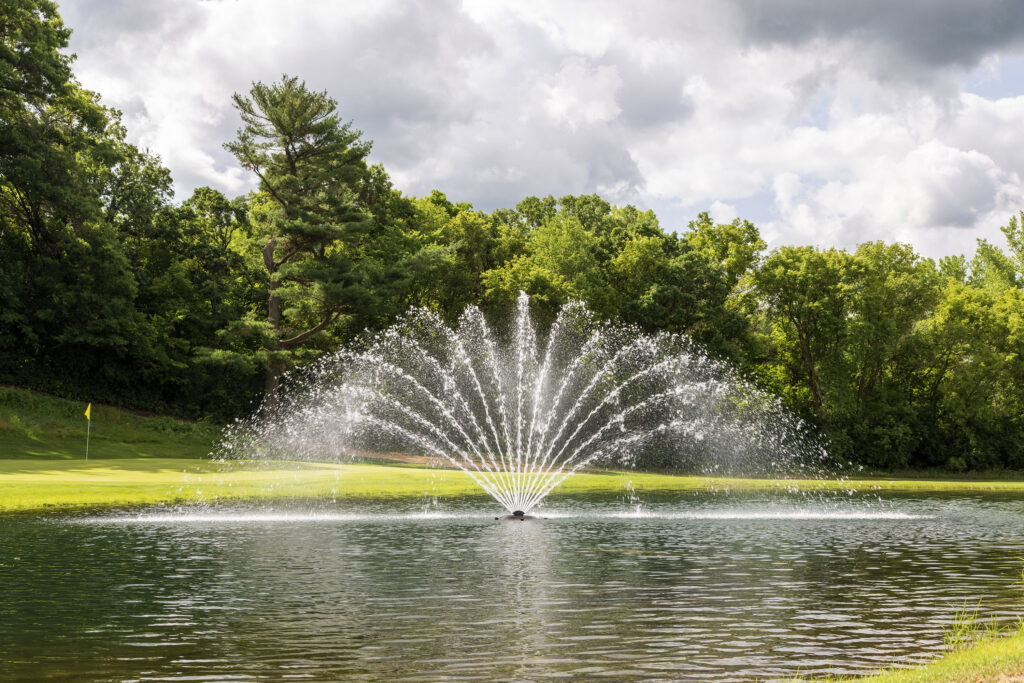
A fountain primarily serves as an aesthetic feature while providing some surface circulation.
As water is sprayed into the air and returned to the pond, oxygen transfer occurs at the surface. This movement can help reduce localized stagnation and improve the visual appeal of the waterbody.
Benefits of fountains include:
- Enhanced appearance
- Surface water movement
- Decorative focal point
- Some oxygen transfer near the surface
While fountains can contribute to water quality, they generally do not provide the same level of circulation or oxygen distribution as a dedicated aeration system, especially in larger or deeper ponds.
Pond Aerator vs. Fountain: What's the Difference?
Although both systems move water, they operate differently and serve different purposes.
| Feature | Pond Aerator | Fountain |
| Primary Purpose | Improve dissolved oxygen levels and circulation | Improve aesthetics |
| Oxygen Distribution | Throughout the water column | Mostly surface-level |
| Water Circulation | Deep circulation | Surface circulation |
| Visual Impact | Limited | High |
| Supports Beneficial Bacteria | Yes | Limited |
| Best for Water Quality | Yes | Moderate |
For pond and lake managers focused primarily on improving water quality, a submersed aerator or surface aerator typically offers greater long-term benefits. However, many waterbodies benefit from a combination of aeration and fountain systems, providing both ecosystem support and visual appeal.
Why Is Dissolved Oxygen Important for Pond Health?
The primary purpose of a pond aerator is to increase dissolved oxygen and improve circulation throughout the water body. That’s important because dissolved oxygen is one of the most critical factors influencing pond health and overall water quality.
Oxygen supports fish, beneficial bacteria, and other aquatic organisms that help maintain a balanced ecosystem. When oxygen levels are sufficient, natural biological processes function more efficiently, helping support healthier water conditions.
According to the U.S. Geological Survey, dissolved oxygen is a key indicator of aquatic ecosystem health and water quality. When oxygen levels decline, water quality challenges become more likely, which is why aeration is often a foundational component of proactive pond management.
Low oxygen levels can contribute to:
- Fish stress
- Organic matter accumulation
- Foul odors
- Poor water clarity
- Water quality imbalances
Because of these benefits, many pond owners and managers invest in aeration systems as a long-term strategy for supporting water quality and ecosystem balance.
Can a Pond Aerator Help Reduce Algae and Aquatic Weed Problems?
Aeration is not designed to control algae or aquatic weeds directly. However, improving circulation and oxygen levels can help support healthier water quality conditions and the natural biological processes that contribute to ecosystem balance. Since excess nutrients often fuel nuisance growth, aeration is typically most effective when paired with a broader water quality management strategy.
According to the U.S. Environmental Protection Agency (EPA), nutrient pollution is one of the leading causes of water quality problems in lakes and ponds.
Balanced water quality helps create an environment where nuisance growth is less likely to thrive. Aeration is often most effective when combined with a comprehensive pond management strategy that addresses nutrient levels and other contributing factors.
This comprehensive approach aligns with SOLitude’s proactive approach to maintaining balanced aquatic ecosystems rather than simply addressing symptoms as they appear.
Should You Choose a Pond Aerator, a Fountain, or Both?
The best solution depends on your goals.
A pond aerator may be the right choice if you want to:
- Improve water quality
- Increase oxygen levels
- Support fish health
- Improve circulation throughout the pond
A fountain may be the right choice if you want to:
- Enhance aesthetics
- Create a visual focal point
- Add surface movement
In many cases, property owners choose both aeration services. A fountain can provide visual appeal while an aeration system works below the surface to support long-term water quality.
Key Takeaways
- A pond aerator is designed to improve dissolved oxygen levels and circulate water throughout the pond.
- A fountain primarily enhances appearance while providing surface water movement.
- Aeration typically provides greater long-term water quality benefits than a fountain alone.
- Dissolved oxygen plays a critical role in maintaining a balanced aquatic ecosystem.
- Many waterbodies benefit from a combination of both aeration and fountain systems for water quality and aesthetics.

How Can SOLitude Help Improve Your Pond's Water Quality?
Choosing between a pond aerator and a fountain is only one piece of maintaining a healthy water body.
The right solution depends on factors such as pond size, depth, water quality conditions, and long-term management goals.
SOLitude Lake Management provides science-based solutions for fountains, aeration systems, water-quality testing, nutrient management, and proactive lake and pond management programs. Our team can help evaluate your water body and recommend solutions tailored to your unique needs.
Contact us today to learn more about improving the health and beauty of your pond or lake.
Watch: How to Increase Dissolved Oxygen in Ponds: Exploring Pond Aerators and Fountains
SOLitude Lake Management is a nationwide environmental firm committed to providing sustainable solutions that improve water quality, enhance beauty, and preserve natural resources.
SOLitude’s team of aquatic scientists specializes in developing and executing customized lake, stormwater pond, wetland, and fisheries management programs. Services include water quality testing and restoration, algae and aquatic weed control, installation and maintenance of fountains and aeration systems, shoreline erosion control, muck and sediment removal, and invasive species management. SOLitude partners with homeowners’ associations, golf courses, private landowners, businesses, and municipalities. SOLitude Lake Management is part of Rentokil, a leading business services company, operating across the United States, Canada, and Puerto Rico.
For more information, visit SOLitude Lake Management at solitudelakemanagement.com, and connect on Facebook, LinkedIn, and YouTube.