





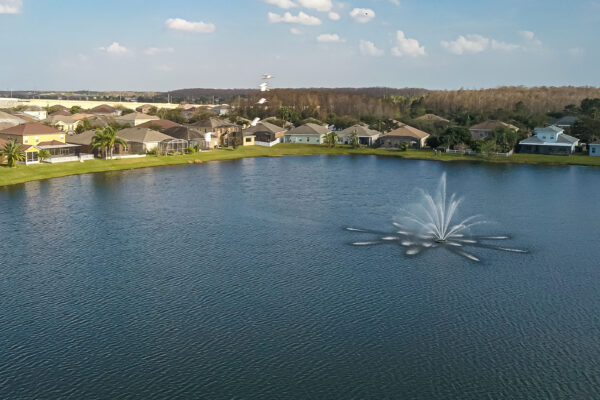

Pond Aeration 101: How Pond Aeration Helps Improve Water Quality
Pond aeration is often introduced when a pond shows recurring signs of stress, including algal blooms or cloudy water. These issues are signals that your pond water isn’t circulating well or oxygen levels are low throughout the water column. Mixing the water and introducing oxygen via pond aerators can help create more stable conditions throughout the pond.
What Is Pond Aeration and Why Does It Matter?
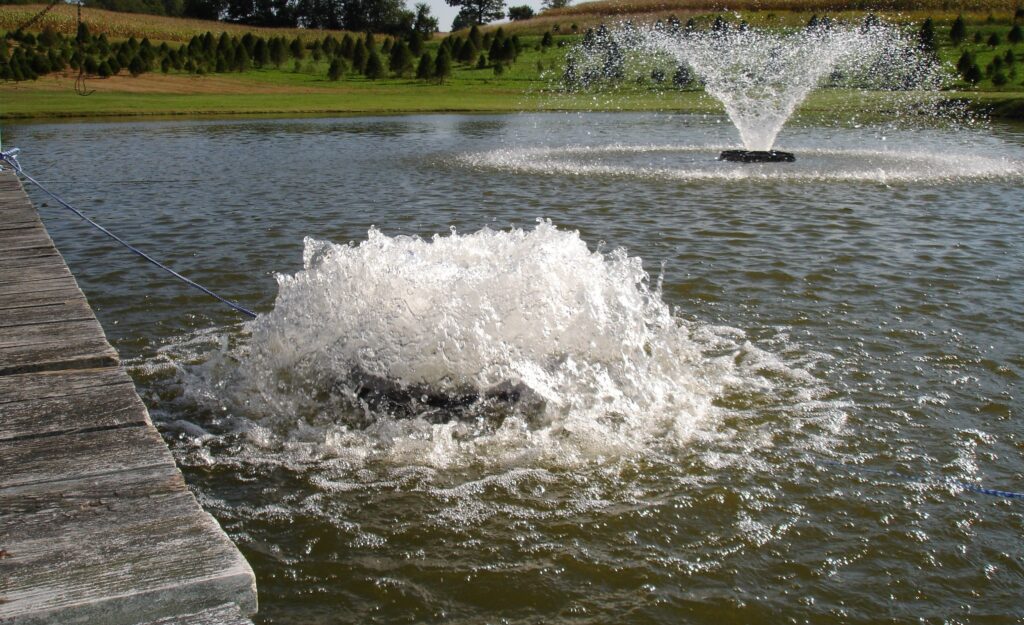
Pond aeration introduces oxygen into the water and, depending on the system, can help improve circulation from top to bottom.
In many ponds, especially those with limited natural flow, water can become stratified. That means oxygen levels drop near the bottom while nutrients accumulate in sediments. Over time, this imbalance may contribute to odors, fish stress, and conditions that make nuisance algae or weeds more likely to develop.
Pond aeration systems work by:
- Increasing dissolved oxygen levels
- Circulating water throughout the pond
- Supporting beneficial bacteria
- Helping maintain more consistent water temperatures
Consistent oxygen and circulation help maintain steadier conditions below the surface.
To see how professional aeration systems are selected and installed, learn more about fountain and aeration system installation.
How Does Pond Aeration Improve Water Quality?
By increasing dissolved oxygen and promoting beneficial microbial activity, pond aeration helps improve functionality and strengthen overall water quality.
When oxygen drops in certain areas of a pond, you’ll often see subtle changes first: more buildup on the bottom, shifting nutrient levels, or fish showing stress during warm weather. Consistent oxygen levels help reduce those swings and support steadier conditions overall.
Research from the EPA highlights dissolved oxygen as a foundational component of aquatic ecosystems, as it supports organisms and regulates nutrient dynamics.
In simple terms, oxygen supports the natural processes that keep waterbodies functioning properly.
Over time, consistent aeration can help reduce the likelihood of water quality imbalances that often trigger reactive treatments.
How does pond aeration help water quality?
In many ponds, the water near the bottom doesn’t get much movement. Over time, that can change how the pond functions. Pond aeration keeps the water circulating instead of separating into layers. When the water column mixes, oxygen isn’t limited to just the surface, and the system tends to stay more stable from season to season.
What Types of Pond Aeration Systems Are Available?
System selection depends largely on how the pond is built and on the conditions that need to be addressed.
Generally, aeration systems are described in three categories:

Bottom Diffused Aeration Systems
These systems are placed along the bottom of the pond, where circulation is often weakest. Air is released from the diffusers, and as it rises, it gradually lifts deeper, low-oxygenated water upward. That movement helps disrupt stagnant layers that can form in deeper areas.
They are typically:
- Positioned on the pond floor
- Used in ponds where depth is a factor
- Selected when deeper water isn’t circulating well
- Chosen to influence conditions below the surface
Because they operate from the bottom up, this type of system is typically chosen when oxygen levels drop in deeper areas of the pond.
Surface Aerators
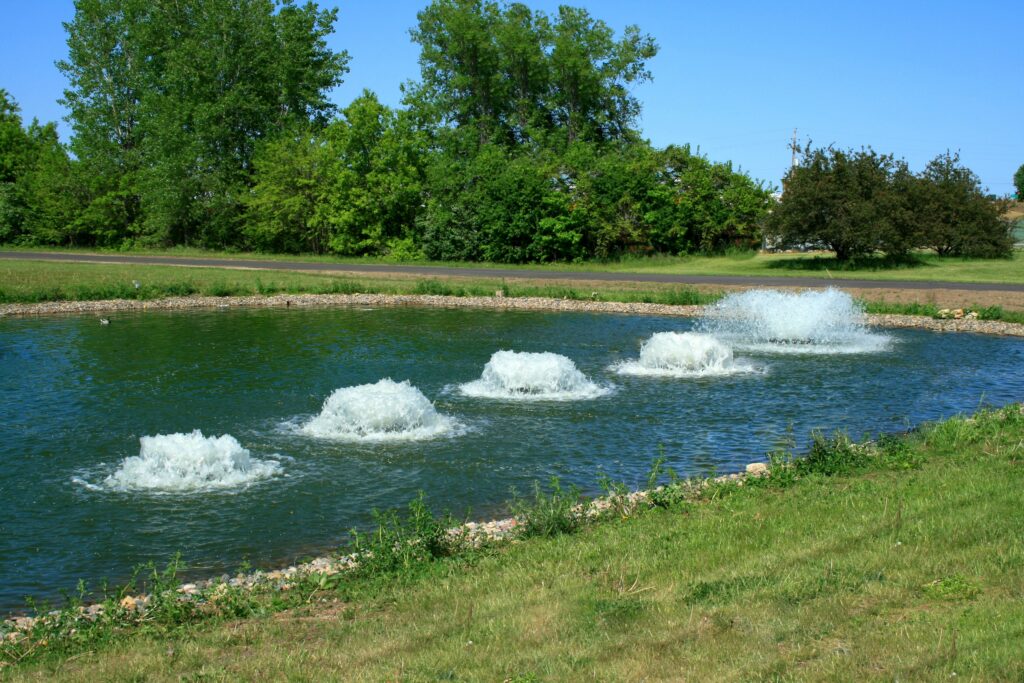
Surface aerators are designed to move water and increase dissolved oxygen levels throughout the pond. These systems use powerful propellers that create a boil-like movement at the surface, pushing water outward and circulating a large volume of water.
They are often:
- Installed to increase movement at the water’s surface
- Used in smaller ponds or areas where bottom aeration isn’t practical
- Selected when additional oxygen is needed in the top layers of a pond
Surface aerators can improve localized oxygen levels, but they typically circulate a smaller portion of the water column compared to bottom-diffused systems.
Fountains
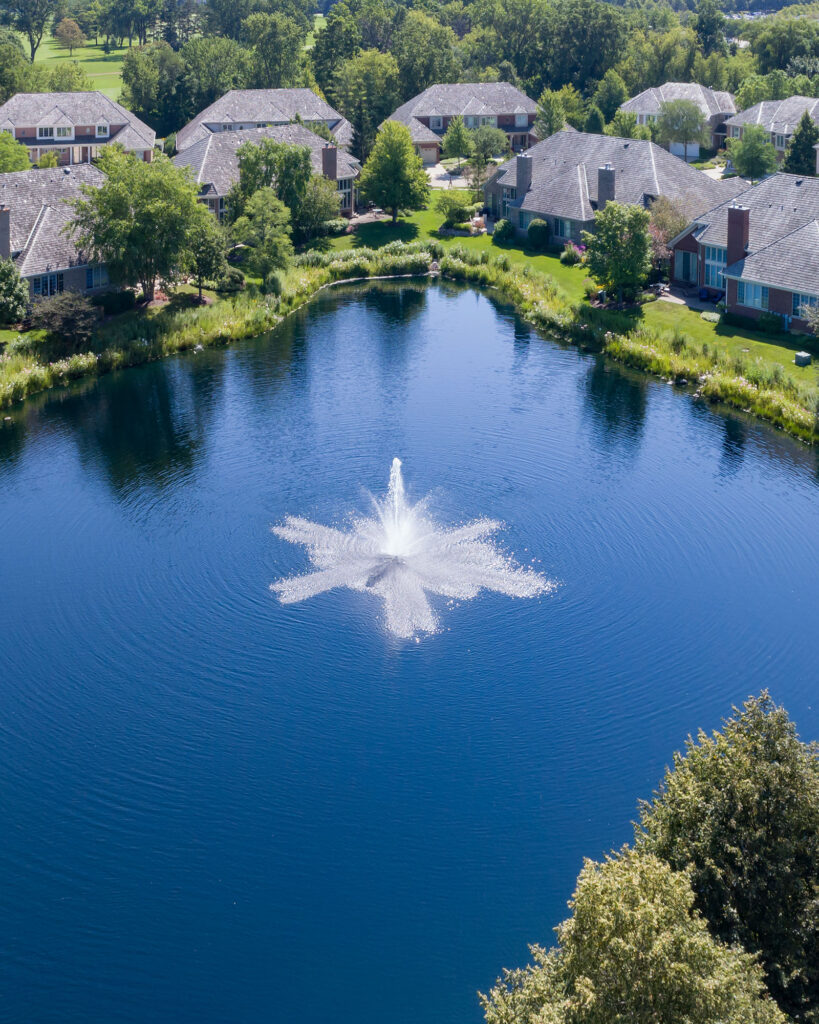
Fountains primarily enhance aesthetics while also helping to provide some surface aeration. By spraying water into the air and allowing it to fall back into the pond, fountains introduce oxygen and create visual appeal.
They are commonly:
- Installed to enhance the appearance of a pond or lake
- Utilized to reduce stagnant water
- Used in smaller, shallower ponds if intended to increase oxygen levels
While fountains can contribute to surface oxygen levels, deeper ponds often benefit from a surface aerator or bottom-diffused aeration to fully circulate the water column. For this reason, fountains are often paired with surface aerators or bottom-diffused aeration systems when stronger circulation is needed.
Learn more about how aeration fits within a broader annual lake and pond management program designed for long-term success.
Is Pond Aeration a Reactive or Proactive Solution?
Pond aeration is a proactive water quality tool.
Reactive solutions—such as applying EPA-registered algaecides or mechanically removing excess growth—may provide short-term relief when issues appear. These tools can be appropriate when used strategically within an integrated plan.
However, proactive tools like aeration focus on root causes:
- Nutrient balance
- Oxygen availability
- Water circulation
By improving the underlying conditions that influence algae and weed development, pond aeration helps reduce reliance on reactive treatments over time.
Integrated management may also include nutrient remediation, shoreline buffers, and routine monitoring to ensure water quality remains balanced.
When Should You Install Pond Aeration?
Rather than waiting for symptoms to appear, many property managers choose to add pond aeration as a preventative step. Starting early allows the system to establish circulation patterns before stress increases.
When installed in advance, aeration can:
- Keep water moving as temperatures change
- Maintain oxygen in lower layers
- Support steadier biological activity
- Reduce sudden seasonal shifts
Even aging ponds can benefit from aeration when incorporated into a customized restoration strategy.
Key Takeaways
- Pond aeration influences water quality by keeping water moving and distributing oxygen more evenly.
- When oxygen reaches deeper areas, natural processes tend to function more steadily.
- It’s often used as a preventative step rather than a response to visible growth.
- Systems that operate from the bottom are commonly selected for deeper ponds.
- Aeration is typically most effective when paired with ongoing monitoring and other management tools.
Healthy water doesn’t happen by accident—it’s built on consistent, proactive care. At SOLitude Lake Management, we design customized lake and pond management programs that incorporate aeration, nutrient management, and long-term monitoring to help restore balance and enhance beauty. If you’re ready to strengthen your waterbody’s foundation, schedule your consultation and explore a plan tailored to your goals.
Watch: How to Increase Dissolved Oxygen In Ponds: Exploring Pond Aerators and Floating Fountains
SOLitude Lake Management is a nationwide environmental firm committed to providing sustainable solutions that improve water quality, enhance beauty, and preserve natural resources.
SOLitude’s team of aquatic scientists specializes in the development and execution of customized lake, stormwater pond, wetland, and fisheries management programs. Services include water quality testing and restoration, algae and aquatic weed control, installation and maintenance of fountains and aeration systems, shoreline erosion control, muck and sediment removal and invasive species management. SOLitude partners with homeowners associations, golf courses, private landowners, businesses, and municipalities. SOLitude Lake Management is part of Rentokil, a leading business services company, operating across the United States, Canada and Puerto Rico.
For more information, visit SOLitude Lake Management at solitudelakemanagement.com, and connect on Facebook, LinkedIn, and YouTube.