





 Welcome to Lake Talk! A series of short educational videos designed to help lake and pond owners make informed decisions about managing their waterbodies, including fountains, aeration, water quality management, aquatic weed and algae control, and more.
In this episode, Business Development Consultant Jay Griffin answers common questions about surface aerators and explains how they improve water quality and support healthier lakes and ponds.
Learn how surface aerators work, the benefits they provide, available horsepower options, maintenance considerations, and why operating schedules play an important role in maximizing dissolved oxygen levels.
Lake Talk Episode: Surface Aerators
Watch the episode or check out the questions and answers below.
How does a surface aerator affect water movement throughout my pond, and how is that different from what a floating fountain does?
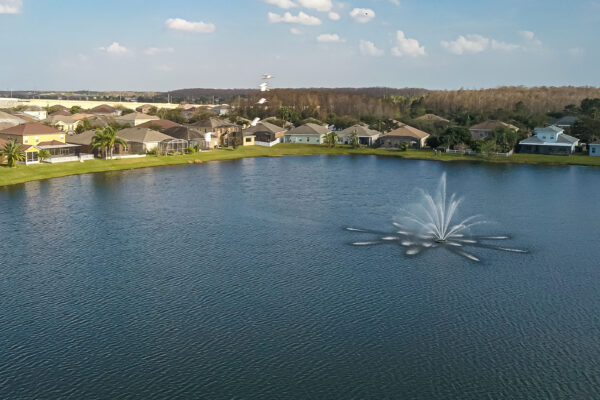
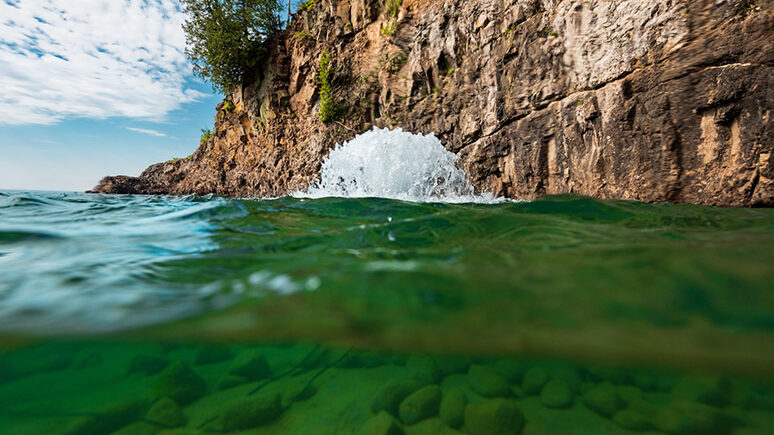
Surface aerators and floating fountains both use electric motors on floats to throw water into the air, but they serve different primary functions. Fountains use nozzles or pump chambers to constrict water flow, pushing it higher to create decorative displays. Surface aerators lack these constrictions, so while they do not throw water as high, they move a significantly larger volume of water relative to their horsepower. Because of this focus on volume over aesthetics, surface aerators offer fewer spray patterns, typically appearing as a “boil” of water or a single-tiered trumpet shape.
What are the benefits of using a surface aerator?
The most critical benefit of a surface aerator is the drastic increase of dissolved oxygen in a water body, which is essential for fish survival. Additionally, the high volume of water moved by these units creates a heavy ripple and wave action. This physical movement pushes floating vegetation toward the shoreline, helping to maintain areas of open water without the need for chemical treatments.
Do surface aerators have lighting features?
Yes, surface aerators can be equipped with various light sets from many different vendors. Options include standard white lights, specific colors, or RGBW (color-changing) sets. Modern color-changing systems offer dozens of pre-programmed patterns, allowing users to select themes for holidays like Christmas or for awareness events such as Breast Cancer Awareness Month.
How much maintenance does a surface aerator require?
Due to the high volume of water they move, surface aerators may occasionally suck up debris, trash, or aquatic vegetation. These units are equipped with screens to protect the internal impeller or propeller, and these screens can eventually become clogged. Maintenance is straightforward and involves turning the unit off and using a long-handled brush to clean the screen. Professional monthly maintenance programs are also available to ensure the units remain clean and functional.
What are the horsepower options for surface aerators?
Surface aerators are highly efficient at moving water, allowing them to utilize lower horsepower ratings than fountains to cover the same area. The most common sizes for these units range from 0.5 to 1.5 horsepower, with a 0.5 horsepower aerator being sufficient for a two-acre pond. For applications requiring extreme water movement, larger units are available at 3.5 and 5.5 horsepower.
How many hours a day should I run my aeration system?
To achieve the best ecological results and maintain high dissolved oxygen levels, it is recommended to run surface aerators 24 hours a day. In southern climates, they should run 24/7 year-round. In northern regions where ponds freeze solid, the units should be removed and stored for the winter. In mid-regions like Virginia, running the unit 24 hours a day during freezing spells prevents the water from freezing around the aerator and locking it in ice.

Whether you manage an HOA, golf course, municipality, commercial property, or private pond, this episode provides practical information to help you better understand surface aeration systems and determine whether they may be a good fit for your waterbody.
Have questions about surface aerators or wondering if one is right for your lake or pond? Contact your local SOLitude Lake Management expert to schedule a free consultation and receive a personalized recommendation for your waterbody.
SOLitude Lake Management is a nationwide environmental firm committed to providing sustainable solutions that improve water quality, enhance beauty and preserve natural resources.
SOLitude’s team of aquatic scientists specializes in the development and execution of customized lake, stormwater pond, wetland and fisheries management programs. Services include water quality testing and restoration, algae and aquatic weed control, installation and maintenance of fountains and aeration systems, shoreline erosion control, muck and sediment removal and invasive species management. SOLitude partners with homeowners associations, golf courses, private landowners, businesses and municipalities. SOLitude Lake Management is part of Rentokil, a leading business services company, operating across the United States, Canada and Puerto Rico.
For more information, visit SOLitude Lake Management at solitudelakemanagement.com, and connect on Facebook, LinkedIn, and YouTube.