



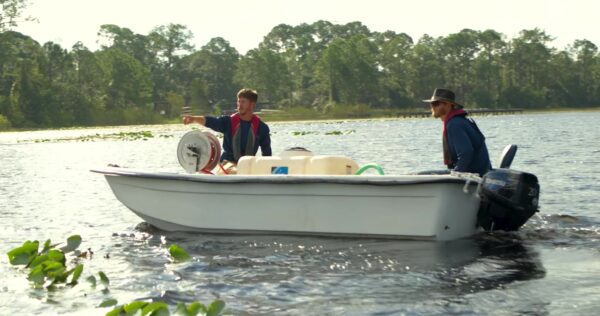

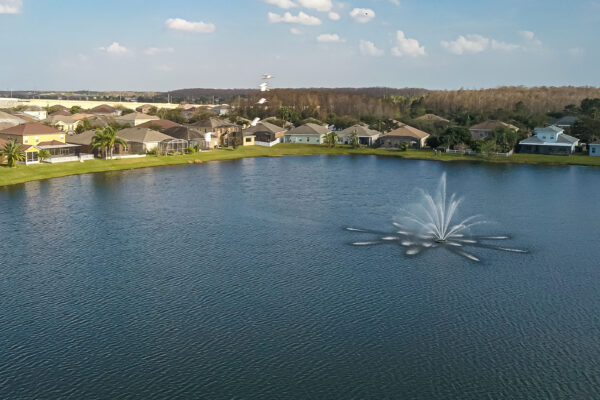

 Welcome to Lake Talk! A series of short educational videos designed to help lake and pond owners make informed decisions about managing their waterbodies, including fountains, aeration, water quality management, aquatic weed and algae control, and more.
In this episode, Business Development Consultant, Jay Griffin, answers common questions about submersed aeration systems and explains how they improve water quality from the bottom up.
Learn how submersed aeration systems circulate water, increase dissolved oxygen levels, improve overall pond health, and what factors should be considered when selecting the right system for your waterbody.
Lake Talk Episode: Submersed Aeration
Watch the episode or check out the questions and answers below.
What is a submersed aeration system and how does it work?
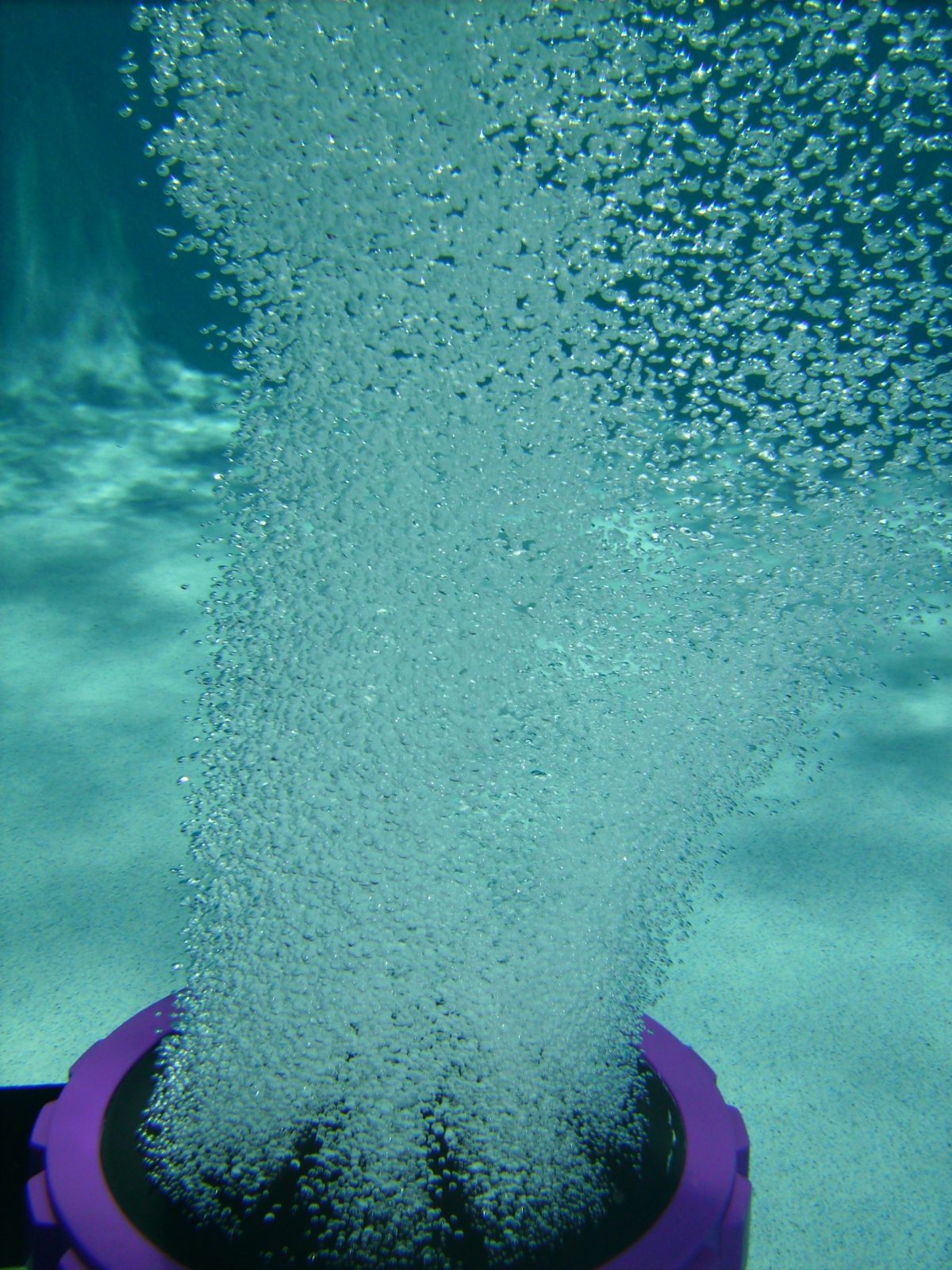
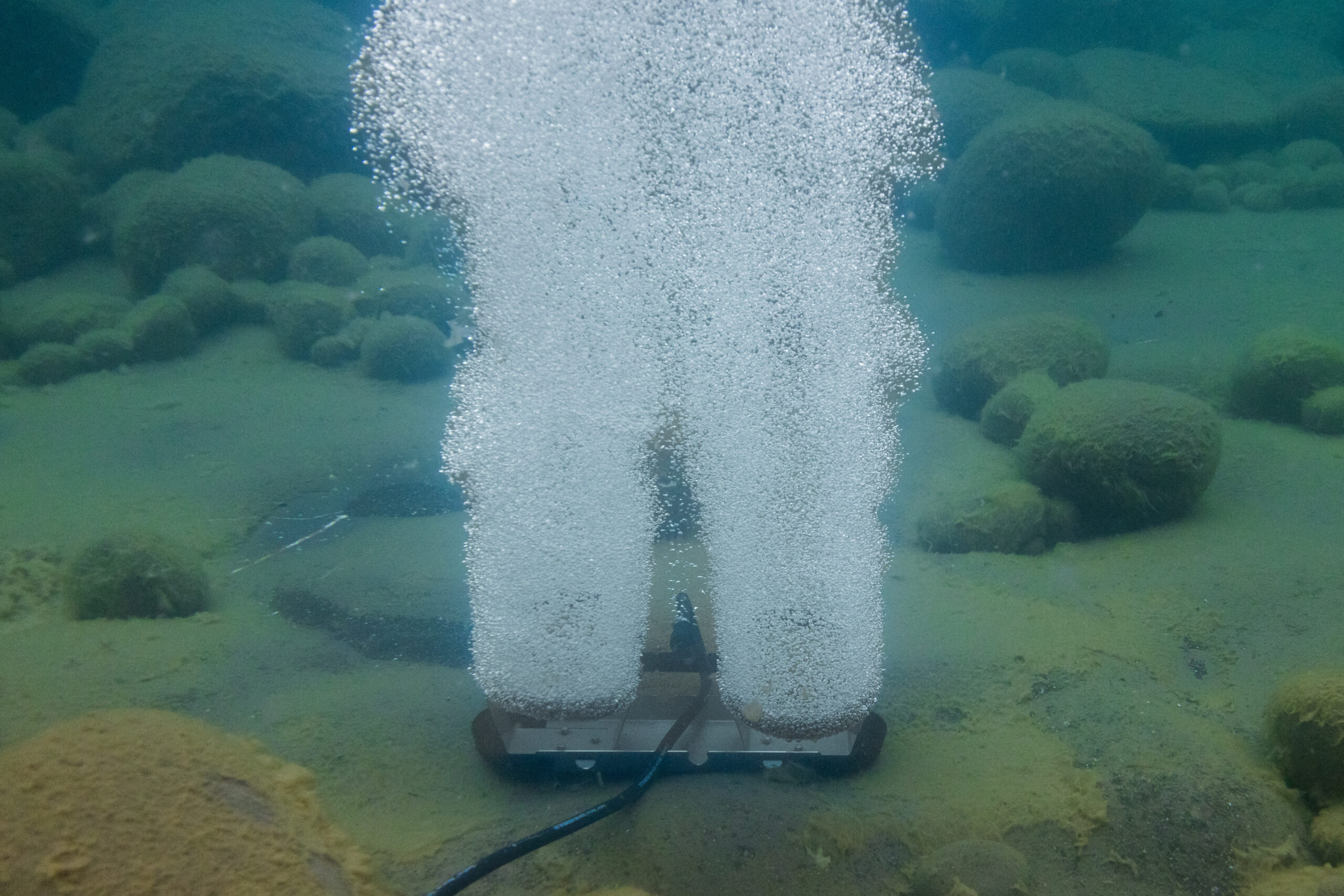
A submersed aeration system utilizes an electric motor compressor placed on dry land near the shoreline to run heavy, weighted airlines down into the water to various diffuser stations. At these stations, the pumped air rises to the surface as a column of bubbles, creating what looks like a boil of water at the pond’s surface. Rather than just adding oxygen through the bubbles themselves, the system works by drawing oxygen molecules off the rising bubbles to increase dissolved oxygen levels, and more importantly, by lifting the oxygen-depleted water from the bottom of the pond up to the surface, where it can interface with the air and mix the water body.
What is water stratification, and why does it matter?
Water stratification is a common summertime occurrence where a water column splits into distinct layers: a warm, highly oxygenated surface layer and a denser, cooler bottom layer. As the summer progresses, the bottom layer below the thermocline interface loses all oxygen and becomes anoxic, meaning fish cannot survive there and are restricted only to the surface. A properly sized submersed aeration system resolves this by continuously bringing that dead bottom layer to the surface to be reinvigorated with oxygen, allowing fish to utilize the entire water column from top to bottom.
Can fish kills still happen with a submersed aerator?
Yes, fish kills can still happen even with a compressor diffuser system during periods of high environmental stress, such as a massive planktonic algae bloom or several consecutive cloudy days in the heat of summer when no oxygen-producing photosynthesis occurs. If the dissolved oxygen across the entire water column drops to dangerous levels, the system simply continues to mix poor-quality water everywhere. In these specific scenarios, a surface aerator or a floating fountain can actually provide more benefit to the pond than a submersed system.
What does installing a submersed aerator system involve?
The installation process is complex and best handled by a professional lake and pond manager rather than an average homeowner. It begins by preparing a flat spot for the compressor cabinet, which requires at least 120-volt power (though 240-volt options are often available), and trenching from the cabinet to the shoreline to bury the airlines. From there, installers use a boat to string out hundreds or thousands of feet of heavy tubing to desired locations, attach the diffusers, and sink them to the bottom—a process that must be repeated for every diffuser required in the system.
What maintenance do submersed aeration systems require?
Submersed aeration systems are engineered to operate continuously 24 hours a day, 7 days a week. Because they run non-stop, they require routine maintenance to ensure they stay functional. Depending on the specific type and design of the compressor cabinet installed, these systems typically require compressor maintenance performed on a yearly basis.
How can SOLitude help determine the right aeration system for my lake or pond?
SOLitude can guide clients through system selection by answering questions about pond depth and the ideal number of diffusers needed. Clients can reach out to a local business development consultant to schedule a service call or site visit, where experts use specialized tools to quickly analyze surface acreage and depth. For a more advanced assessment, SOLitude offers bathymetry mapping services that generate detailed topographical images of the lake bottom in 1-foot depth increments to paint an exact picture of the water body.
Whether you manage an HOA, golf course, municipality, commercial property, or private pond, this episode provides practical information to help you better understand submersed aeration systems and determine whether they may be a good fit for your waterbody.
Have questions about submersed aerators or wondering if one is right for your lake or pond? Contact your local SOLitude Lake Management expert to schedule a free consultation and receive a personalized recommendation for your waterbody.
SOLitude Lake Management is a nationwide environmental firm committed to providing sustainable solutions that improve water quality, enhance beauty and preserve natural resources.
SOLitude’s team of aquatic scientists specializes in the development and execution of customized lake, stormwater pond, wetland and fisheries management programs. Services include water quality testing and restoration, algae and aquatic weed control, installation and maintenance of fountains and aeration systems, shoreline erosion control, muck and sediment removal and invasive species management. SOLitude partners with homeowners associations, golf courses, private landowners, businesses and municipalities. SOLitude Lake Management is part of Rentokil, a leading business services company, operating across the United States, Canada and Puerto Rico.
For more information, visit SOLitude Lake Management at solitudelakemanagement.com, and connect on Facebook, LinkedIn, and YouTube.