



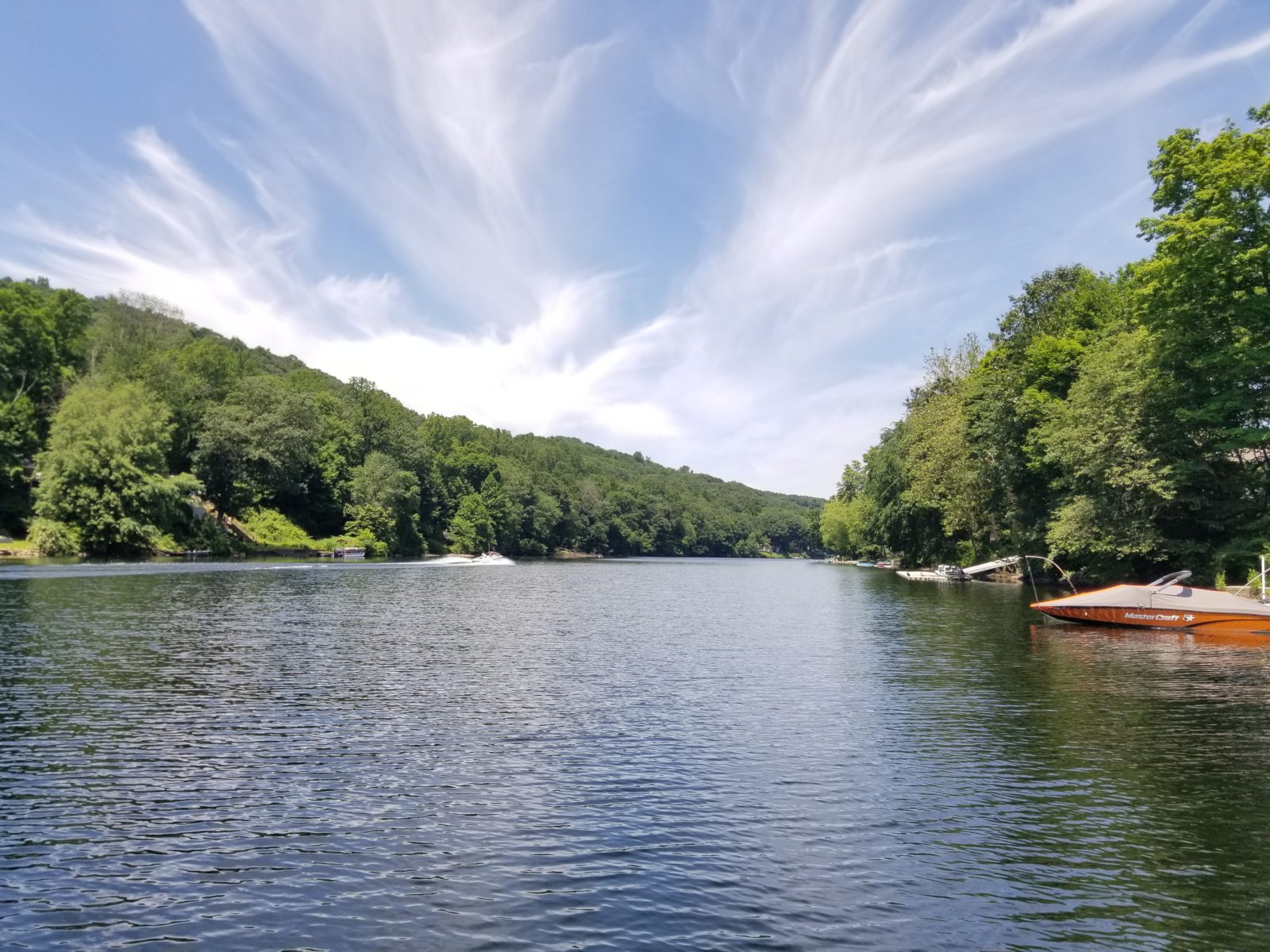
Know Your Surroundings: A Healthy Lake Begins Outside of the Water
August 21st, 2019
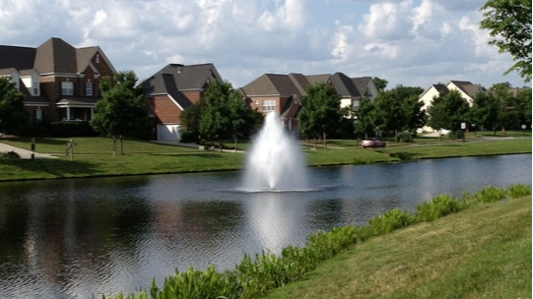
AS SEEN IN Lawn and Landscape: Written by Paul Conti, Environmental Scientist and Regional Manager
While all lakes, stormwater ponds, wetlands and fisheries are susceptible to water quality problems without proper management, the cause of these issues doesn’t always originate within the waterbody. Pond maintenance companies know that these complications often begin outside of the water. During precipitation events, water follows the course of gravity, either seeping into the earth to replenish groundwater or running across the ground as surface water runoff. The area of land that directs flowing water to lakes and ponds is called a “watershed.” As water travels across the watershed, it picks up and carries whatever is in its path—which can pose an enormous threat to your waterbody.
Understanding the Eutrophication Process
Surface water runoff often carries fertilizers, animal waste, loose soil, organic matter like leaves and grass clippings, and other debris. Upon entering a waterbody, the undesirable nutrients that comprise these substances are released into the water, initiating a dangerous cycle: Pond nutrients such as phosphorus and nitrogen can promote excessive plant growth and algae blooms. As large volumes of plants and algae decompose over time, they are transformed into sediment and release additional nutrients into the water. Increased sediment levels further decrease water depth and volume. As depths become shallower, sunlight is able to penetrate throughout the entire water column, which warms the water and fuels additional plant and algae growth through photosynthesis. This entire process is known as “eutrophication.” When the process is further expedited by human activities like urban development and pollution, it’s often referred to as “cultural eutrophication.”
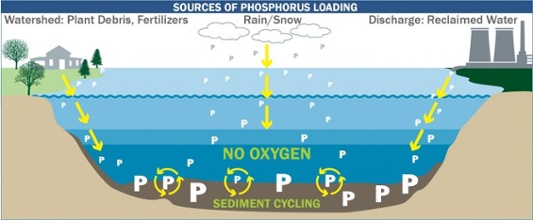
Negative Effects of Lake and Pond Eutrophication
The eutrophication cycle does not just pose a danger to the long-term health and aesthetics of your waterbody; it also creates potentially deadly conditions for fish and small beneficial organisms. During plant decomposition events, dissolved oxygen in the water column is consumed by bacteria. When dissolved oxygen is consumed at high rates, fish and other aquatic organisms will become stressed, and can even die. Shallow waterbodies, particularly in the summer, are at the highest risk due to the inability of warm water to hold dissolved oxygen. In order to protect lakes, stormwater ponds and other aquatic resources from the negative effects of eutrophication, communities should always be cognizant of surrounding land use practices—starting around the shoreline of your waterbody.
How to “Slow Down” the Eutrophication Process
Establishing and maintaining a vegetative buffer is highly important in protecting a waterbody from surface water runoff and outside contaminants that tend to promote eutrophication. By leaving a large strip of un-mowed native plants around a waterbody, surface water runoff can be slowed and filtered before it enters the water. Many of the nutrients in the surface water runoff will be taken up by rooted plants in the vegetated buffer. Vegetative buffers produce long, deep roots, which are also extremely important in stabilizing banks and preventing erosion. Another added benefit – vegetative buffers help ward off geese and ducks from grazing and defecating on surrounding lawns.
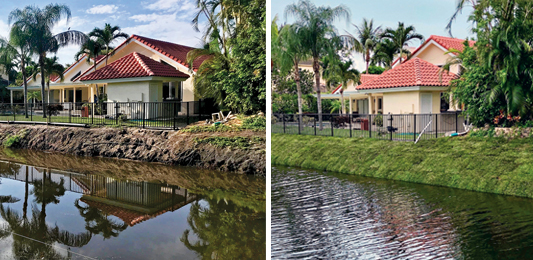
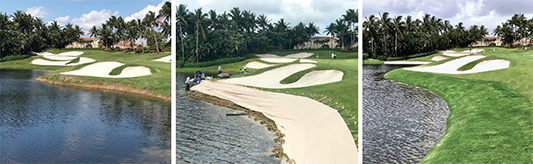
Before and after the installation of a bioengineered shoreline
If erosion problems cannot be solely addressed with a beneficial vegetative buffer, several methods can be employed to help repair and stabilize your bank. Some property managers find success by installing rip-rap, deflectors, erosion mats and plantings along the shoreline to hold sediment in place. Coconut “coir” logs can also provide short-term shoreline stability. However, one of the latest and most comprehensive restoration methods is the introduction of a bioengineered living shoreline, which utilizes a biodegradable woven mesh that is anchored to the earth and filled with soil to rebuild and stabilize eroded banks for several years. Depending on your state’s permitting requirements, sediment that has accumulated locally in the pond can be dredged and placed inside the woven material. Grass or other plants are then planted on top, ensuring protection from erosion in the future. This is a very effective tool when managing your waterbody because it both reclaims lost water depth by removing excess sediment and rebuilds and stabilizes the shore bank, allowing for optimal aesthetic, recreational, and ecological use.
Shoreline protection and restoration are critical aspects of a successful freshwater management program, but they will not alone ensure your long-term goals are achieved. In order to maintain a healthy waterbody, one should also maintain a healthy watershed by limiting fertilizer use, confirming septic systems are properly functioning, and properly disposing of pet waste, leaves and grass clippings. Proactive measures, like aeration, nutrient remediation and water quality testing should also be taken within the waterbody to further prevent ongoing problems. The last piece of the puzzle is education. Educate your community members about the direct impact they have on surrounding aquatic resource and the small steps they can take to prevent algae and aquatic weed growth. By taking a proactive, custom aquatic management approach designed with the help of a professional lake manager, you can reduce eutrophication and prolong the health, beauty and function of your lake or stormwater pond for years to come.
Contact the experts at 888-480-5253 for all of your lake, stormwater pond, wetland and fisheries management needs.
 Paul Conti is a regional manager and environmental scientist serving SOLitude’s Southern New England region. Paul works with each client to determine the best possible lake and pond management solutions to meet their individual needs, and has worked on an array of jobs both large and small. He regularly monitors lakes, ponds and wetlands, where he enjoys conducting vegetation surveys, nuisance algae bloom treatments, nutrient remediation projects, biological applications, and the removal of invasive and nuisance plant species in both aquatic and upland environments.
SOLitude Lake Management is a nationwide environmental firm committed to providing sustainable solutions that improve water quality, enhance beauty, preserve natural resources and reduce our environmental footprint. SOLitude’s team of aquatic resource management professionals specializes in the development and execution of customized lake, stormwater pond, wetland and fisheries management programs that include water quality testing and restoration, nutrient remediation, algae and aquatic weed control, installation and maintenance of fountains and aeration systems, bathymetry, shoreline erosion restoration, mechanical harvesting and hydro-raking, lake vegetation studies, biological assessments, habitat evaluations, and invasive species management. Services and educational resources are available to clients nationwide, including homeowners associations, multi-family and apartment communities, golf courses, commercial developments, ranches, private landowners, reservoirs, recreational and public lakes, municipalities, drinking water authorities, parks, and state and federal agencies. SOLitude Lake Management is a proud member of the Rentokil Steritech family of companies in North America.
 Tweet
Tweet
 Share
Share
 Share
Share