



 Welcome to Lake Talk! A series of short educational videos designed to help lake and pond owners make informed decisions about managing their waterbodies, including fountains, aeration, water quality management, aquatic weed and algae control, and more.
In this episode, Business Development Consultant, Jay Griffin, answers common questions about choosing the right aeration system for your lake or pond.
Learn what factors influence system selection, including pond size, shape, depth, varying water depths, access to electricity, and operational recommendations to help maximize water quality and long-term performance.
Lake Talk Episode: Choosing the Right Aeration System
Watch the episode or check out the questions and answers below.
Do I need an aeration system? Why are they beneficial for lakes and ponds?
Any water body that has at least two feet of depth can benefit from supplemental aeration, whether it is a tiny, tenth-of-an-acre backyard pond or a giant 20-acre community lake. Ponds and lakes equipped with these systems maintain higher dissolved oxygen levels, which fundamentally improves the health and stability of the entire ecosystem.
Does pond shape/size/depth matter in determining the type of aeration needed and why?
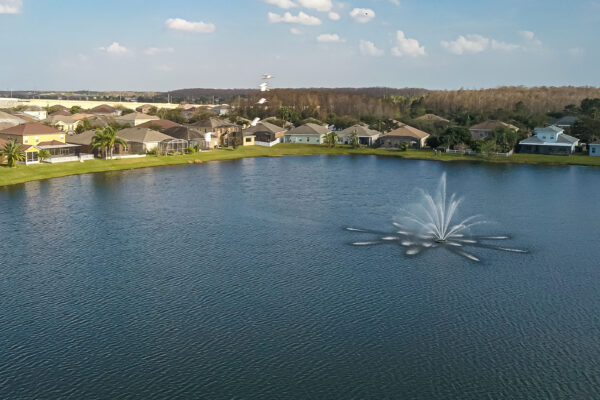
Yes. Pond shape, size, and depth absolutely dictate the type of equipment required. For water bodies that are 12 feet deep or more, a compressor diffuser system is typically ideal if the primary goals are destratification and expanding the habitable zone where fish can live. If the water body is shallower, a surface aerator or a floating fountain serves as the best option. In some cases, deploying both types of systems provides the best of both worlds by destratifying deep areas while using surface units as an aesthetic focal point or backup during harsh summer conditions.
How do I determine the right aeration system if my pond has different depths throughout?
Determining the exact aeration setup requires evaluating the varying depths of the water body against a general 12-foot threshold rule of thumb. Deep areas that reach 12 feet or more are best suited for compressor diffuser systems to aid in destratification, while the shallower sections are better served by surface aerators or floating fountains. Consulting with a business development professional is the best way to analyze these size and depth variations to figure out the right combination of equipment options for the pond’s specific layout.
How does access to electricity impact system selection?
Electrical access is a major factor in determining what equipment can run safely and economically. A compressor diffuser system requires a bare minimum of 120 volts, while most floating fountains and surface aerators necessitate 240 volts to operate properly. If a site has three-phase or 480-volt power available, utilizing these higher voltages reduces amp draw and lowers monthly electricity bills while allowing for smaller diameter cables that cut down upfront installation costs. For remote locations where running traditional power is uneconomical, advanced solar-powered systems equipped with lithium-ion battery backups are an effective alternative, provided the solar panels can be installed on a northern bank with a clear, south-facing view of the sky.
Do the systems need to run 24/7?
Aeration equipment should ideally run 24 hours a day, 7 days a week because longer run times introduce more oxygen and maximize ecological benefits. While some users prefer to turn systems off at night so they only operate when people are awake to see them, running the units at night is actually far more critical for the health of the water body. During the day, pond plants and algae produce oxygen through photosynthesis, but at night they consume it; without nocturnal aeration, fish can breathe up the remaining oxygen, leading to severe dissolved oxygen crashes and fish kills right around dawn.
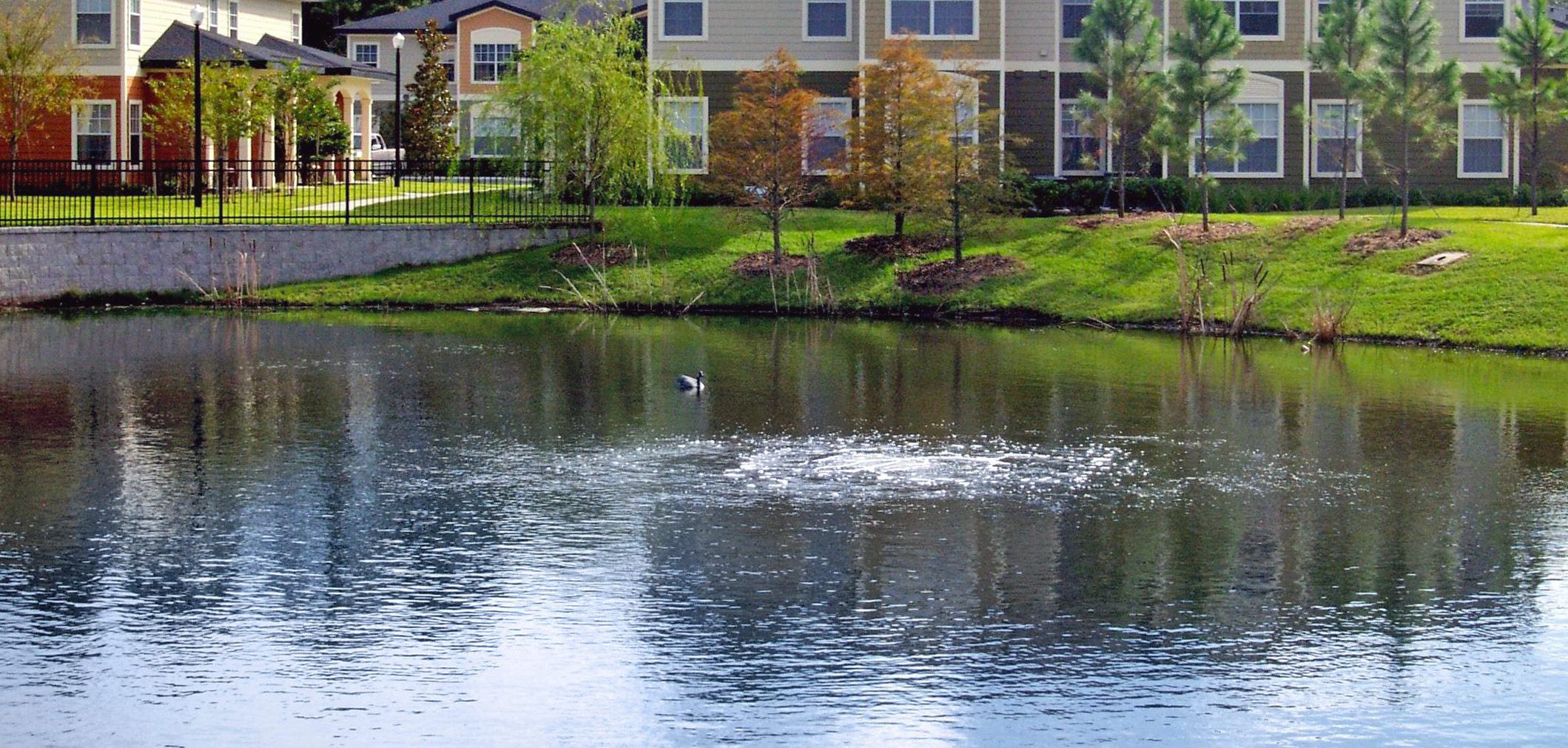
Whether you manage an HOA, golf course, municipality, commercial property, or private pond, this episode provides practical information to help you better understand the key considerations involved in selecting an aeration system that best fits your waterbody.
Have questions about choosing the right aeration system or wondering which solution is best for your lake or pond? Contact your local SOLitude Lake Management expert to schedule a free consultation and receive a personalized recommendation for your waterbody.
SOLitude Lake Management is a nationwide environmental firm committed to providing sustainable solutions that improve water quality, enhance beauty and preserve natural resources.
SOLitude’s team of aquatic scientists specializes in the development and execution of customized lake, stormwater pond, wetland and fisheries management programs. Services include water quality testing and restoration, algae and aquatic weed control, installation and maintenance of fountains and aeration systems, shoreline erosion control, muck and sediment removal and invasive species management. SOLitude partners with homeowners associations, golf courses, private landowners, businesses and municipalities. SOLitude Lake Management is part of Rentokil, a leading business services company, operating across the United States, Canada and Puerto Rico.
For more information, visit SOLitude Lake Management at solitudelakemanagement.com, and connect on Facebook, LinkedIn, and YouTube.