




Water quality management professionals find that educating facility owners and managers is their greatest challenge. Because stormwater regulations under the Clean Water Act continue to evolve, clients must understand how their facilities function to implement sustainable maintenance or remediation programs successfully.
Although modern stormwater management incorporates various best management practices (BMPs), such as rain gardens and bioswales, traditional “wet” retention ponds and “dry” detention ponds remain widespread. These basins hold water, trap pollutants, and slow release rates to mimic pre-development runoff. Explaining their shared components and maintenance needs builds the mutual understanding necessary before launching a management or repair program.
The following stormwater pond parts are found in the vast majority of jurisdictions and designs
What Is A Pond Embankment?
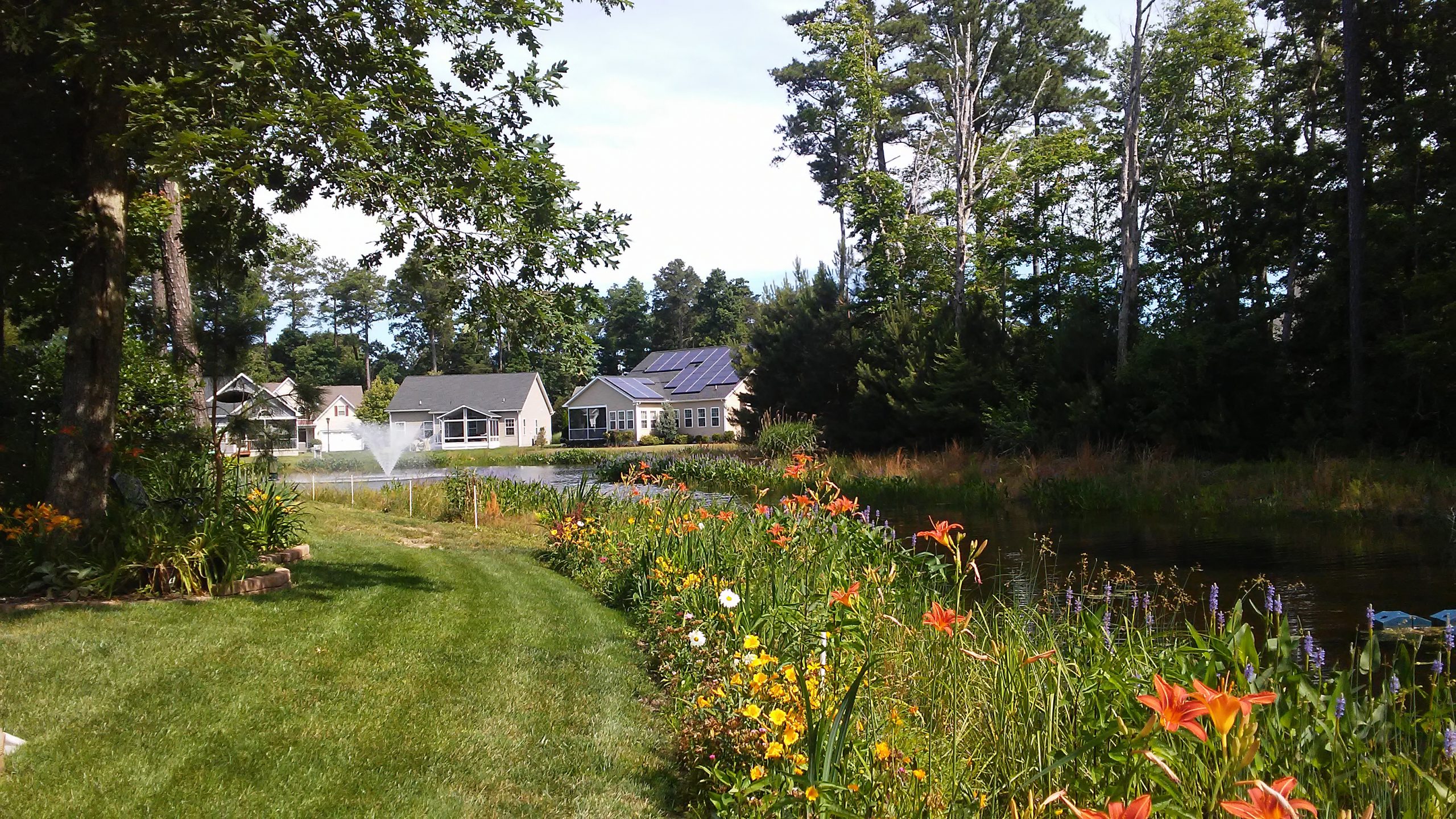
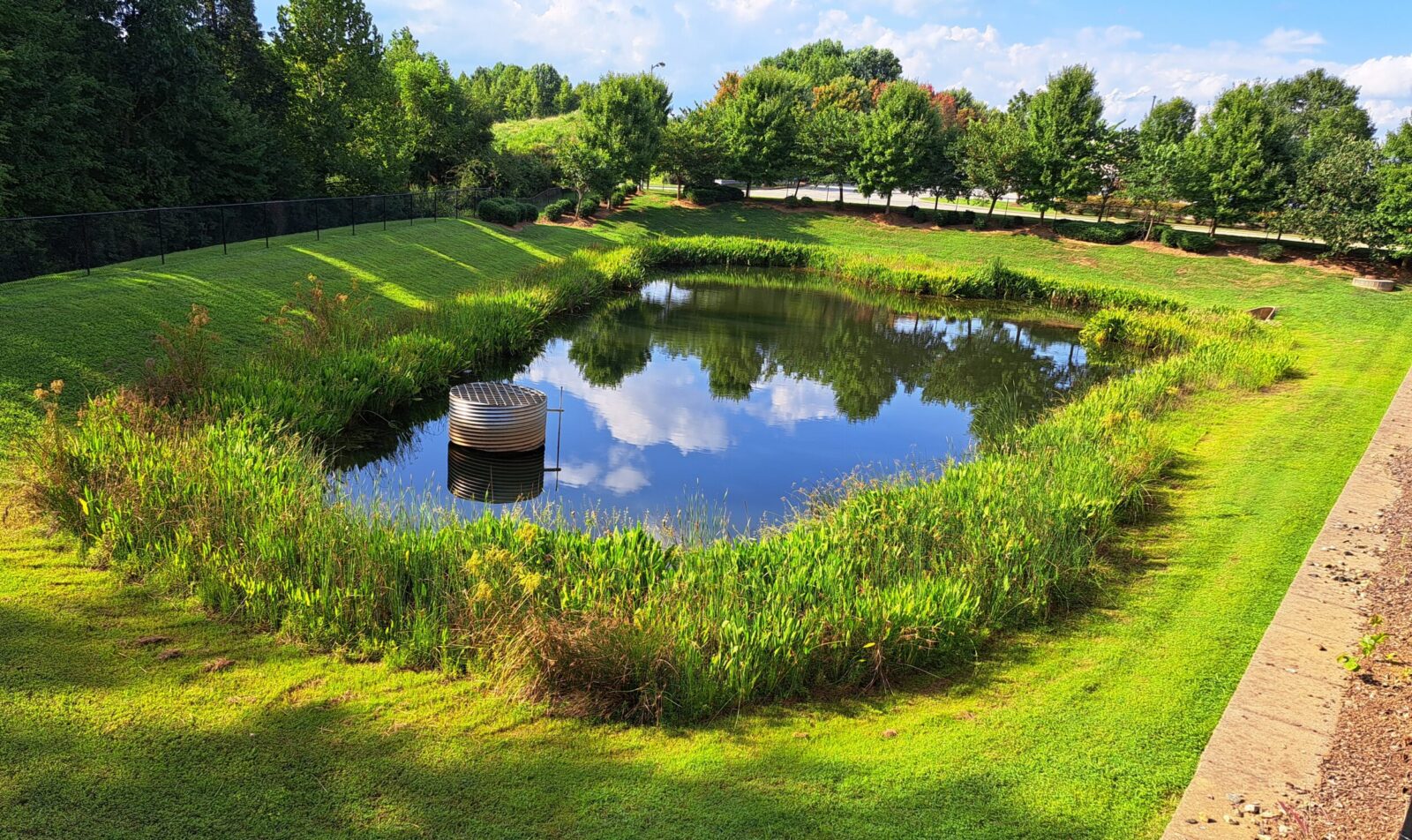
Typically, stormwater ponds have an earthen embankment surrounding them. Part or all of the embankment can act as a dam to keep the water in the pond.
The embankment is usually sloped and should be stabilized with herbaceous vegetation and grasses. A buffer can also be allowed to grow. A shoreline buffer can help reduce sediment and nutrient loading in the pond while providing greater stabilization for the embankment. Buffers should be composed of herbaceous vegetation, native grasses, and perennial flowers, and should be kept free of invasive species and trees. Large trees, animal burrowing, and exposed soils can lead to erosion and failure of the embankment
Regulations and Maintenance
Depending on the jurisdiction or size of the embankment, it may be regulated by both stormwater and dam safety regulations. If classified as a regulated dam, it may entail more intensive maintenance. These regulations are often enforced by separate regulatory organizations. It is important to become familiar with all the regulations that are applicable to the pond to ensure compliance. The pond embankment should be inspected monthly, at a minimum, and after any large rain event.
How Does A Pond Outlet Structure Work?
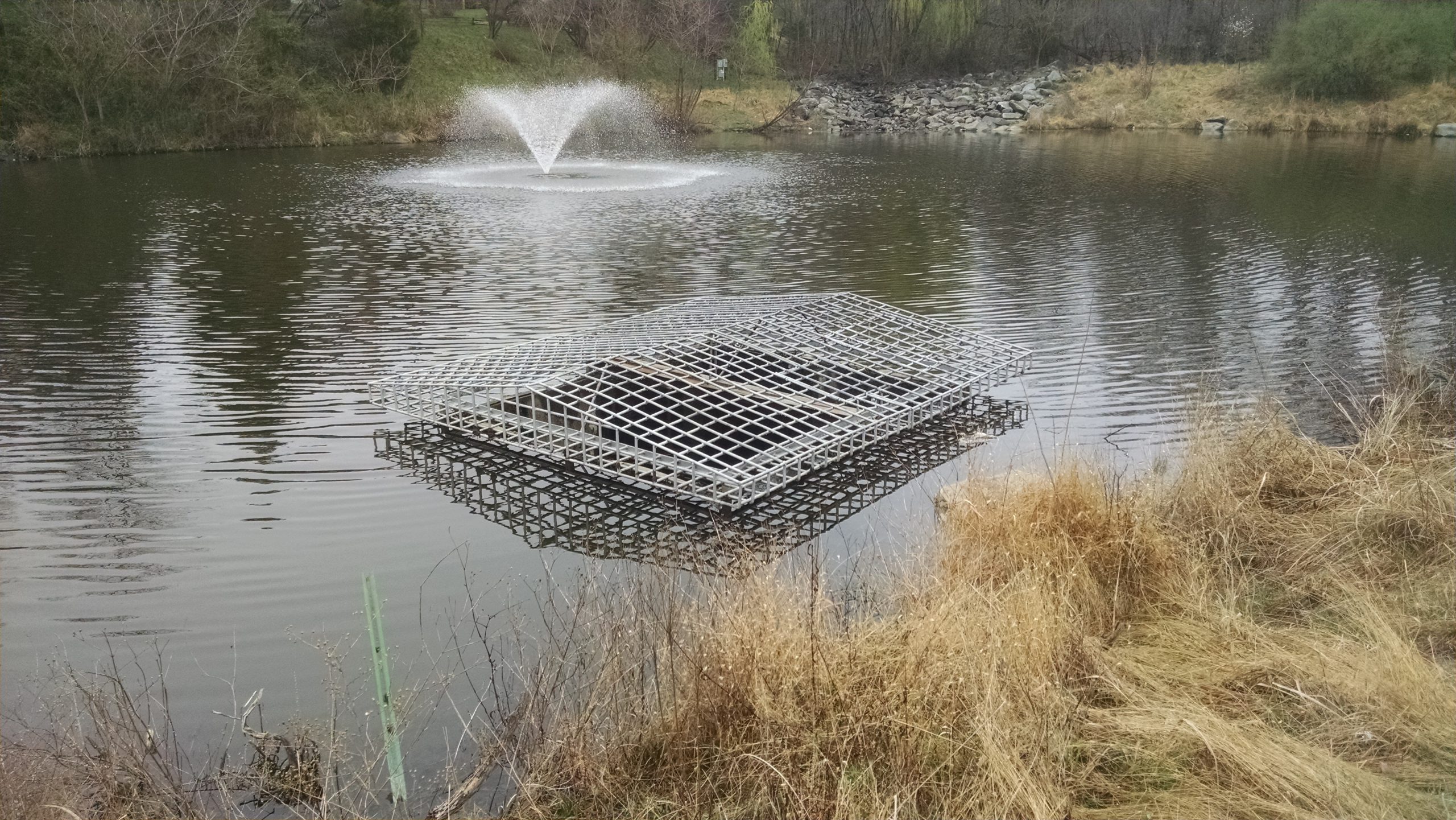
Outlet structures are designed to hold and release water from the stormwater pond at specific engineered rates based on the amount of rainfall or runoff draining into the basin from surrounding impervious surfaces. Newer ponds mostly have engineered concrete outlet structures, but older ponds may also have galvanized steel structures or other types of pipe risers.
Outlet structures also have trash racks on the low-flow (bottom orifice) and overflow (top of the structure). Trash racks need to be secured and kept in place. Outlets and the associated trash racks should be kept free of trash, debris, and vegetation.
Operational Guidelines and Upkeep Recommendations
If part of a classified dam, the outlet structure may have different design and maintenance criteria that could entail more intensive or additional maintenance activities. Typically, a properly functioning outlet structure should drain the pond back to the designed “normal pool” 24 to 48 hours after a normal rain event.
What Is A Stormwater Pond Inlet?
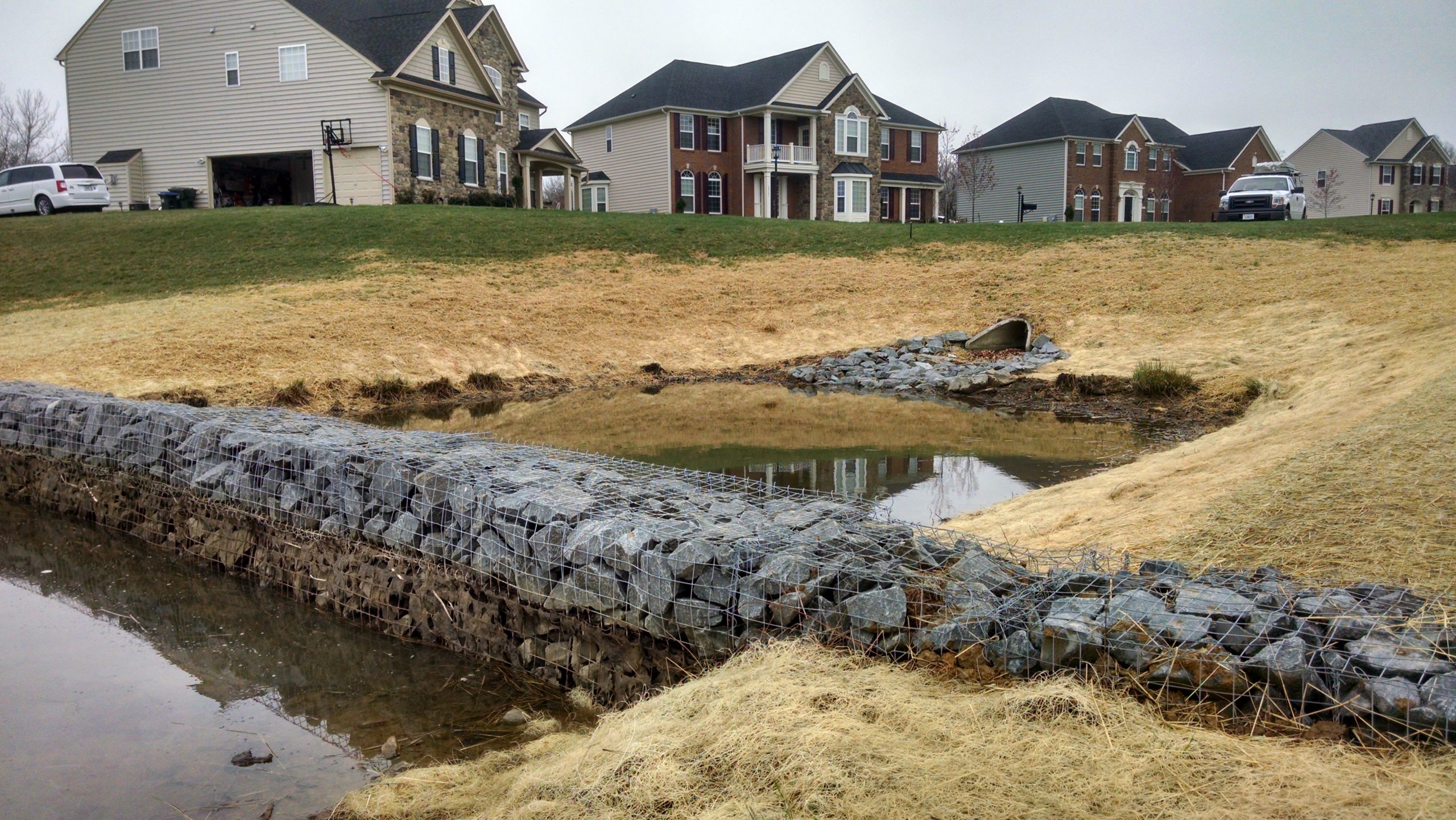
An inlet is any area, often a pipe, which conveys runoff from surrounding paved areas and property into the stormwater pond. Piped inlets are typically made of concrete, high-strength plastics, or galvanized steel. Inlets can also be in the form of open earthen swales typically vegetated with grass or other herbaceous perennials.
Where inlets enter the pond or basin, rip-rap (stone) dissipaters or aprons are often installed. Stoned areas have been designed to reduce run-off velocity to prevent erosion and catch sediment and debris before it enters the pond.
Inlet Maintenance
The inlet should be periodically checked for sediment buildup in the pipe. The rip-rap dissipater should also be kept free of vegetation and checked for erosion or sediment build-up. Sediment build-up, unwanted vegetation, or erosion at inlet areas can cause drainage issues, reduce the lifespan of the pond and increase maintenance costs.
What Are Pond Forebays?
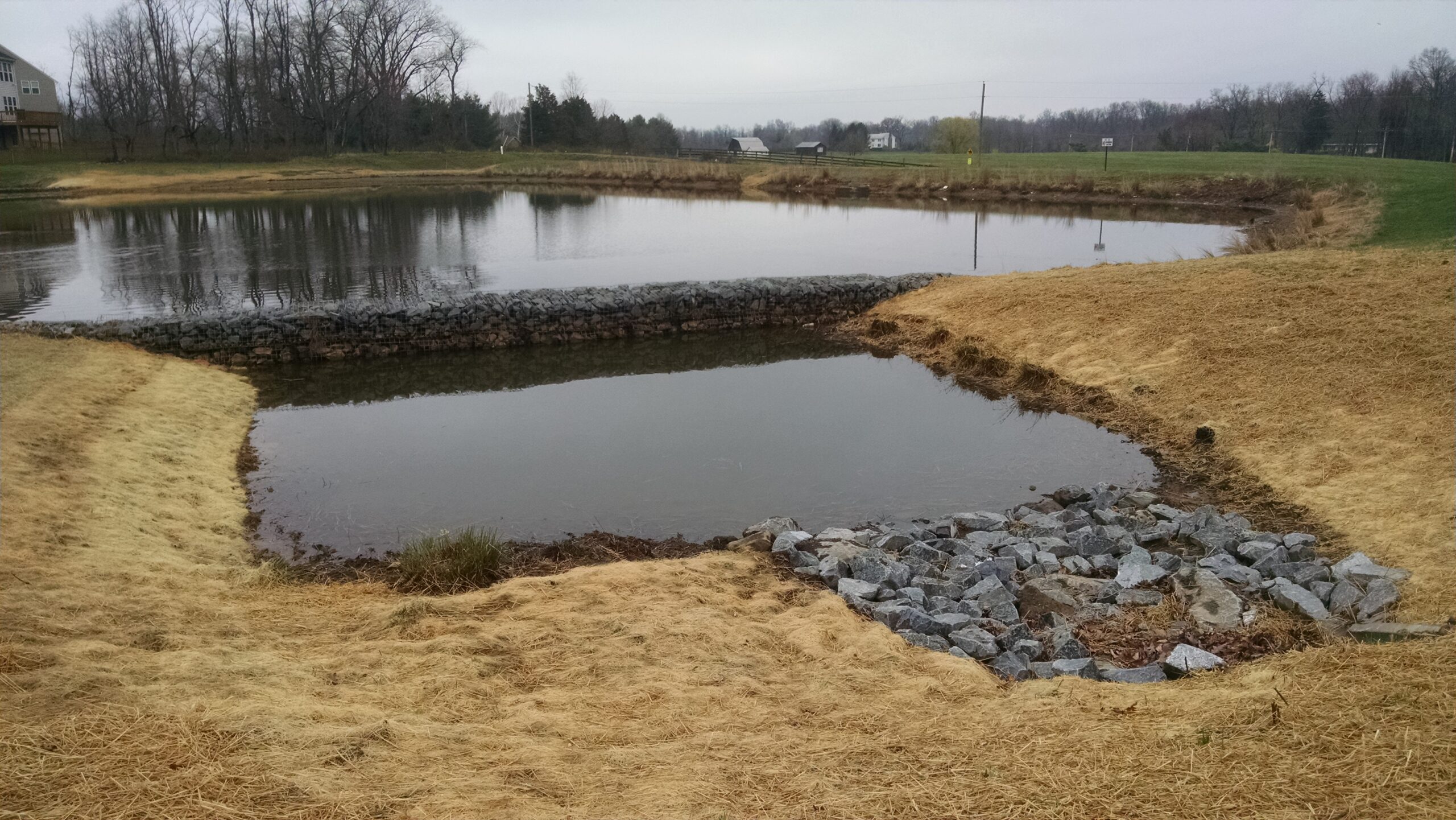
Forebays are typically located at inlets. They are small areas segregated from the rest of the pond by rip-rap, stone gabions or earth embankments.
The purpose of a forebay is to collect sediment before it enters the rest of the pond, making maintenance and sediment removal easier. They need to be checked periodically for sediment build-up to function properly and should also be kept clear of trees and invasive vegetation.
What Is the Purpose of an Emergency Spillway?
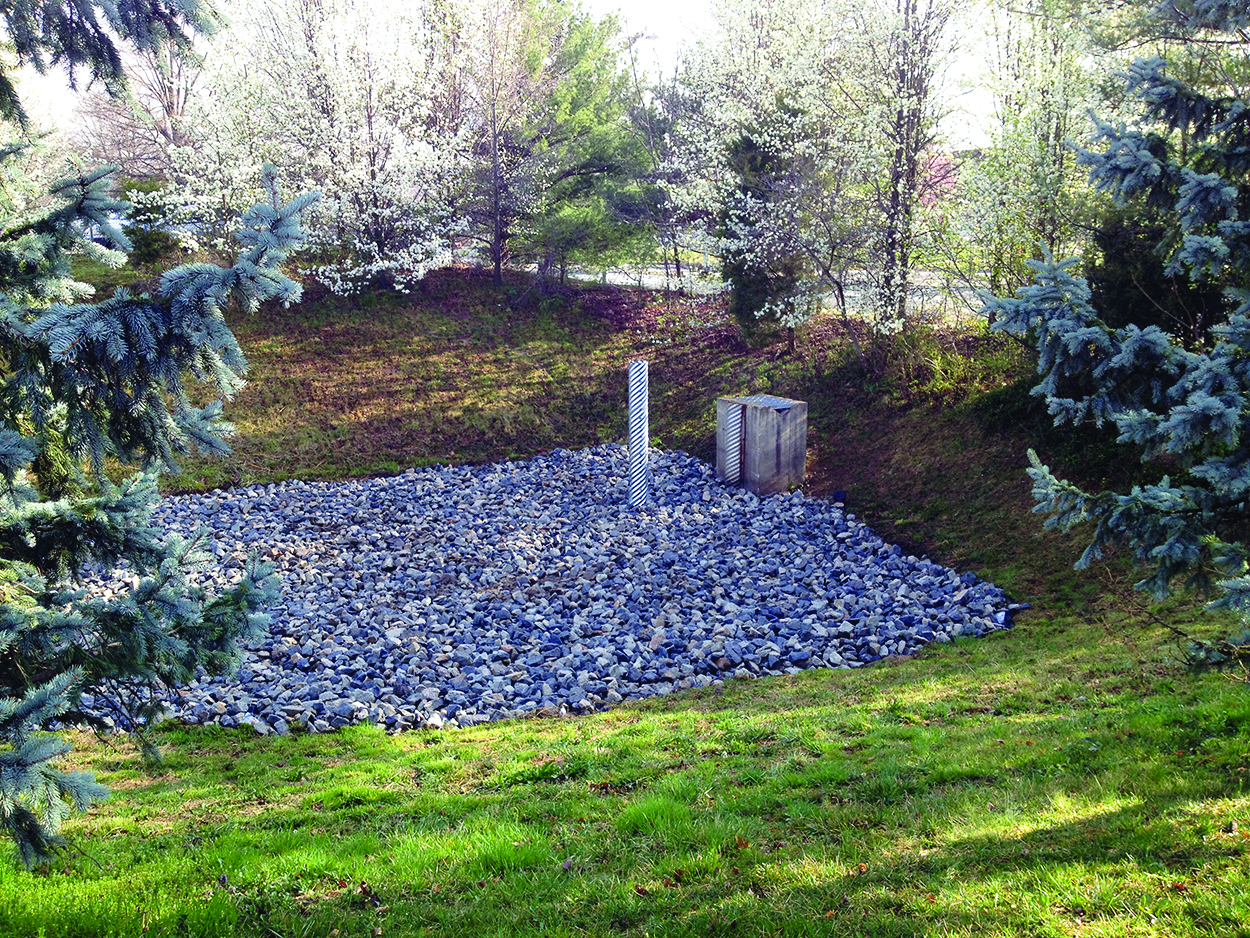
The emergency spillway is a cut-out at the top of the embankment where water can leave the pond during an extreme storm or rain event. These areas can be stabilized with concrete, rip-rap, or herbaceous vegetation.
Maintaining Your Stormwater Pond’s Emergency Spillway
The emergency spillway should be kept clear of trees, sediment, animal burrows, and debris. If part of a classified dam, the emergency spillway may have different design and maintenance criteria that could entail more intensive or additional maintenance activities. They need to be checked for any erosion or structural weaknesses during regular inspections.
What Is A Stormwater Pond Safety Bench?
Many stormwater ponds include safety benches, depending on their age and local design requirements. These benches are typically constructed one foot above and one foot below the permanent pool elevation to provide a gradual transition at the water’s edge and improve public safety.
They should be inspected regularly and maintained free of trees and invasive vegetation while being stabilized with turfgrass or appropriate wetland vegetation.
Case Study: Restoring Compliance for a Stormwater Pond
Background
In 2012, a commercial property owner in Newark, Delaware, faced enforcement action from New Castle County after an inspection revealed significant deficiencies in their 2,832-square-foot stormwater pond.
County Inspection Findings
The county identified several maintenance failures caused by years of neglect:
- Active erosion around the storm sewer manhole and inlet pipe.
- A detached low-flow standpipe that was off to the side of the facility.
- Sediment, vegetation, and debris accumulation in the rip-rap inlet forebay.
- A separated and leaking flared end section at the inlet.
The Repair Strategy
SOLitude Lake Management developed a cost-effective plan to restore functionality without expensive engineering changes. The construction was completed in under five days using the following steps:
- Basin Restoration: Removed organic debris and restored the basin to its original engineered grade.
- Inlet Repair: Re-sealed the flared end section and installed woven geotextile fabric to prevent future erosion.
- Outlet Maintenance: Installed a new, engineered galvanized low-flow riser standpipe to ensure proper drainage.
- Site Stabilization: Applied 25 tons of rip-rap stone, followed by topsoil, seed, and erosion control matting.
Project Outcome
The county signed off on the repairs in May 2013, averting legal fines and allowing the property to remain in the county amnesty program. This program provides critical assistance for large structural issues and pond failures. The client now utilizes a proactive maintenance program to ensure long-term compliance and system health.
Maintain A Functional Stormwater Management Facility
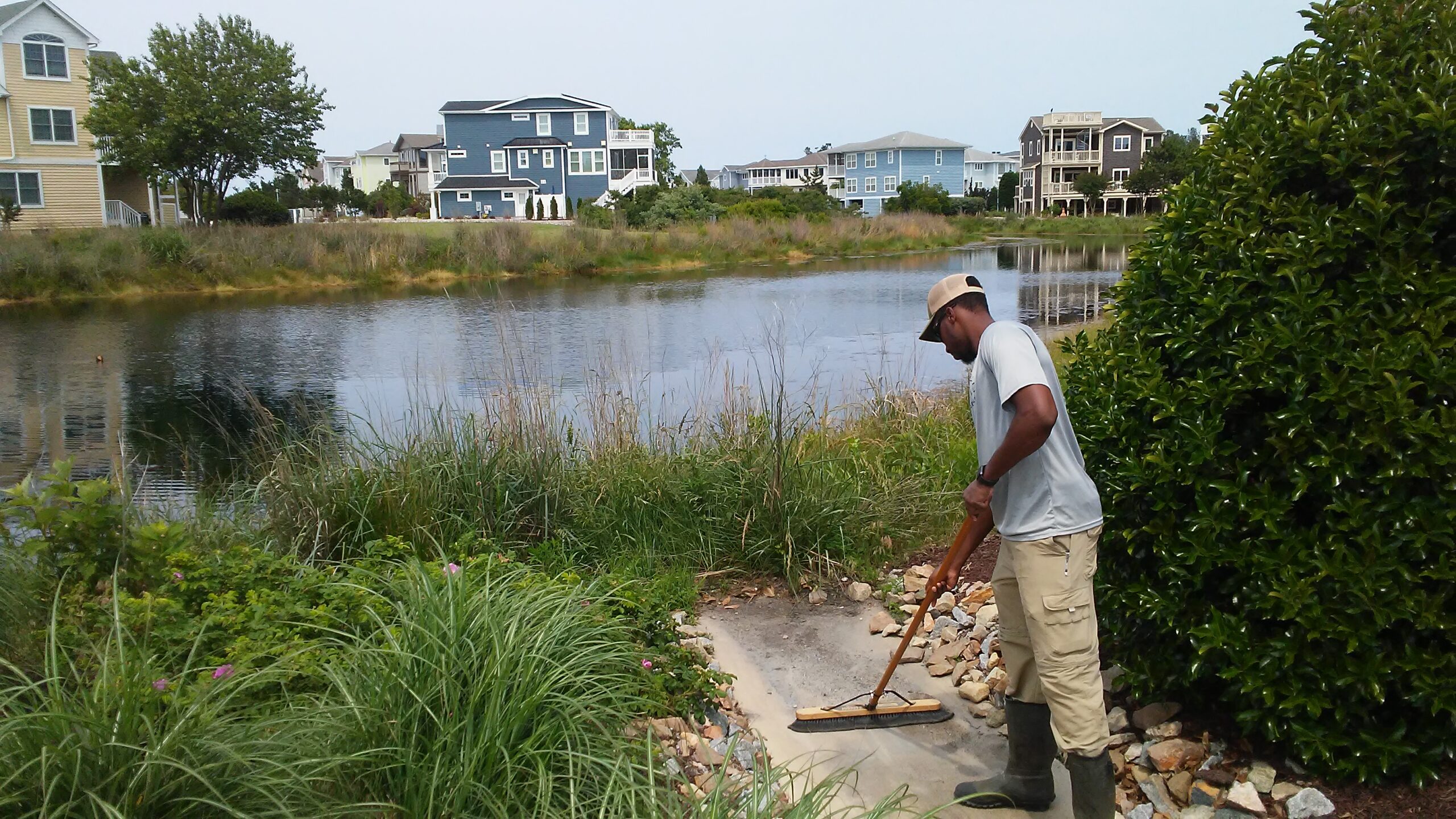
For water quality management professionals who work with stormwater systems on a day-to-day basis, the basic stormwater management pond parts are easy to identify. Professionals must remember that when most people outside of the water quality management industry read an inspection report or are told that they have a clogged outlet structure or a separated inlet pipe, they may have no idea what that is or how it could impact their pond or BMP.
Taking the time to educate a client on the fundamentals of stormwater management is the first step to developing the type of relationship required to implement a successful stormwater maintenance or repair program.
Key Takeaways About Stormwater Pond Management
- Understand Core Components: Every stormwater pond relies on specific parts—including embankments, outlet structures, inlets, forebays, emergency spillways, and safety benches—that must be monitored to ensure optimal performance.
- Prioritize Proactive Maintenance: Regular inspections, particularly after significant rain events, are necessary to identify issues like sediment buildup, erosion, or debris blockages before they lead to costly repairs.
- Ensure Regulatory Compliance: Consistent maintenance is the best way to stay in compliance with local stormwater and dam safety regulations, protecting property owners from fines and enforcement actions.
Maintain A Balanced Pond with Professional Maintenance
SOLitude Lake Management is a nationwide environmental firm committed to providing sustainable solutions that improve water quality, enhance beauty, preserve natural resources and reduce our environmental footprint. SOLitude’s team of aquatic resource management professionals specializes in the development and execution of customized lake, pond, wetland and fisheries management programs that include water quality testing and restoration, nutrient remediation, algae and aquatic weed control, installation and maintenance of fountains and aeration systems, bathymetry, mechanical harvesting and hydro-raking, lake vegetation studies, biological assessments, habitat evaluations, and invasive species management. Services and educational resources are available to clients nationwide, including homeowners associations, multi-family and apartment communities, golf courses, commercial developments, ranches, private landowners, reservoirs, recreational and public lakes, municipalities, drinking water authorities, parks, and state and federal agencies. SOLitude Lake Management is a proud member of the Rentokil Steritech family of companies in North America.