

Article Summary
- Learn what pond succession is and how sediment and organic matter contribute to the aging process.
- Explore how a pond changes as it becomes shallower and vegetation becomes established.
- Understand the difference between pond succession and eutrophication.
- Discover how preventative maintenance and sediment management can help extend a pond’s lifespan.
Learn how ponds age over time and discover how proactive management can slow the natural succession process.
What Is Pond Succession?
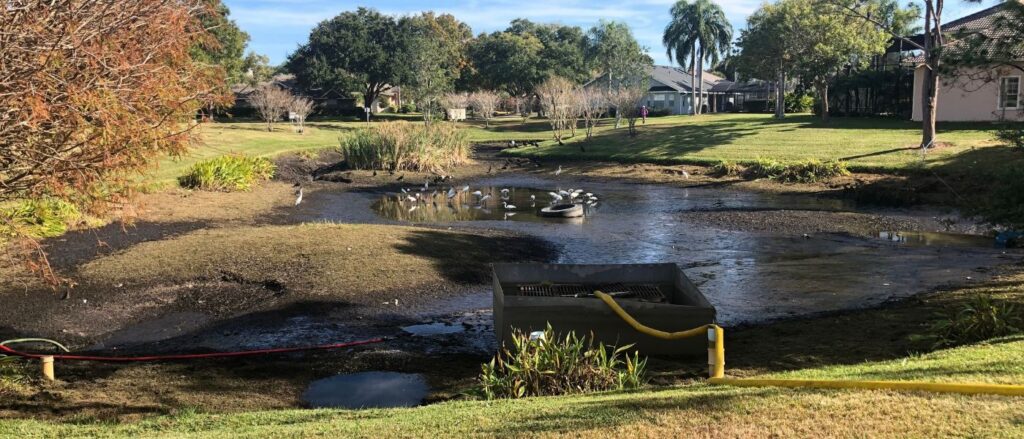
Pond succession is the natural process by which a pond gradually fills with organic matter and sediment over time. Left unmanaged, most ponds will naturally transition into a bog, then a field, and eventually a forest.
Preventative pond maintenance helps slow this process, extending the life and function of the pond for many years.
Concerned about sediment buildup or decreasing pond depth? SOLitude’s aquatic experts can help you develop a management plan to support your pond’s long-term health.
What Determines a Pond’s Lifespan?
Like all living things, lakes and ponds have a lifespan. When a waterbody is formed, either by man or Mother Nature, it immediately begins to expire – its lifespan is determined by how fast it “fills in.” As grim as that might seem, it’s simply the way nature works.
The rate of pond succession varies widely depending on factors such as watershed size, nutrient inputs, sediment runoff, surrounding land use, and whether the pond receives ongoing maintenance.
How Does a Pond Change Over Time?
Lakes and ponds are dynamic, ever-changing environments. Plants and animals are constantly living, growing, reproducing, and dying within an ecosystem.
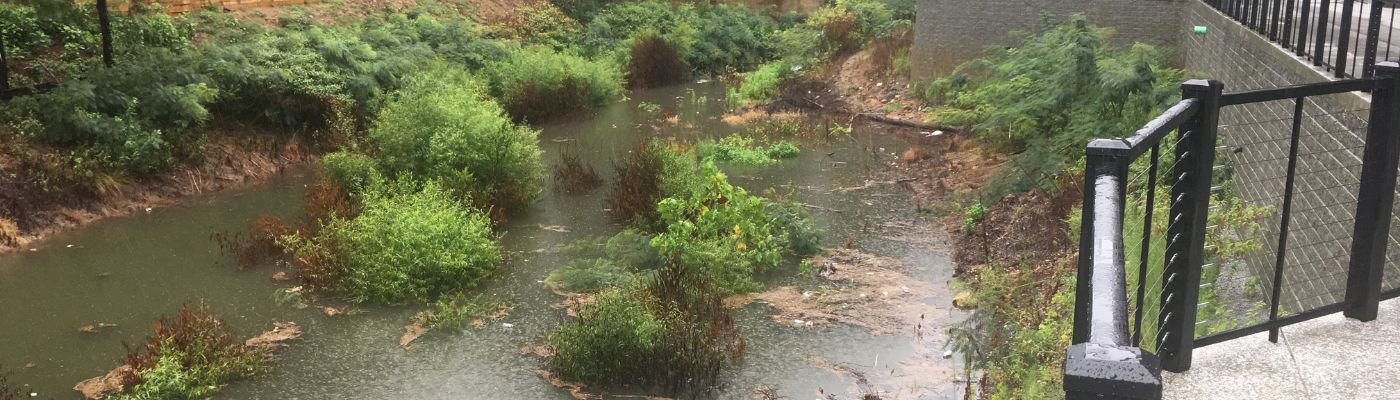
At the same time, the pond serves as a collection basin for the surrounding watershed. A waterbody’s purpose—especially a stormwater pond—is to collect and filter rainwater, sediment, and organic matter like leaves and fertilizers carried by runoff during rainstorms.
Because ponds continually collect sediment from runoff and organic material from decaying plants, algae, leaves, and aquatic organisms, they naturally become shallower over time. This gradual accumulation is what drives pond succession.
Young Ponds and Organic Matter Accumulation
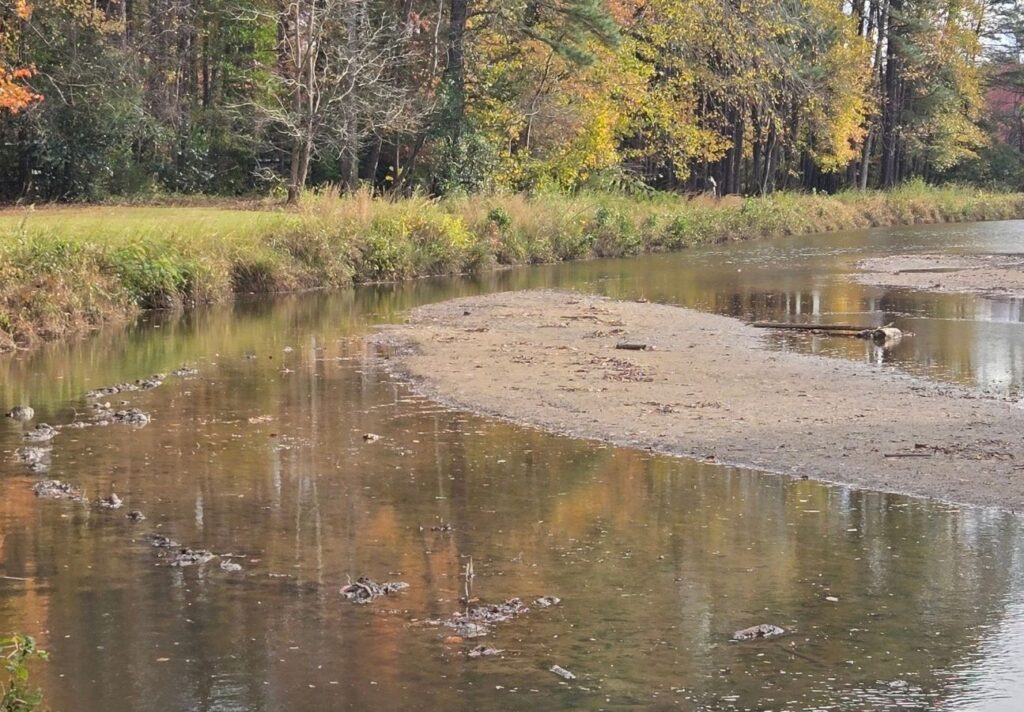
Young ponds generally contain very little accumulated organic matter. At this stage, ponds may primarily support algae.
When algae die, it decomposes into organic matter and becomes food for more algae to grow. This organic matter accumulates on the bottom of the pond and begins to decrease its depth.
Leaves and grass clippings that enter the pond also increase the amount of organic matter, causing the pond to become shallower more rapidly.
What Happens As the Pond Matures?
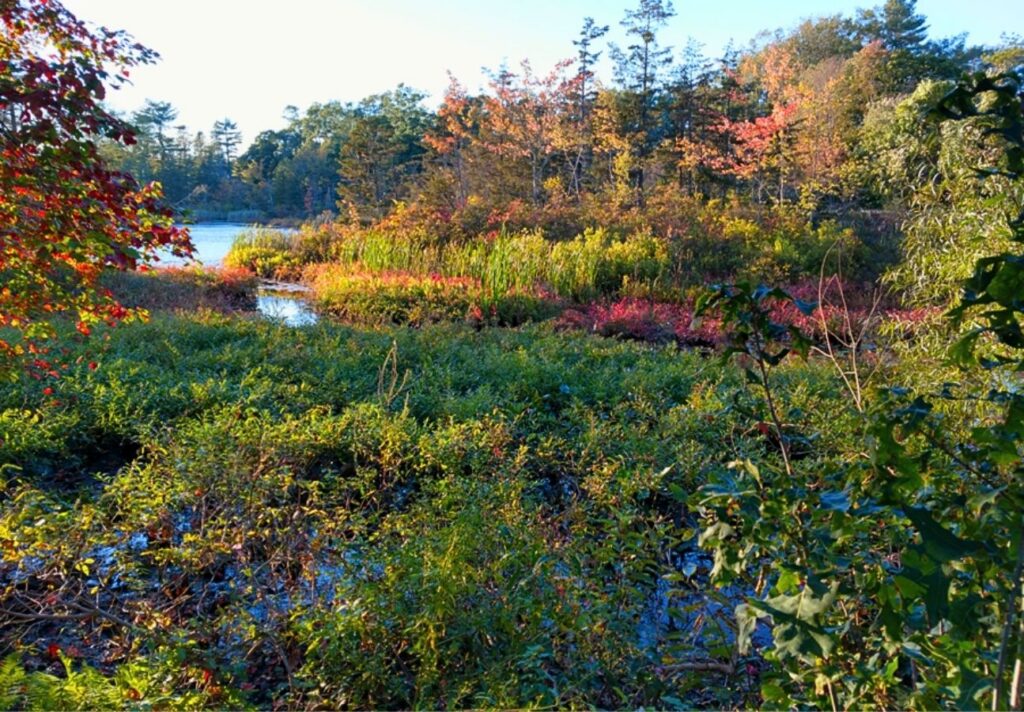
When enough organic matter builds up, plants begin to grow. First, floating and submersed plants become established. At this point in the pond’s life, it can support other organisms such as fish, amphibians, and reptiles. As these organisms live and die, they continue to contribute organic matter to the pond.
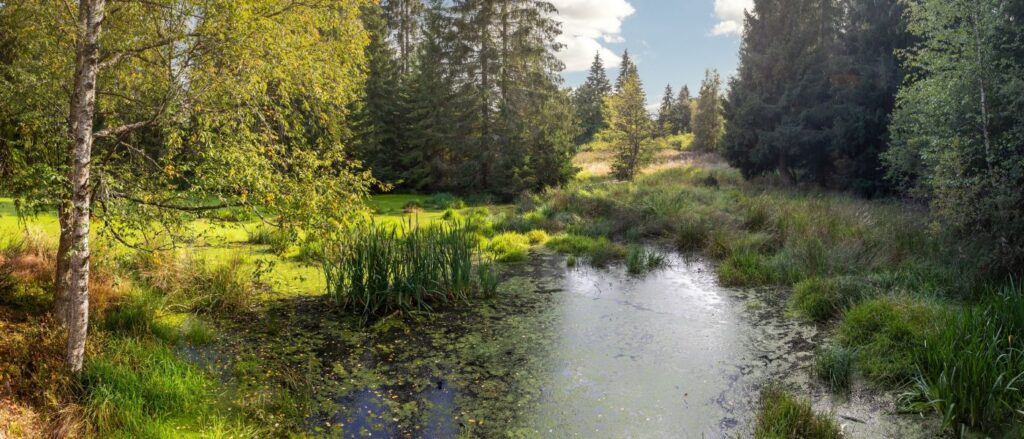
Eventually, emergent plants begin to grow. By this time, the pond is mature and has accumulated a significant layer of organic and inorganic sediment on the bottom. Sediment continues to fill in the pond, causing the water depth to decrease over time until a swamp or bog is formed.
Transition From Water to Land
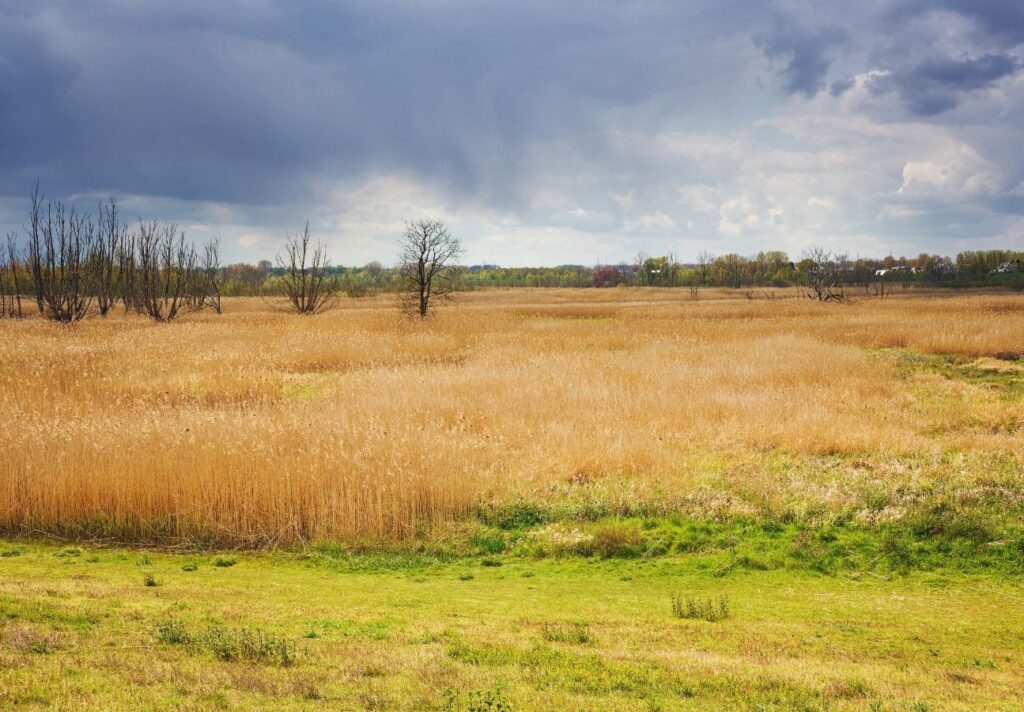
Continuing on with succession, the bog will eventually dry up and become a field.
Given enough time, the former pond area will begin to support trees and will ultimately become a forest.
Pond Succession vs. Eutrophication
The terms succession and eutrophication sometimes get confused, but they are distinct phenomena.
Succession is the natural process by which a pond gradually ages and fills in over time.
Eutrophication is a process that can accelerate succession by increasing algae and aquatic plant growth, which eventually decomposes and adds more organic matter to the pond.
Can Pond Succession Be Slowed?
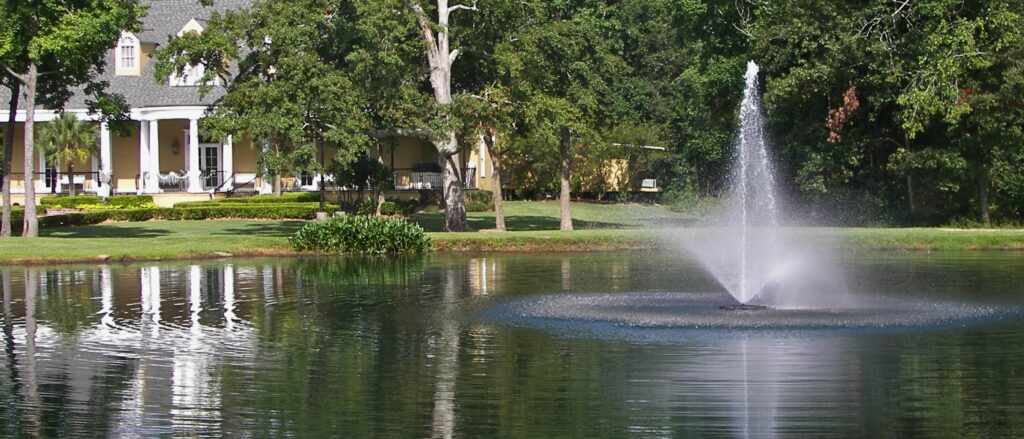
Maintaining and executing a proper pond maintenance plan helps keep your pond healthy and functioning as intended. Many of the ponds SOLitude manages are part of residential communities, golf courses, or commercial properties, so they must be maintained to ensure they continue functioning as part of a stormwater system.
The life process described here is what would happen if a pond were abandoned and left alone to let nature take its course.
Just as we help extend our own lives by taking care of our bodies, proper pond management helps extend the life of a pond. With routine maintenance, dredging when necessary, and proactive management, you can significantly slow the natural succession process and enjoy a healthy, functional pond for many years to come.
Key Takeaways:
- Pond succession is the natural aging process of lakes and ponds.
- Sediment and decomposed organic matter gradually make ponds shallower over time.
- Eutrophication can accelerate pond succession by increasing algae and plant growth.
- Preventative maintenance can help significantly slow the succession process and extend a waterbody’s lifespan.
Your Partner In Worry-Free Lake & Pond Management
SOLitude Lake Management is a nationwide lake and pond management company committed to providing sustainable solutions that improve water quality, enhance beauty, and preserve natural resources.
SOLitude’s team of aquatic scientists specializes in developing and executing customized lake, stormwater pond, wetland, and fisheries management programs. Services include water quality testing and restoration, algae and aquatic weed control, installation and maintenance of fountains and aeration systems, shoreline erosion control, muck and sediment removal, and invasive species management. SOLitude partners with homeowners’ associations, golf courses, private landowners, businesses, and municipalities.
Connect with SOLitude Lake Management on Facebook, LinkedIn, and YouTube.