



The Problem:
A 0.5-acre hypereutrophic pond on the Stony Brook University main campus was suffering from severe nutrient overloading. Working with Dr. Christopher Gobler, Distinguished Professor and Endowed Chair of Coastal Ecology and Conservation at Stony Brook University, the project aimed to reverse years of accumulation through intensive study and treatment.
Key Issues:
- Hypereutrophic status with excessive nutrient loads.
- Accumulated muck and sediment are reducing pond volume.
- Poor aesthetics.
The Objective:
- Implement a “Rapid Muck Reduction” program.
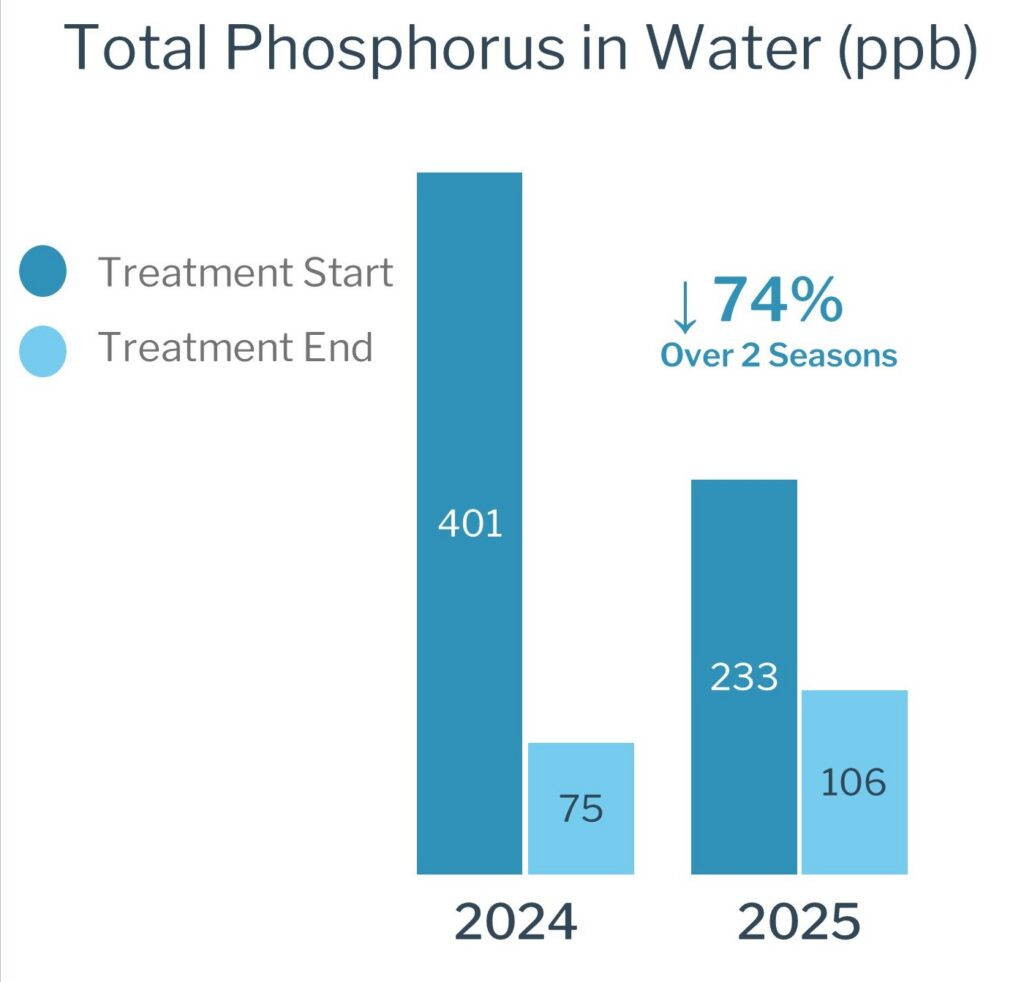
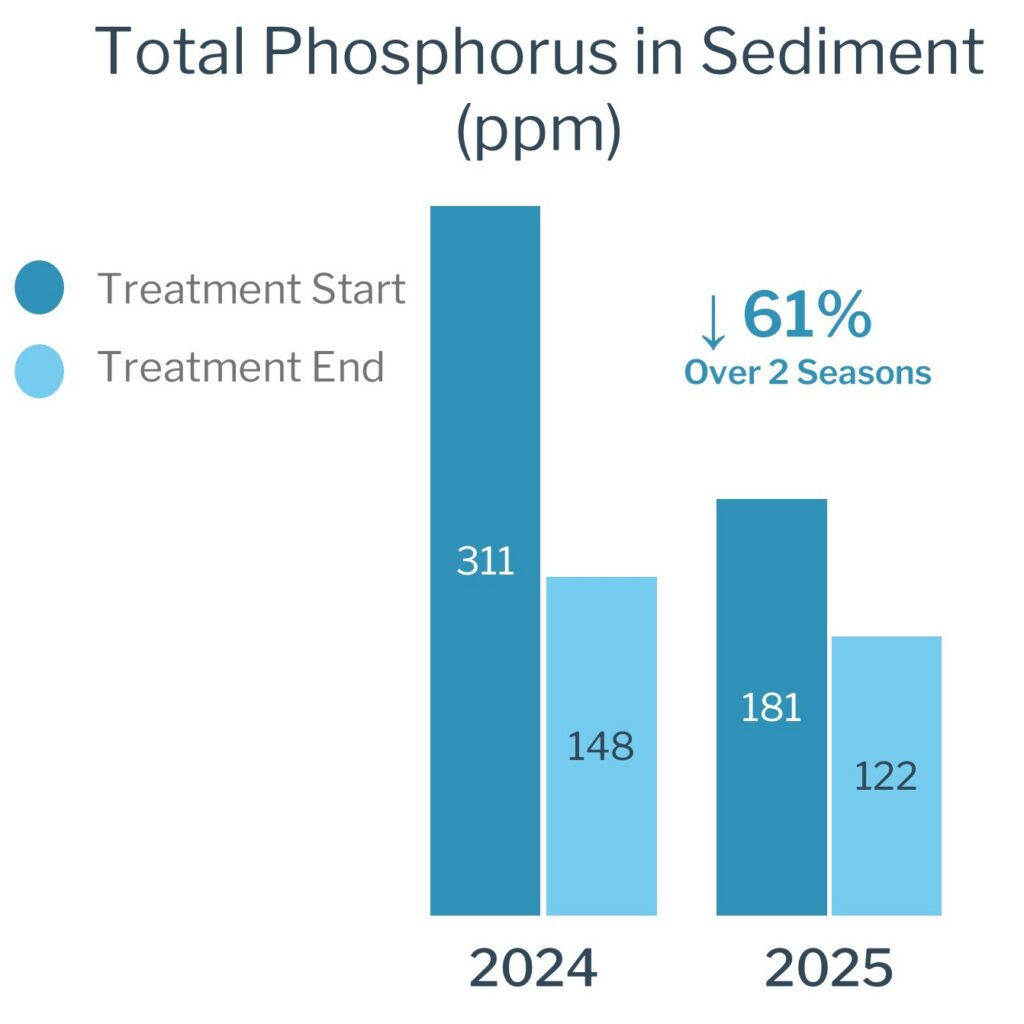
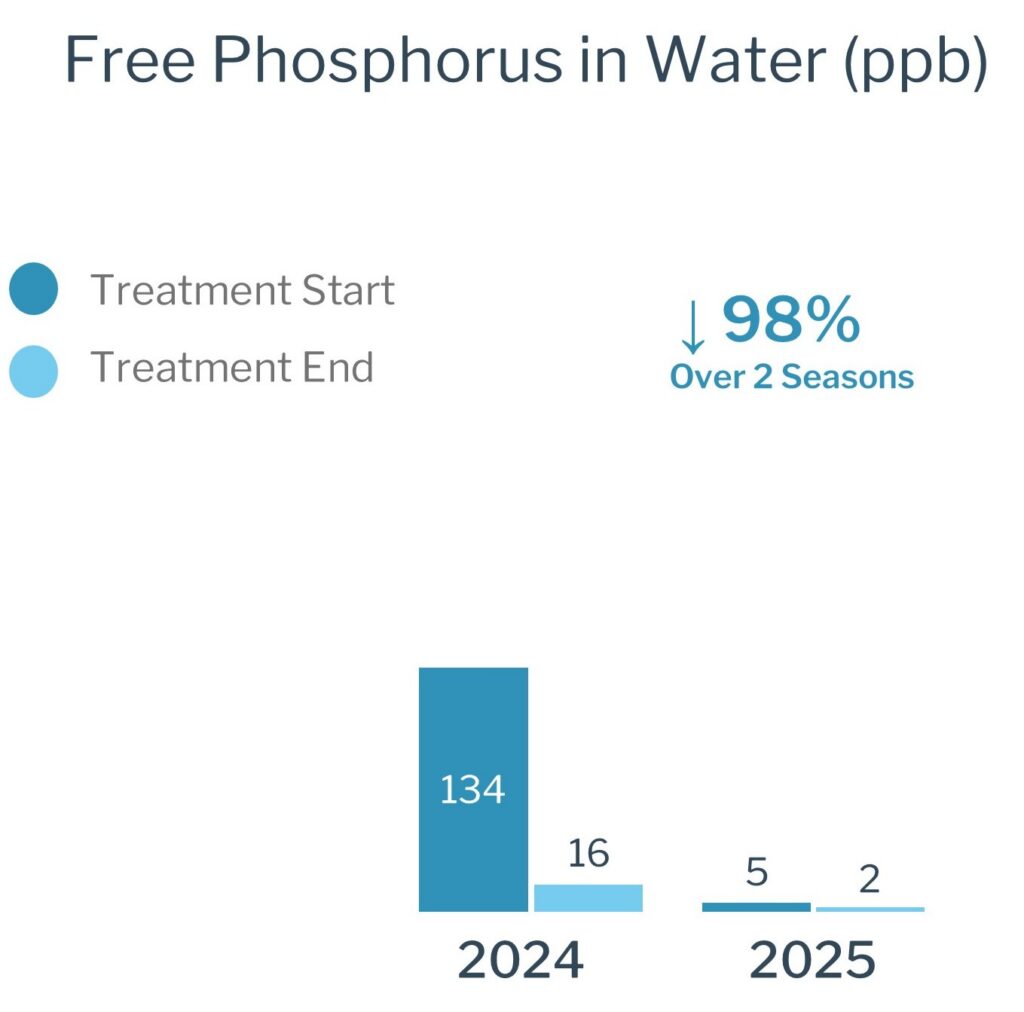
- Significantly reduce Total Phosphorus (TP) in the system.
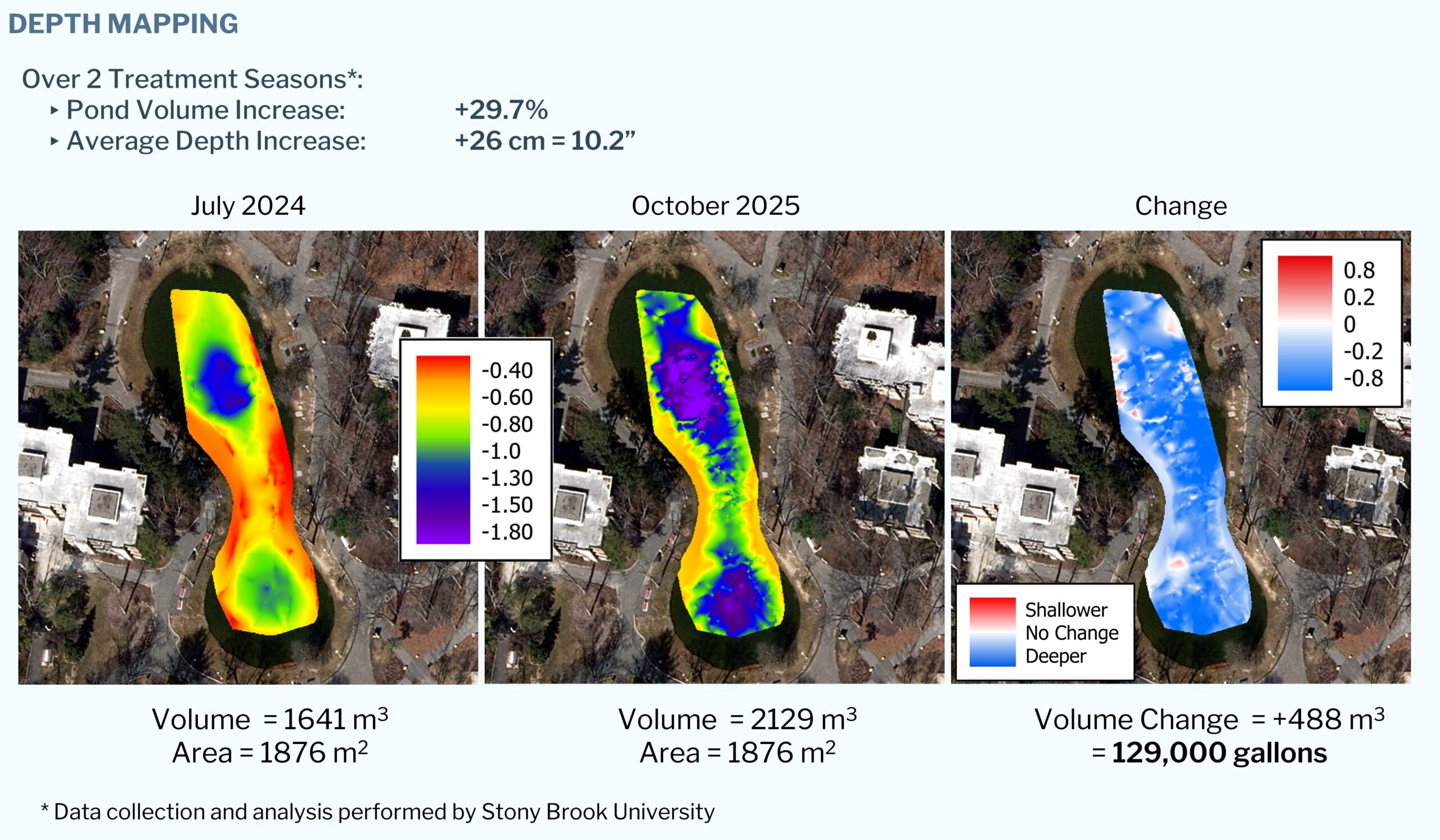
- Restore water volume by reducing sediment depth.
The Solution Overview:
A TryMarine treatment program was deployed over the 2024 and 2025 seasons. The program focused on processing impurities back into the food web to enhance the pond’s capacity to naturally handle high nutrient loads. Bathymetric surveys using HYCAT sonar were utilized to track precise volume changes throughout the restoration process.
The Results:
The pond saw a dramatic transformation over two seasons, with phosphorus reductions sustained even through seasonal breaks in treatment. The removal of sediment led to a significant increase in total water capacity.