




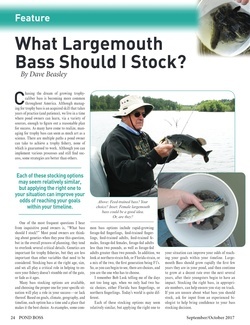
What Largemouth Bass Should I Stock?
October 30th, 2017
AS SEEN IN Pond Boss Magazine: Written by Industry Expert Dave Beasley, Fisheries Biologist & Director of Fisheries Chasing the dream of growing trophy caliber Largemouth Bass is becoming more common throughout America. Although managing for trophy bass is an acquired skill that takes years of practice (and patience), we live in a time where pond […]
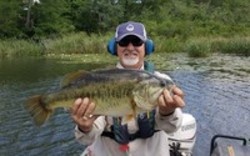
Should I be concerned with genetics when stocking Largemouth Bass?
October 17th, 2017
Written by Industry Expert Dr. Vic DiCenzo, Fisheries Biologist Fish stocking is one of the most common management practices employed by fisheries managers to help enhance recreational fishing. There are a variety of reasons why managers stock fish: • Establish populations in new or reclaimed lakes and ponds • Supplement a population that experiences poor […]
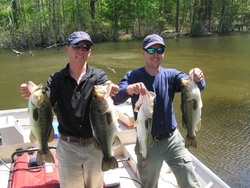
Patience Is Key: Raising Trophy Largemouth Bass
September 21st, 2017
Topics:
Fisheries Management
Written by Industry Expert Aaron Cushing, Fisheries & Wildlife Biologist With so much instant gratification in life these days, it is becoming harder and harder for people to exercise patience. When it comes to fisheries management, however, patience often leads to great future rewards. A pond owner in North Carolina decided to take the patient […]
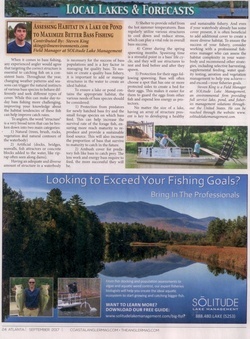
Assess Fish Habitat to Maximize Better Bass Fishing
September 14th, 2017
AS SEEN IN Angler Magazine: Written by Industry Expert Steven King, Field Manager When it comes to bass fishing, any experienced angler would agree that targeting the correct structure is essential to catching fish on a consistent basis. Throughout the year, changing weather patterns and seasons can trigger the natural instincts of various bass species […]
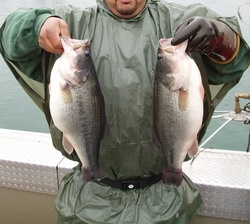
The Benefits of Stocking All Female Largemouth Bass
August 3rd, 2017
Written by Industry Expert Dr. Vic DiCenzo, Fisheries Biologist There are approximately 4.5 million lakes and ponds in the United States, and many of these waterbodies are utilized for recreational fishing. Anglers often have wide ranging objectives for their fishing experience, including catching fish to eat, catching and releasing a variety of fish for sport, […]
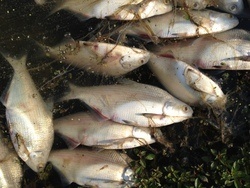
6 Tips to Prevent Summer Fish Kills & Improving Pond Water Quality
July 20th, 2017
Hot summer temperatures can put a strain on aquatic environments and often push animals, such as fish, to their limits. As temperatures increase, so does the possibility of a fish kill. When a fish kill is discovered, it’s common for communities to fear the worst – from chemical spills to foul play. However, most fish […]
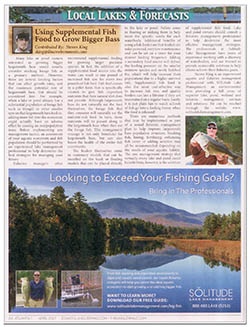
Fisheries Management: Grow Bigger Bass with Supplemental Fish Food
July 13th, 2017
AS SEEN IN The Angler Magazine: Written by Industry Expert Steven King, Field Manager Many lake or pond owners interested in growing bigger Largemouth Bass would usually consider stocking forage fish as a primary method. However, there are several limiting factors that can affect growth rates, and the maximum potential size of Largemouth Bass, that should […]
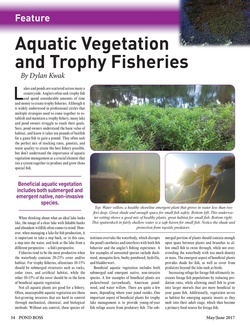
Aquatic Vegetation and Trophy Fisheries
July 6th, 2017
AS SEEN IN Pond Boss Magazine: Written by Industry Expert Dylan Kwak, Wildlife & Fisheries Biologist Lakes and ponds are scattered across many a countryside. Anglers often seek trophy fish and spend considerable amounts of time and money to create trophy fisheries. Although it is widely understood in professional circles that multiple strategies need to […]
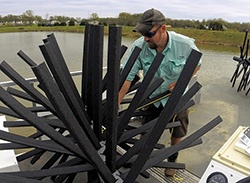
Fish Habitat Management: “Cover” Your Waterbody
February 9th, 2017
Written by Industry Expert Paul Dorsett, Fisheries Biologist and Territory Leader How to Create a Better Aquatic Habitat for Your Fish There’s an old adage that states, “Ninety percent of fish live in ten percent of the water.” This statement has more truth than most realize. Fish move throughout their environment for a variety of […]
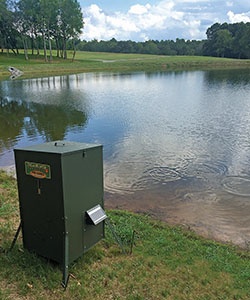
Five Benefits of Feeding Fish with Automatic Fish Feeders
January 19th, 2017
Topics:
Fisheries Management
Written by Industry Expert, Aaron Cushing, Fisheries and Wildlife Biologist and Environmental Scientist Regularly feeding the fish in your lake or pond with an automatic feeder can be beneficial for a variety of reasons. Many waterbodies are lacking a natural food source or don’t produce enough natural food to support the desired predator population. And […]