




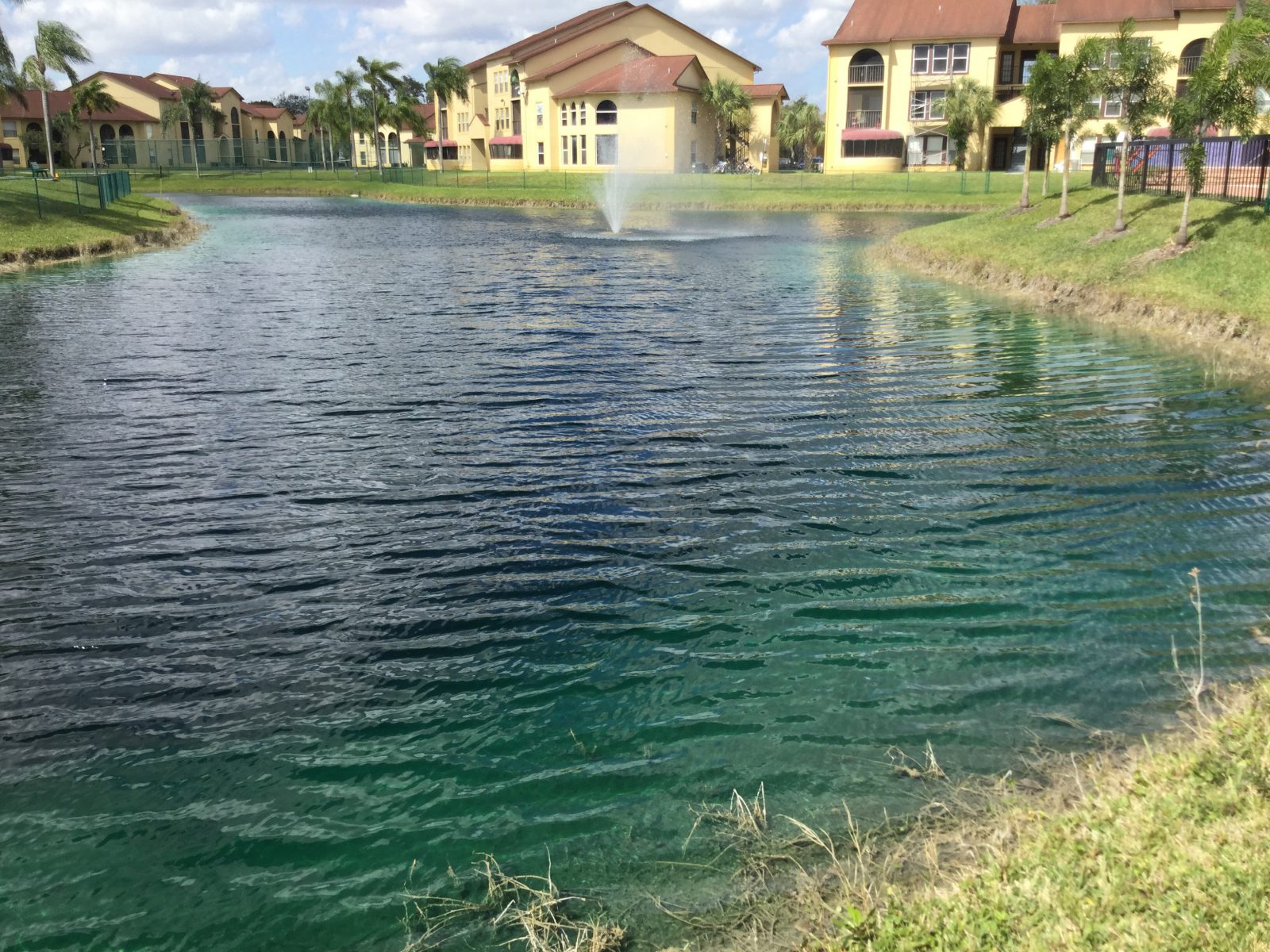
Maintaining healthy ecological balance and keeping up the appearance of your pond or lake can be frustrating. Reactive pond management is applied far too often to control problems that arise. One simple, cost-effective and proactive step that can be taken is to limit the amount of sunlight that is entering your waterbody with pond dye, or lake dye.
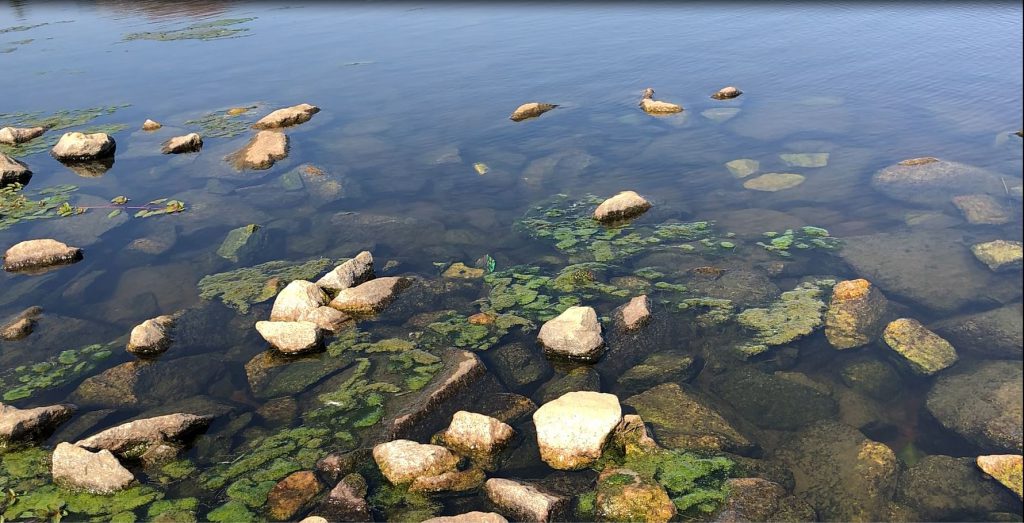
Why Shallow Areas Need UV Protection
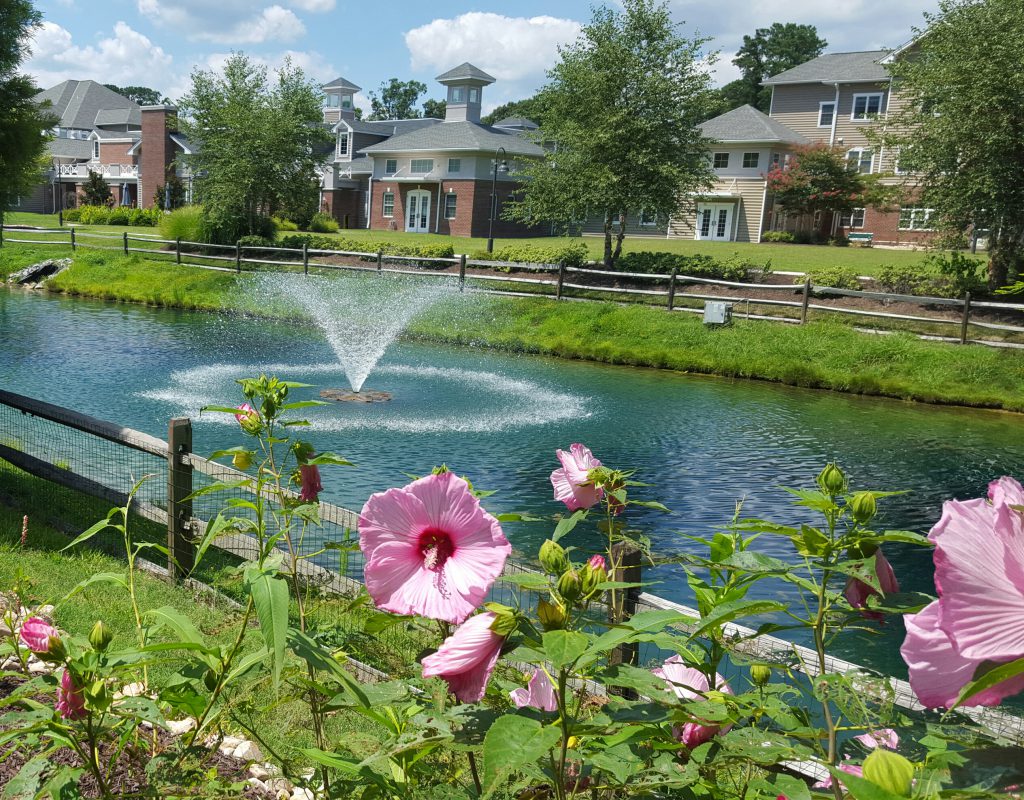
Choosing Between Blue and Black Dye
Almost all plants and algae require sunlight in order to grow through photosynthesis. In the electromagnetic spectrum, some wavelengths are more valuable than others. The strongest inhibitor of these UV penetrations is the color blue, which is why the most common lake dyes used are blue. However, black and other colors of pond and lake dye have been successful if the conditions are right. If the waterbody is not particularly shallow, it can be surprising to find out how far down the water column UV penetration can occur.
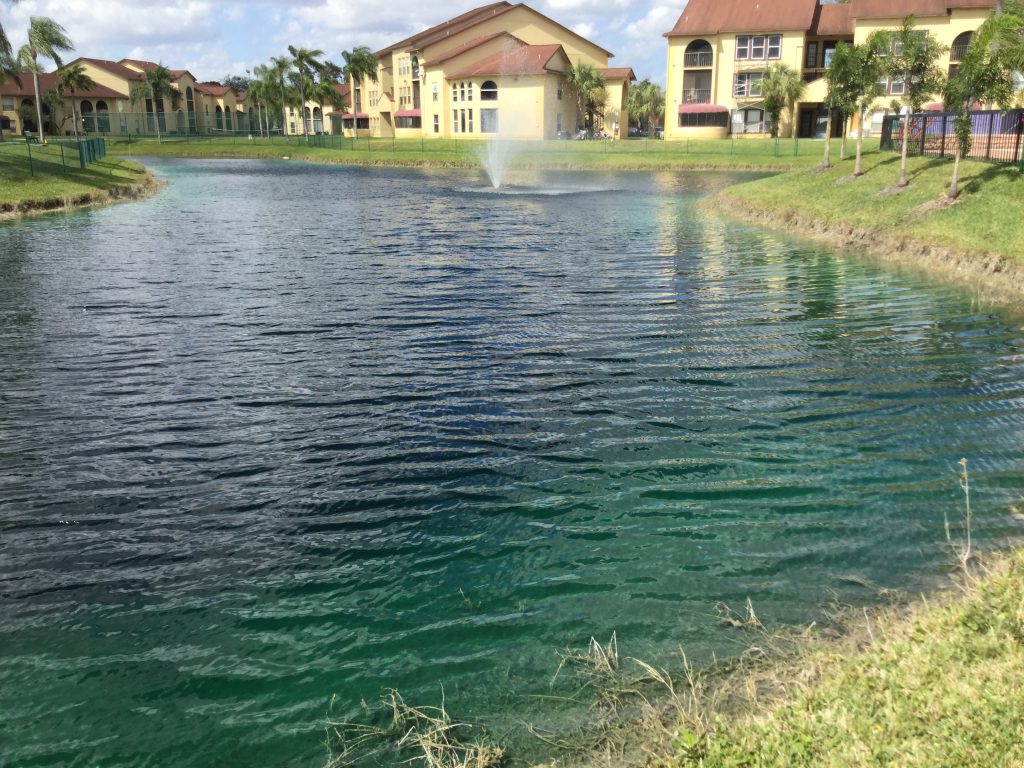
Maintaining Year-Round Coverage
In order to implement this lake management strategy successfully, a constant UV screen must be maintained, not just in the spring growing season. This is accomplished by applying pond dye regularly throughout the year, including the winter months. The constant color that is created for your water by regularly applying pond dye will be aesthetically pleasing to the eye all year round.
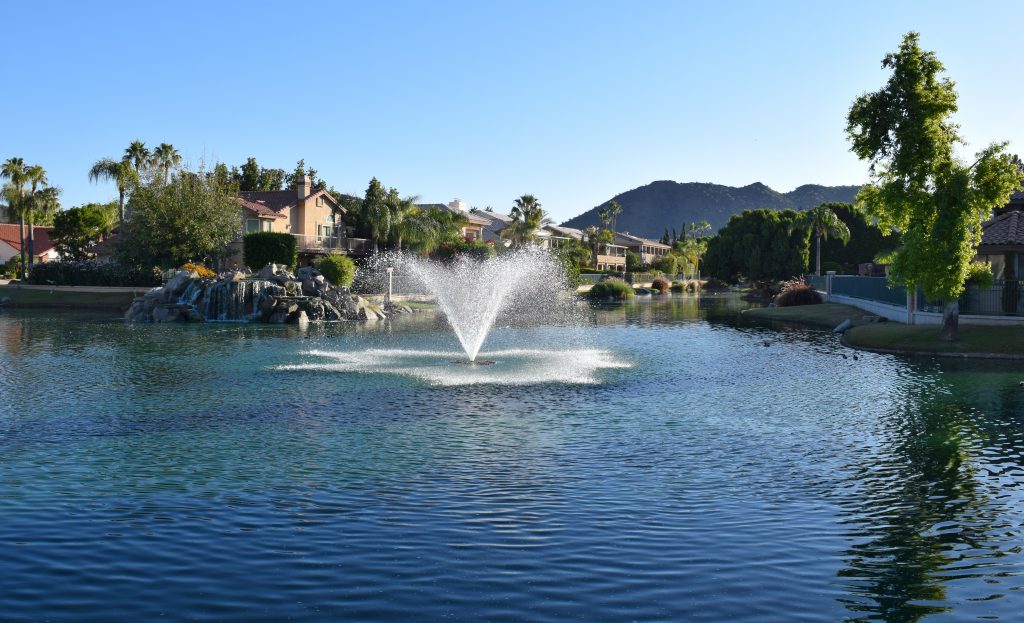
Application Tips and Best Practices
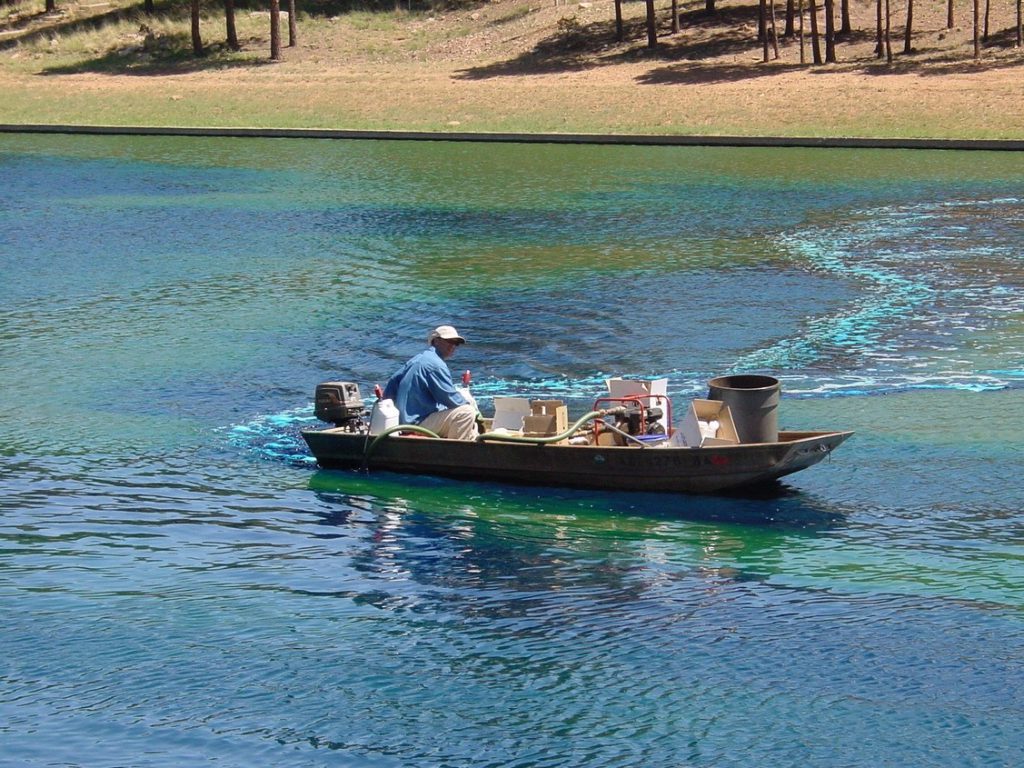
It can be tricky at first to determine the correct amount of pond dye for the initial application and subsequent applications throughout the year. Starting with the product manufacturer’s recommendations per acre foot is the general rule of thumb. Future applications should be tracked and monitored moving forward. If the waterbody has no or few outflows then less pond dye product will be needed to maintain a constant color. It is also important to mention that various shades of blue and black lake dyes can be mixed to achieve just the right color.
Safety and Environmental Considerations
The majority of pond dyes that are registered for aquatic use are rated as environmentally friendly and non-toxic, which means that they will not harm birds, reptiles, mammals, fish and turfgrass. During and after a dye treatment, using the waterbody for swimming and irrigation continues to be safe. If you ever have any concerns or doubts about the safety of these lake dye products, please check the product label or contact the experts at SOLitude.