





What Exactly Is Alum?
Alum, or aluminum sulfate, is a widely recognized and utilized solution for water quality restoration.
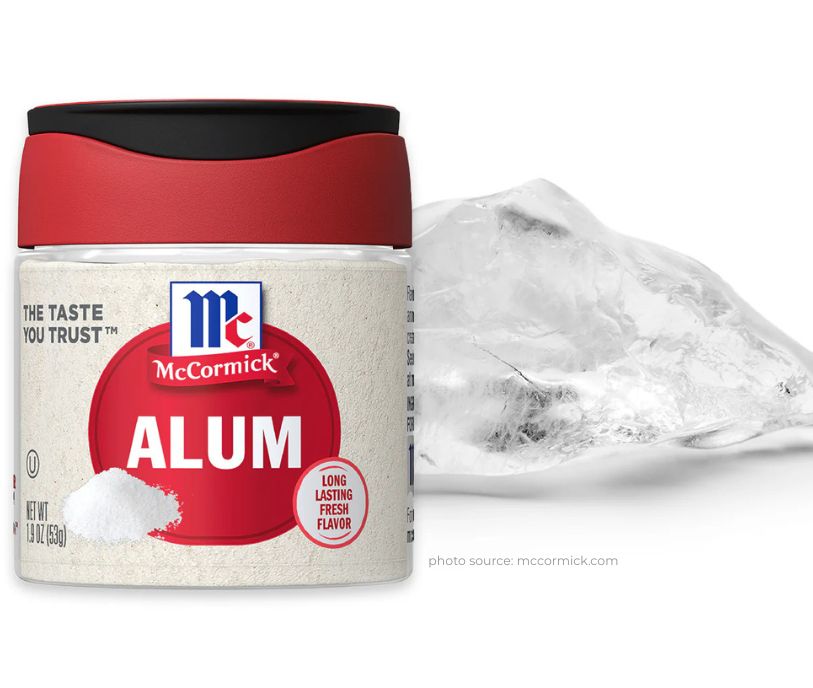
It’s a common substance, even found as a food additive in grocery stores. In lake management, a specialized, liquid form of alum is utilized to help restore water quality by binding with excess phosphorus and trapping it in the lakebed.
How Alum Works In the Water and Bottom Sediment to Reduce Phosphorus
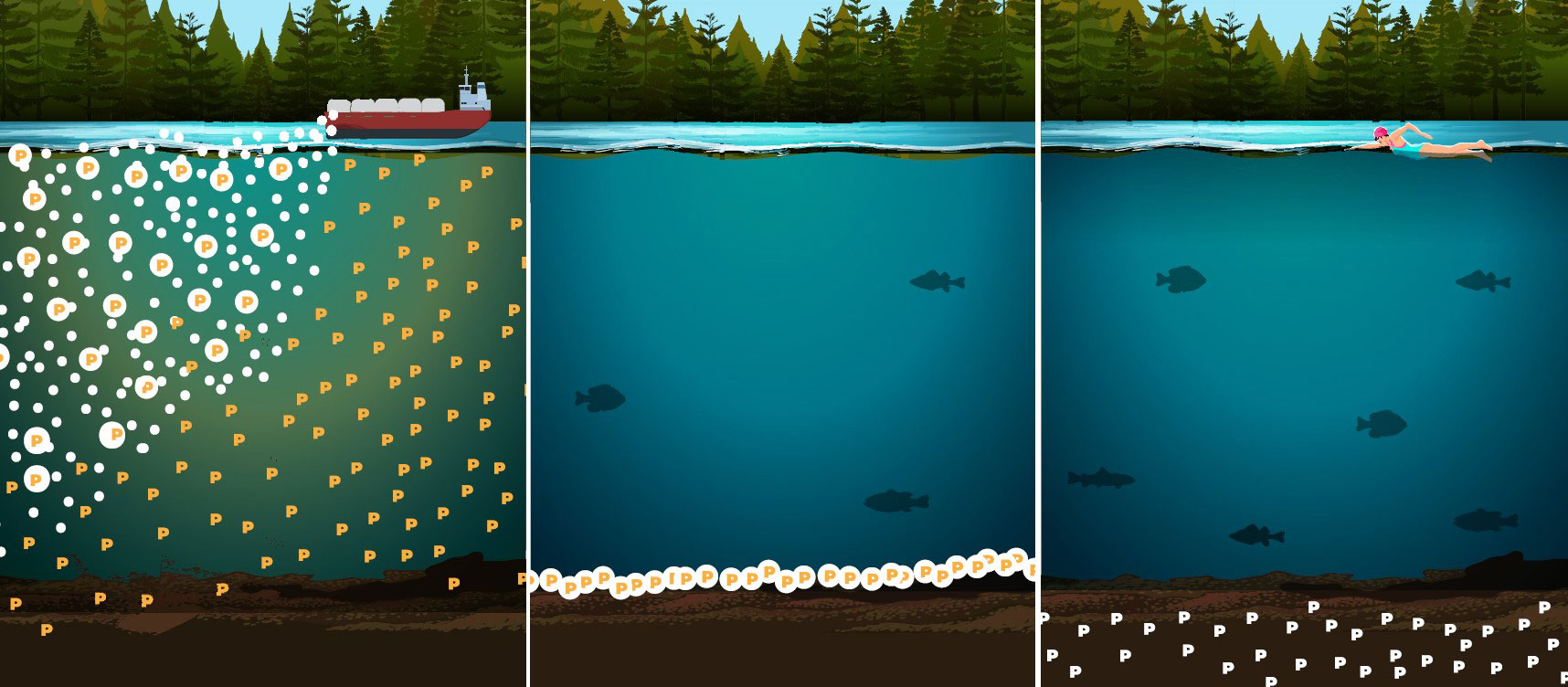
The primary goal of an alum treatment is to neutralize internal phosphorus loading—the process where nutrients stored in bottom sediments fuel poor water quality issues.
Alum is injected into the water, 18-24 inches below the surface, and forms a precipitate, commonly known as “floc.” Think of the floc as a phosphorus sponge. It contains unfilled binding sites that intercept and chemically bond with phosphorus. Once bound to the alum, phosphorus becomes “non-bioavailable.” It remains physically in the lake but is chemically locked away so algae cannot use it for growth.
As the floc gradually settles to the bottom, it binds with suspended phosphorus throughout the water column, capturing 50–90% of it. This process can lead to a noticeable improvement in water clarity.
Once the floc reaches the lake bed, it forms a thin, uniform layer that intercepts any future phosphorus attempting to release from the bottom sediments. Within weeks, the layer integrates into the top inches of sediment, where it remains active and continues to trap nutrients for years.
How Alum Is Applied with Precision

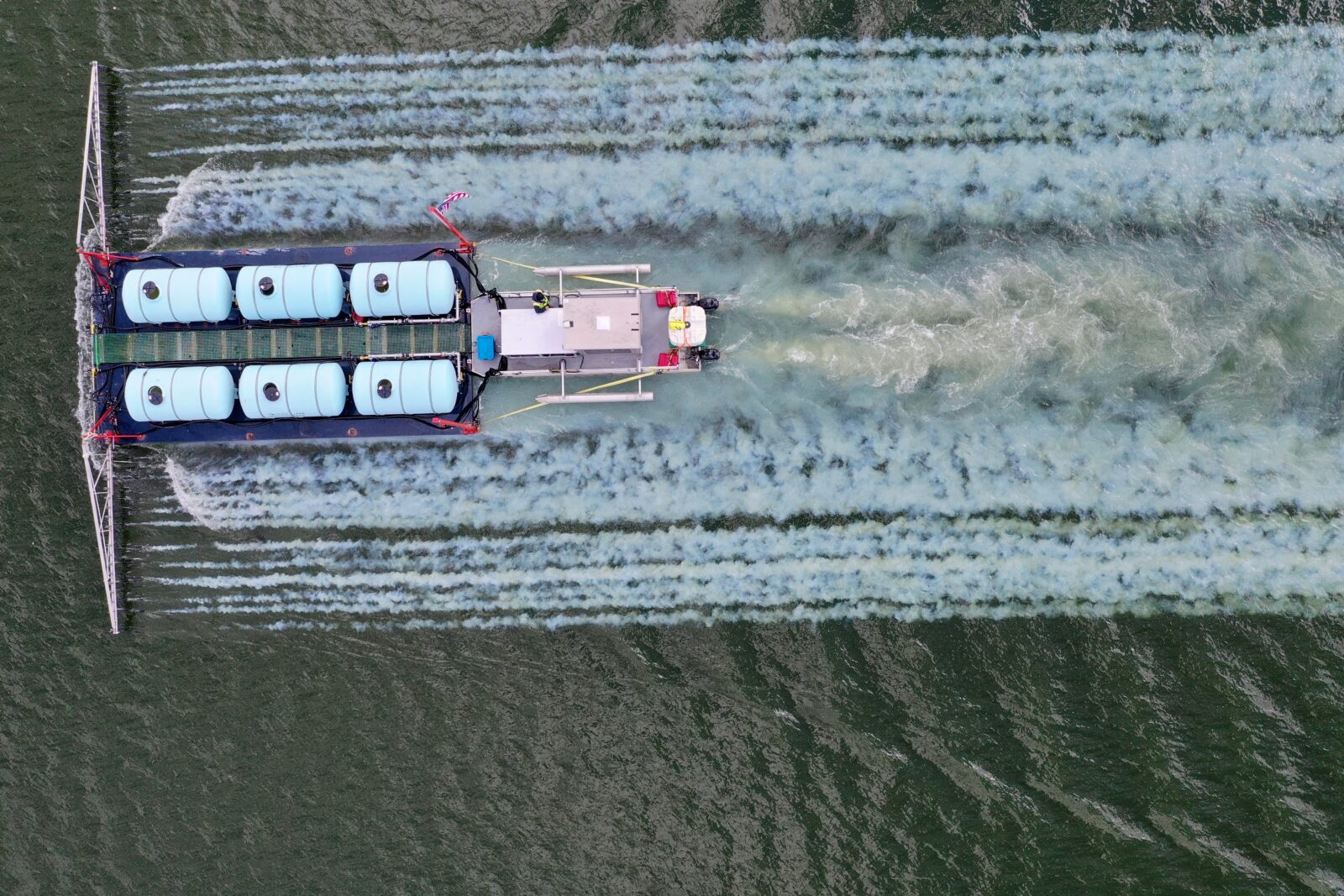
SOLitude’s team of experts has completed over 200 alum projects, improving over 35,000 acres of water in recreational lakes and drinking water reservoirs. Our state-of-the-art application vessels are custom-designed to apply alum safely and effectively.
Limiting Unwanted Fluctuations: To ensure precise applications, the barge is equipped with submerged nozzles that inject the alum below the surface. This design helps counter disturbances caused by wind or surface currents, preventing fluctuations in water quality parameters such as pH.
Computerized Flow Control: High-precision GPS and flow-control systems sync the injection pumps with the barge’s speed. If the boat slows down, the pump slows down, ensuring a perfectly uniform application rate across the entire treatment zone. This ensures there are no “gaps” in the application where internal loading can bypass the alum and get into the water column.
Geo-Fencing: To prevent application in sensitive or unintended areas, the system uses geo-fencing. If the barge drifts outside the pre-mapped zone, the pumps automatically shut off.
Why Alum Is A Safe Tool for Phosphorus Management

Alum is renowned for its safety and predictable chemistry, making it a cornerstone of water quality restoration:
Non-Toxic: It is not harmful to aquatic life, including native plants and fish. In fact, fishery improvements are common outcomes due to enhanced water quality and habitat.
Drinking Water Grade: The liquid alum used in lake treatments is drinking water grade (meeting NSF 60 standards), underscoring its safety profile.
Well-Understood Chemistry: Aluminum chemistry is exceptionally well-understood and predictable. Scientists can accurately forecast the amount of phosphorus that will be removed based on the mass of aluminum added to the water, ensuring highly effective and cost-efficient dosing.
Extensive History and Endorsement: The technique is supported by an extensive history of nearly 60 years in lake restoration, with hundreds of studies documenting its safe and effective use. It is also formally endorsed by leading professional organizations like the North American Lake Management Society (NALMS).
The Long History of Alum Use
Alum’s utility in water management spans centuries, predating its use in lake restoration.
Long-Standing Solution in Water Clarification: Alum has been used for over 200 years for drinking water clarification. Its ability to aggregate fine particles makes it an essential coagulant.
Modern Water Treatment: Today, the use of alum is absolutely essential in both wastewater and drinking water treatment plants globally to ensure clean and safe public water supplies.
Adoption in Lakes: The idea of using alum for in-lake phosphorus control was first suggested in 1955. The world’s first application took place in Sweden in 1968, followed quickly by the first US application in 1970 in Wisconsin. This long history provides a robust foundation of experience and research.
Watch Alum Applications In Action
Learn more about alum and how it helps restore water quality in our video. For additional information on alum, click here.