

Article Summary
- Shoreline issues generally call for one of two approaches: repairing existing erosion damage or proactively preventing erosion.
- Bioengineered living shorelines are SOLitude’s recommended solution for repairing an eroded shoreline, offering faster, more natural results than hard armoring.
- Vegetative buffers are a proactive, ongoing strategy for reducing erosion— and can be planted into a bioengineered system for extra long-term stability.
- The right approach depends on whether your shoreline needs repair now or ongoing protection, along with site conditions like wave exposure, slope, and budget.
Exposed roots, slumping banks, and sediment accumulating along the water’s edge are early indicators of shoreline erosion, and for property managers, HOAs, and municipalities responsible for a waterbody’s long-term condition, catching these signs early matters.
Choosing the right shoreline stabilization method starts with accurately diagnosing the causes of erosion, then matching a solution to the site’s conditions, budget, long-term maintenance capacity, and goals.
There’s no single “best” method across the board; the right approach depends on the specifics of the site. Here’s a framework for evaluating the options.
Is a bioengineered living shoreline better than riprap for erosion repair?
Bioengineered living shorelines stabilize a bank quickly with eco-friendly mesh systems that dissipate wave energy and support vegetation, making them SOLitude’s recommended repair solution even in higher-wave areas. Riprap can also reinforce a bank structurally but typically costs more and offers less habitat value.
Why Does Shoreline Erosion Happen?
Shoreline erosion is rarely caused by a single factor. Instead, it’s typically a combination of wave action from wind or boat traffic, fluctuating water levels, thinning vegetative cover, stormwater runoff, and repeated foot traffic or wildlife activity that compacts or strips soil.
Left unaddressed, even minor erosion tends to progress over time: banks become unstable, infrastructure gets exposed, and sediment load in the water increases. That sediment buildup can affect water quality over time as well, which is why shoreline health is best managed as part of a broader lake or pond management program rather than addressed as a one-off repair.
Are You Repairing Erosion or Preventing It?
Erosion repair and erosion prevention are two related but distinct goals within shoreline stabilization, and mixing them up can lead to the wrong solution
Erosion repair addresses shoreline damage that has already occurred, such as exposed banks, active soil loss, and encroaching water. Erosion prevention is a proactive strategy used on healthy shorelines, aimed at reducing erosion before it starts. Knowing which one applies to your property is the first step toward choosing the right approach.
What Are the Main Options for Repairing an Eroded Shoreline?
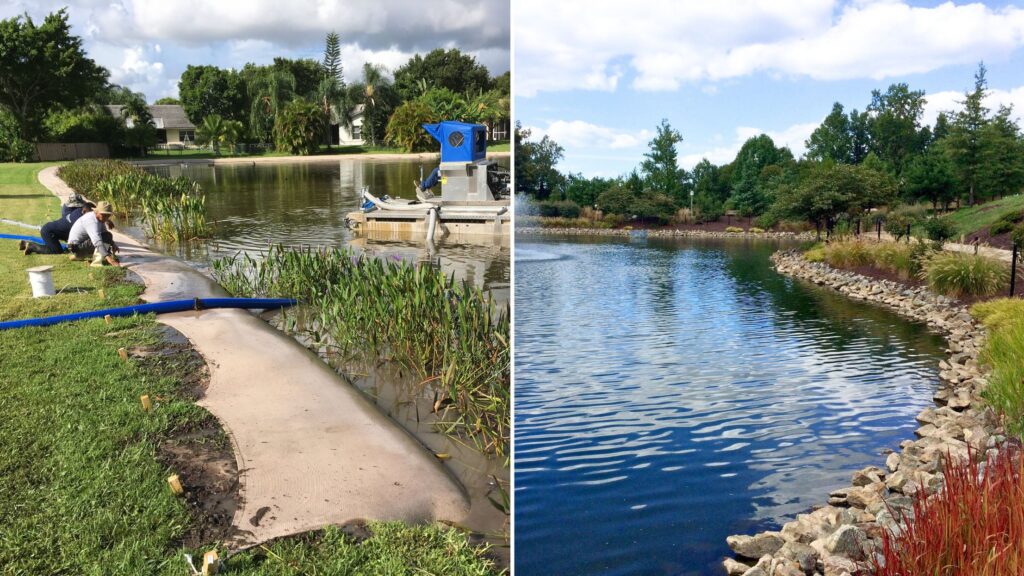
When erosion damage has already occurred, the two most common repair approaches are bioengineered living shorelines and hard armoring systems.
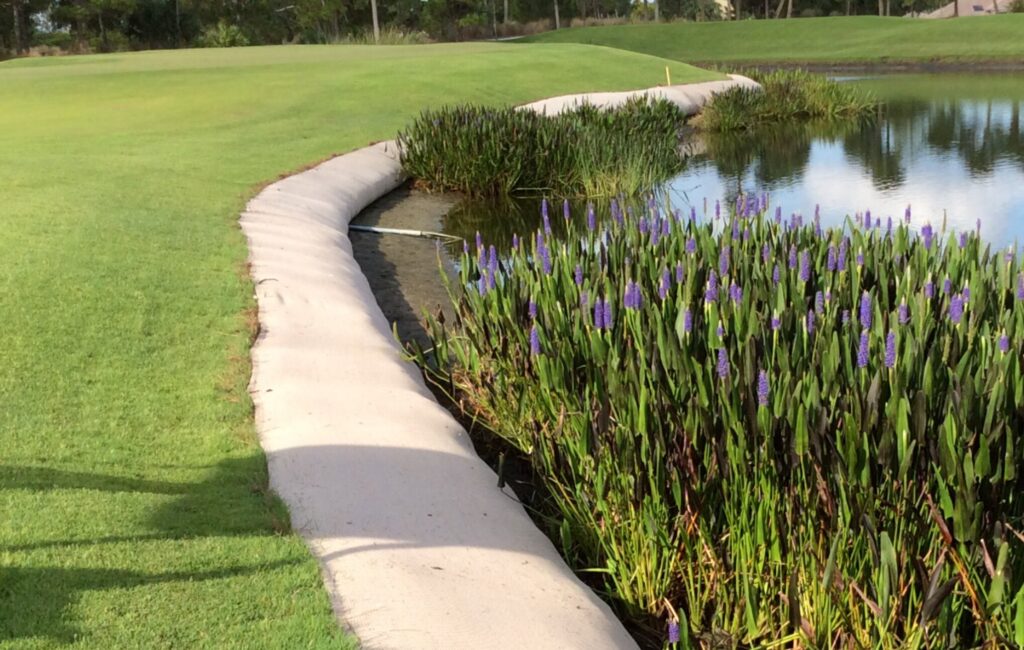
Bioengineered living shorelines — sometimes called soft armoring — use eco-friendly fabric and mesh systems filled with sand, soil, or sediment to immediately halt active erosion and rebuild lost bank, while creating a natural planting surface for native vegetation. Because the mesh material allows water to pass through it rather than reflecting it back into the waterbody, these systems also dissipate wave energy and adapt well to fluctuating water levels without compromising their structural integrity — making them effective even on shorelines with regular wave or boat-wake activity. SOLitude typically recommends bioengineered living shorelines as the primary erosion repair solution: they stabilize the bank quickly, integrate naturally into the surrounding landscape, and support long-term shoreline health rather than just holding soil in place.
Hard armoring systems, such as riprap, retaining walls, or bulkheads, use stone or engineered materials to physically reinforce a bank. These can be a fit in certain space-constrained scenarios, but they’re generally more resource-intensive to install, and state fish and wildlife agencies have noted that riprap and other hard armoring options typically offer less habitat value than bioengineered alternatives. Because hard armoring reflects wave energy rather than absorbing it, it can also redirect that energy onto nearby, unprotected sections of shoreline if not carefully designed.
How Can Vegetative Buffers Help Reduce Shoreline Erosion?
Vegetative buffers are composed of deep-rooted native plants along the water’s edge that hold soil in place and slow runoff before erosion has a chance to start. Because they work by keeping an already-healthy shoreline healthy, buffers are considered a proactive management tool rather than a repair solution. They’re most effective when the bank is still stable.
Buffers can also be planted directly into a bioengineered living shoreline system once it’s installed, adding an extra layer of long-term stabilization on top of the initial repair. This also makes buffers a useful complement on properties where one section of shoreline needs repair and another is still healthy — the eroded area gets a bioengineered solution, while the stable sections are protected proactively with buffers, so the whole shoreline is covered by the right approach rather than one fix applied everywhere.
How Do You Choose the Right Approach for Your Property?
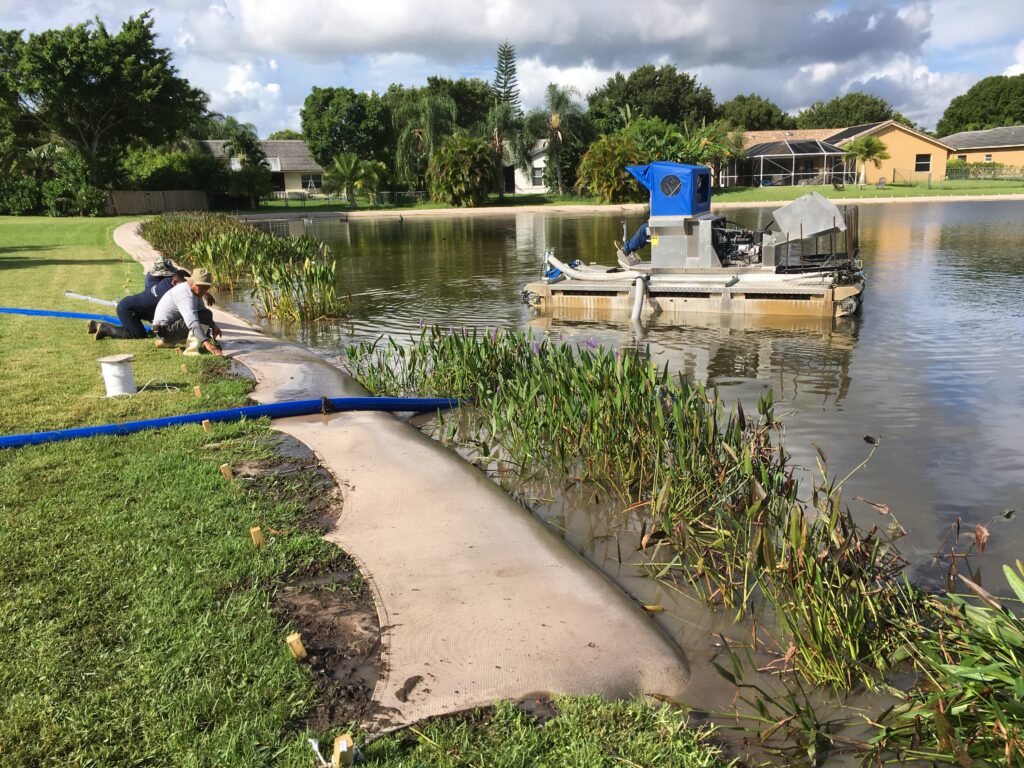
A few key factors typically guide the decision:
- Current condition of the shoreline. Visible bank loss or exposed soil generally calls for a repair solution like a bioengineered living shoreline, while a stable shoreline is a better candidate for a proactive buffer.
- Wave and boat traffic. Waterbodies with regular wave action or boat wakes call for a method that can handle that energy without compromising its structure — bioengineered living shorelines are built to dissipate wave energy rather than reflect it, which is one reason they perform well even on higher-traffic waterbodies.
- Soil type and slope. Steep banks and loose or sandy soils erode faster and often call for a different combination of materials than a gradually sloped bank.
- Site use and aesthetics. A community waterbody with walking paths or shared amenities may call for a natural-looking approach that blends into the landscape, while a commercial retention pond with limited space may prioritize a more compact, engineered footprint.
- Budget and timeline. Bioengineered systems typically deliver faster, more immediate results than allowing a buffer to establish on its own — though the two are often used together over time for long-term protection.
Why Work With a Professional Waterbody Management Team?
Because every shoreline erodes for slightly different reasons, a site assessment is one of the most useful steps before choosing an approach, including whether your property needs repair, prevention, or both.
A qualified team evaluates soil composition, water flow, existing vegetation, and how the shoreline is used — often against established engineering criteria like the USDA NRCS Streambank and Shoreline Protection standard — then recommends an approach built for long-term stability rather than a quick patch.
Key Takeaways
- Shoreline issues generally fall into two categories: repairing existing damage and proactively preventing new damage. The right solution depends on which one applies to your property.
- Bioengineered living shorelines are SOLitude’s recommended repair solution, offering fast stabilization along with a natural planting surface.
- Hard armoring (riprap, bulkheads) is a repair alternative, but it typically comes with higher cost and less habitat value.
- Vegetative buffers are a proactive, ongoing tool and can be layered onto a bioengineered system for extra long-term stability.
Ready to Protect Your Shoreline?
Every shoreline tells a different story, which is why a proactive, science-based assessment matters more than picking a method off a list.
SOLitude helps property managers, HOAs, municipalities, and commercial properties evaluate their shoreline conditions and put together a stabilization approach designed to support the health of the entire waterbody, not just the visible bank.
If you’re noticing changes along your shoreline, reach out to our team to talk through what you’re seeing and explore your options.
Lake Shoreline Erosion Management & Erosion Repair
SOLitude Lake Management is a nationwide environmental firm committed to providing sustainable solutions that improve water quality, enhance beauty, and preserve natural resources.
SOLitude’s team of aquatic scientists specializes in developing and executing customized lake, stormwater pond, wetland, and fisheries management programs. Services include water quality testing and restoration, algae and aquatic weed control, installation and maintenance of fountains and aeration systems, shoreline erosion control, muck and sediment removal, and invasive species management. SOLitude partners with homeowners’ associations, golf courses, private landowners, businesses, and municipalities. SOLitude Lake Management is part of Rentokil, a leading business services company, operating across the United States, Canada, and Puerto Rico.
For more information, visit SOLitude Lake Management at solitudelakemanagement.com, and connect on Facebook, LinkedIn, and YouTube.