




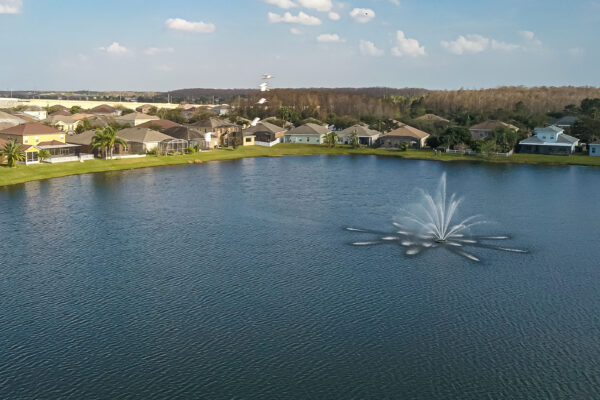


What’s one of the simplest ways to improve the balance of your lake or pond? Increase oxygen. The water quality benefits of fountains and aerators are numerous and far-reaching.
- Fish kills from low dissolved oxygen can be prevented in most waterbodies with the installation of an aeration system.
- Foul odors from anoxically produced hydrogen sulfide gas will be greatly reduced as bottom water mixes and becomes oxygenated.
- Aeration systems and pond fountains can help break down organic sludge and convert limiting nutrients such as nitrates and phosphates into forms that will not directly fertilize algal blooms.
However you look at it, pond aeration is one of the leading components of improved water quality and a sustainable and healthy aquatic ecosystem.
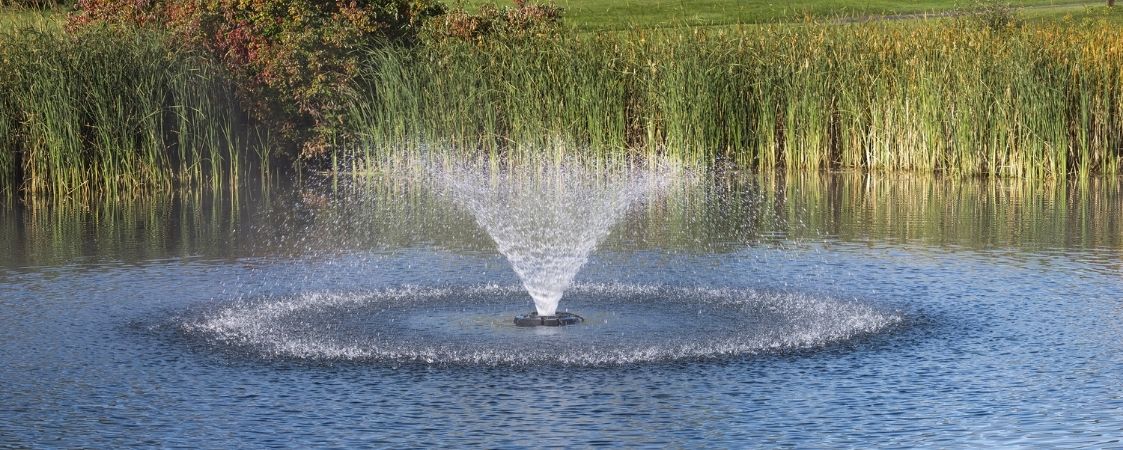
Floating Pond Fountain
Surface Aerator
Submersed Pond Aerator
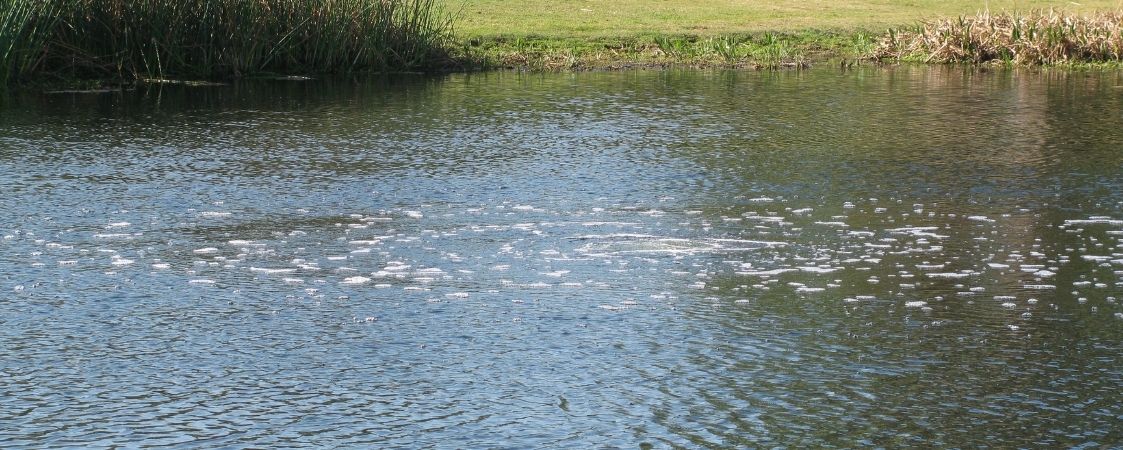
Types of Pond Aerators
There are several different types of aeration. The most common are sub-surface diffusers, floating fountains, and surface aerators. Other effective, but more energy-efficient options are solar-powered aerators and windmill aerators.
Numerous factors that go into determining which is aeration system or fountain best for your specific waterbody and property. The best aeration option depends on several factors, including:
- Pond size
- Pond shape
- Pond depth
- Water flow
- Aesthetic preferences
- Budget
Each type of system is available in a variety of sizes and configurations to create a customized solution for your waterbody.
Floating Pond Fountains
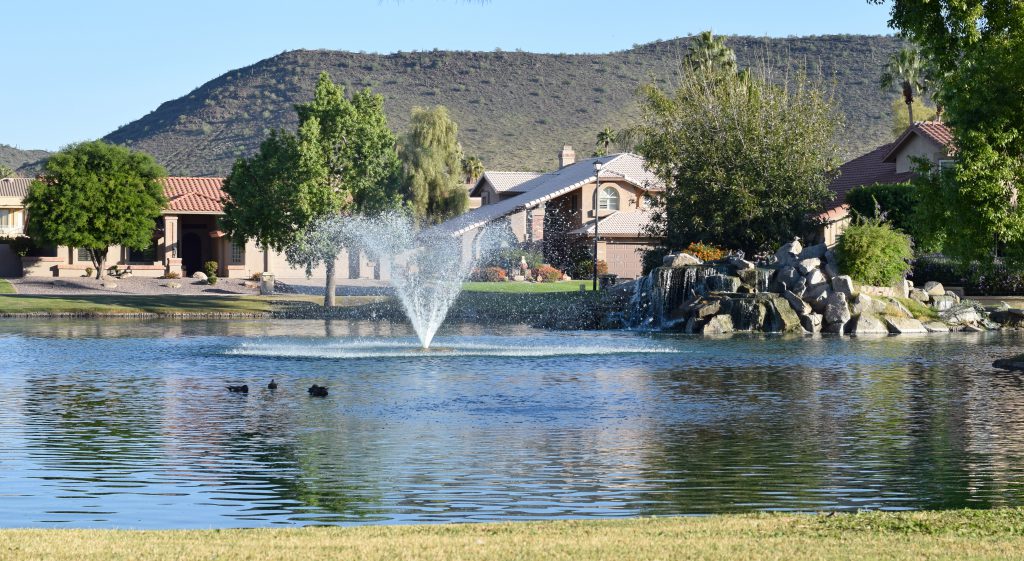
Best for: Waterbodies 4–6 feet deep; symmetrical ponds where aesthetics are a priority.
How they work: Fountains draw water from the upper few feet of the pond and spray it into the air, where it absorbs oxygen. The resulting circulation returns oxygenated water to the pond.
Benefits: Floating fountain aerators offer both the aeration and visual appeal that many property owners desire. The primary limitation of fountain aeration is that its effects are generally localized. It performs best in ponds with symmetrical shapes, such as:
- Round
- Oval
- Square
- Triangular
Irregular-shaped ponds can also benefit from fountains, but multiple units may be required to provide uniform aeration, increasing overall cost.
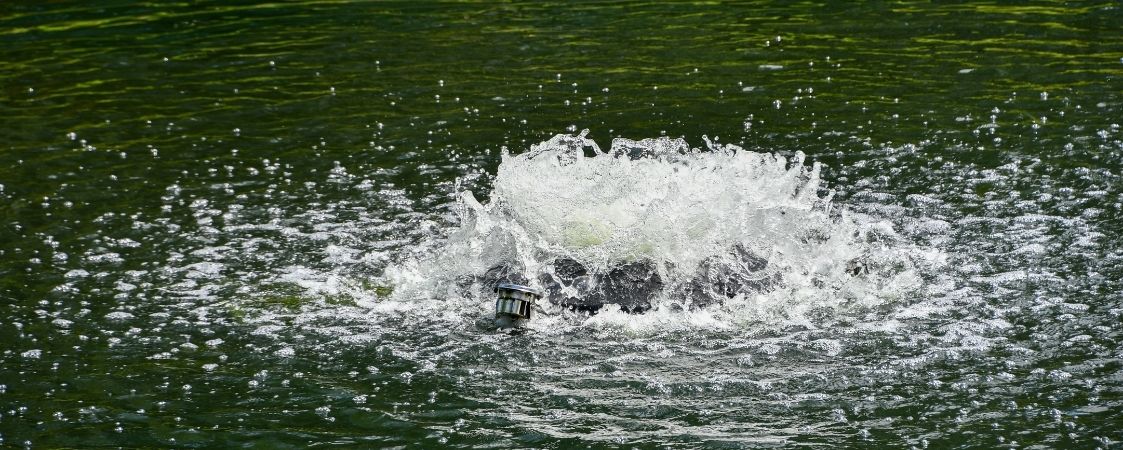
Surface Aerator
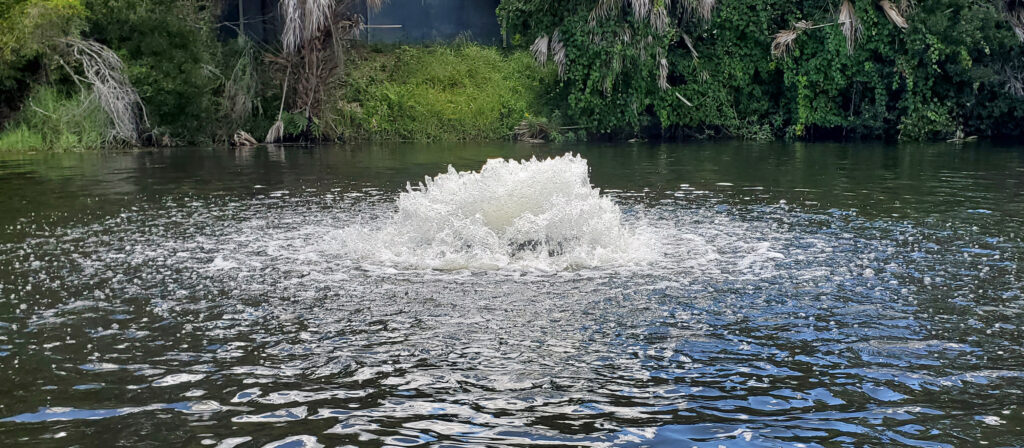
Best for: Waterbodies 4–6 feet deep; performance is the priority.
How they work: Surface aerators resemble floating fountains, but instead of decorative spray patterns, they use large propellers to create a powerful boil-like circulation at the water’s surface.
Benefits: Operating at lower speeds, they can inject up to 3 pounds of oxygen per horsepower-hour into the water, making them extremely effective at aerating and circulating the water column.
Submersed Aerator or Pond Diffuser
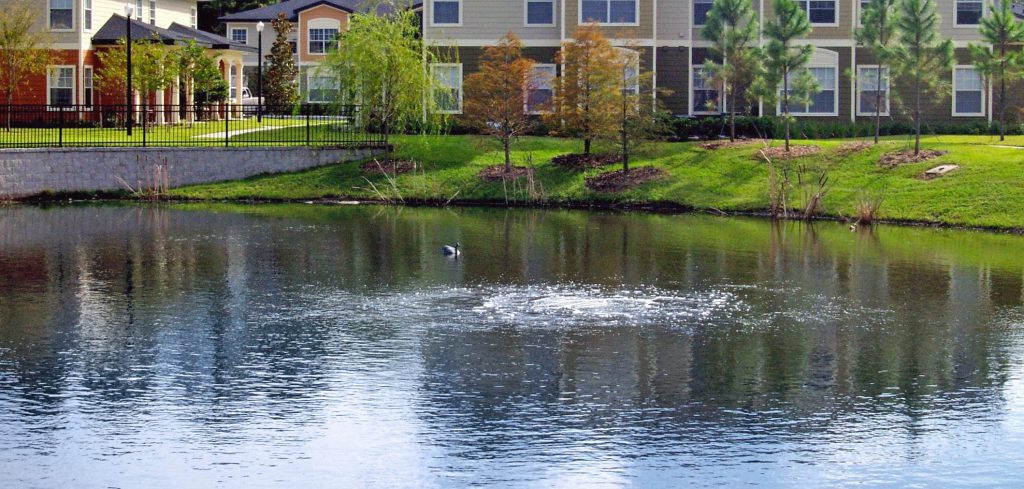
Best for: Waterbodies greater than 6 feet deep; irregularly shaped ponds.
How they work: Submersed pond aeration systems, or bottom diffused systems, release oxygen directly into the water column at precise locations within the pond via bottom diffusers.
Benefits: These systems can supply aeration for any pond, but work extremely well for irregularly shaped ponds such as kidney-shaped or long and narrow ponds.
In irregularly shaped ponds, fountains are generally limited because they are placed centrally in an effort to cover the most surface; however, this creates dead zones in the odd-shaped areas of the pond.
In these situations, fountains may be supplemented with submersed aeration to achieve the ideal aeration for the pond. Using all submersed aeration systems in irregular-shaped ponds will create the best overall aeration.
Solar Aeration Systems
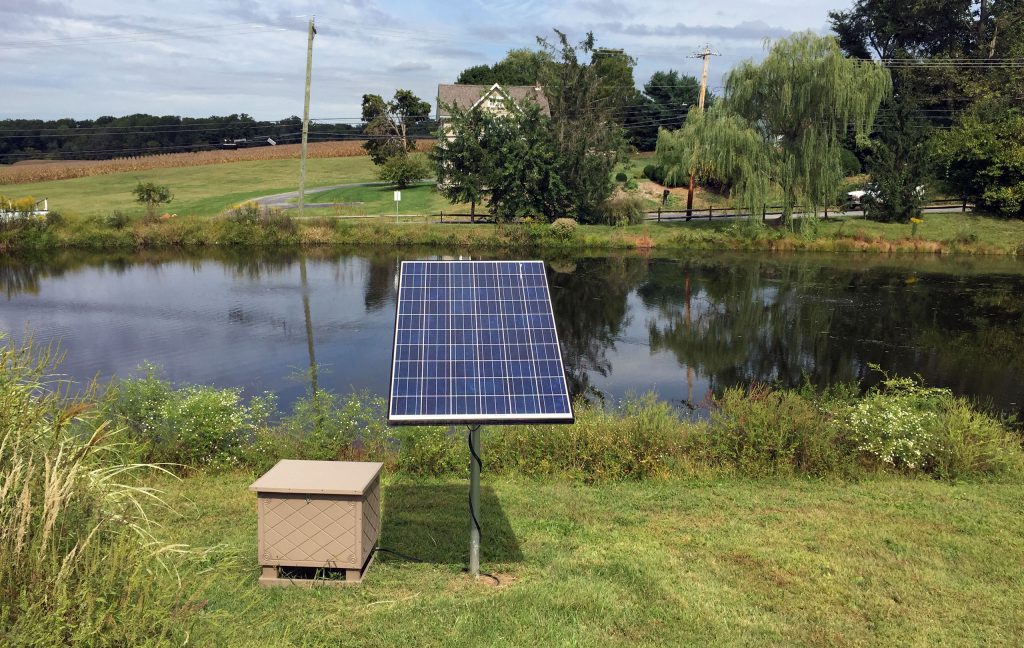
Best for: Remote ponds and environmentally conscious properties.
How they work: These fully automatic systems are designed to run up to 20 hours per day under standard operating conditions. The battery backup system allows them to run normally under less-than-optimal conditions.
Benefits: Solar pond aerator systems are great for both remote installations and environmentally conscious applications. They are designed for aquatic environments in a variety of sizes from ornamental ponds up to 5-acre lakes.
A solar pond aerator is a very effective and low-cost solution for your aeration needs, as it offers unbelievable savings over electric-powered aeration systems.
Choosing the Right Pond Aeration System
Every pond is unique, and both you and your pond have individual needs. Your local lake and pond management professionals can advise you on which method(s) of aeration are best for your particular waterbody and budget. Aeration systems can seem like a big investment, but they will protect a bigger investment by ensuring a long and healthy life for your pond!
What Are the Benefits of Pond Aeration?
Discover how dissolved oxygen generated by pond aerators and fountains can help improve water quality.
SOLitude Lake Management is a nationwide environmental firm committed to providing sustainable solutions that improve water quality, enhance beauty, preserve natural resources and reduce our environmental footprint. SOLitude’s team of aquatic resource management professionals specializes in the development and execution of customized lake, pond, wetland, and fisheries management programs that include water quality testing and restoration, nutrient remediation, algae, and aquatic weed control, installation and maintenance of fountains and aeration systems, bathymetry, shoreline erosion restoration, mechanical harvesting and hydro-raking, lake vegetation studies, biological assessments, habitat evaluations, and invasive species management. Services and educational resources are available to clients nationwide, including homeowners associations, multi-family and apartment communities, golf courses, commercial developments, ranches, private landowners, reservoirs, recreational and public lakes, municipalities, drinking water authorities, parks, and state and federal agencies. SOLitude Lake Management is a proud member of the Rentokil family of companies in North America.